

There’s a very specific conversation that happens in Bangalore’s new construction communities — in WhatsApp groups, at RWA meetings in Whitefield, over coffee in Koramangala. Someone has just moved into their new home or villa, and they’re asking if anyone else is dealing with: the afternoon rooms that won’t cool down, the traffic noise that cuts through closed windows, the first monsoon that left damp patches on the wall, the window that needs two hands and a shoulder to close properly.
The answers come in quickly. And they almost always reveal the same thing: these problems were baked in before possession, in decisions made at the specification stage — sometimes by a developer cutting costs, sometimes by a homeowner who didn’t know the right questions, and sometimes by both. Windows are rarely the headline specification conversation during construction. They become the headline conversation six months after you move in, when the problems are visible and the cost of fixing them is real.
These are the five most common window mistakes Bangalore homeowners make — and what each one costs you if you get it wrong.
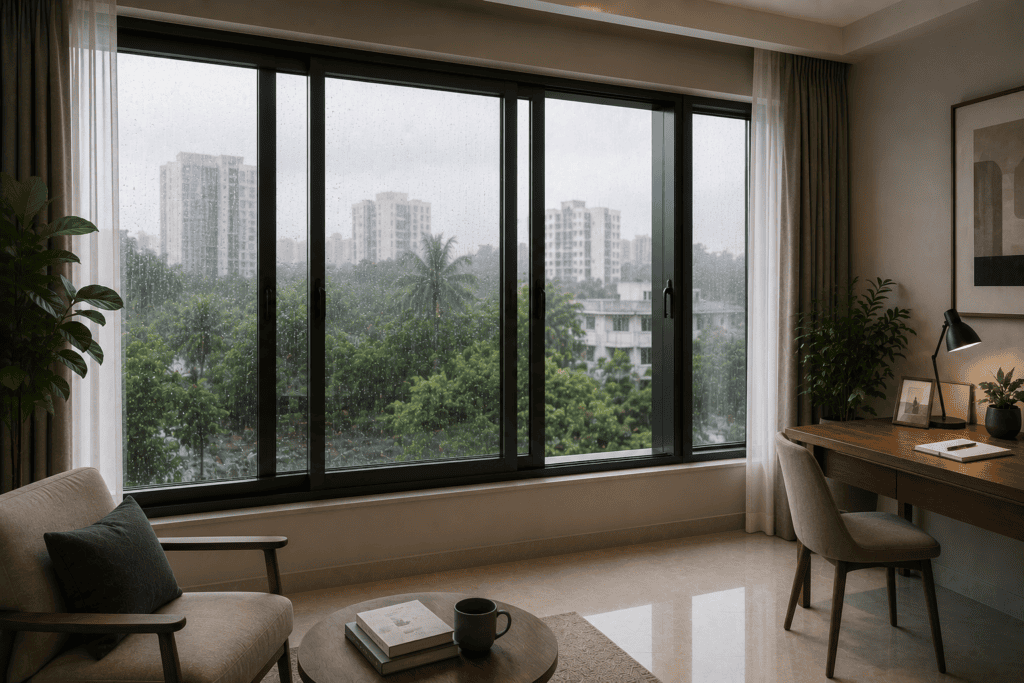
Mistake 1: Trusting “Double Glazed” Without Checking What’s Actually in the Frame
The mistake: A developer or supplier offers “double-glazed aluminium windows” and the buyer hears “good windows” and moves on. The conversation never gets to the frame specification.
Why it costs you: Double glazing refers to two glass panes with a gap between them. It improves window performance over single glass — but only through the glass area, which is typically 70–80% of the window’s total area. The remaining 20–30% is the aluminium frame, and if that frame is standard (non-thermal-break) aluminium, it conducts heat inward at high rates regardless of what the glass is doing.
In Bangalore’s west-facing rooms — which receive direct afternoon sun from around 1 PM to 6 PM between March and October — this matters enormously. A west-facing room in a Koramangala or Sarjapur villa with standard aluminium frames will be noticeably warmer near the windows than in the room’s centre, even with double-glazed glass. The frame is radiating heat into the room from its hot outer section.
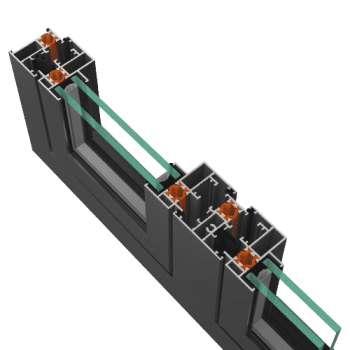
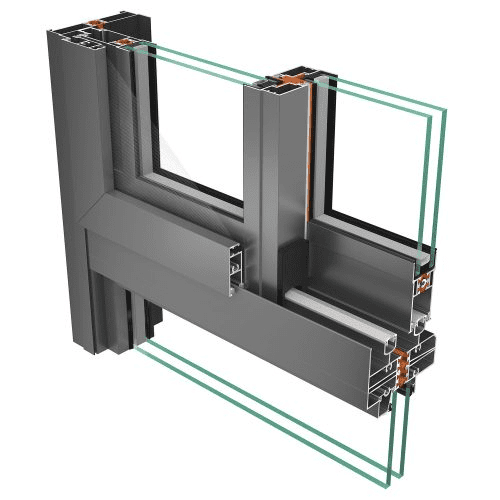
What you should have specified: Thermally broken aluminium frames — where the outer and inner sections are separated by a reinforced polyamide strip that prevents heat from conducting through the metal. Combined with Low-E double glazing (which reflects infrared heat rather than transmitting it), this is the complete system that actually solves the west-facing heat problem. Specifying glass without specifying the frame is half a solution.
Competitor reality check: Neither Koemmerling (formerly AluPure) nor ALCOI’s published Bangalore content addresses this specific frame-plus-glass distinction for buyers in construction. Their materials reference product features without spelling out that frame specification and glass specification are two separate decisions that must both be made correctly. Prominance, as a uPVC specialist, sidesteps the aluminium thermal bridge issue through material chemistry — but uPVC’s structural limitations for large openings apply, as discussed throughout this series.
Mistake 2: Choosing Window Configuration for Aesthetics Without Considering Monsoon Exposure
The mistake: The architect or designer specifies large sliding windows for the primary living areas because they look modern and allow maximum glass area. No one discusses the sealing performance of large sliding windows under monsoon wind-driven rain.
Why it costs you: Bangalore’s June–September monsoon brings sustained wind-driven rain. Large sliding windows — particularly those spanning 2 to 3 metres — have more potential seal failure points than smaller windows, and the sealing mechanism (usually brush seals on budget systems) is fundamentally less robust under lateral wind pressure than a casement window’s compression seal against a full-perimeter frame stop.
The first monsoon after moving in is when this mistake reveals itself: water at the bottom of the sliding track, damp around the frame-wall joint, or fine spray finding its way in through the meeting stile where the two panels overlap. In a villa in HSR Layout or a premium apartment in Whitefield overlooking an open plot to the west, this exposure can be significant.
What you should have specified: For west or southwest-facing large openings — which take the most direct monsoon wind and rain in Bangalore — either thermally broken casement windows (which seal against a full-perimeter frame stop) or large-format sliding systems like Thermaline®’s EcoSlide® that use multi-point compression seals rather than brush seals, and have drainage channels sized for monsoon rainfall intensity. The configuration conversation should have included the orientation, floor level, and building exposure — not just the aesthetic preference.
Mistake 3: Letting the Builder Choose the Hardware
The mistake: The window frame and glass specification is discussed with care. The hardware — handles, hinges, locking mechanisms — is left to the builder or fabricator’s standard selection, which almost always means the most cost-efficient option available.
Why it costs you: In Bangalore’s IT corridor — particularly Whitefield, Sarjapur, Marathahalli, and Electronic City — the combination of monsoon humidity, occasional dust from ongoing construction activity, and ambient temperatures drives hardware corrosion faster than most homeowners expect. Standard zinc alloy handles and hinges show surface corrosion, stiffening, and reduced functionality within 3–5 years. By year 5, windows that should operate smoothly require significant force to lock properly — meaning they’re not sealing correctly, even if the frame and glass are in good condition.
Corroded or stiff hardware is the most common reason a technically adequate window system fails to perform in practice. A window that can’t close flush against its seal isn’t sealing at all.
What you should have specified: Stainless steel handles, hinges, and multi-point locking mechanisms. In Bangalore’s climate, this is not a luxury upgrade — it is the durability specification that keeps the window functioning correctly for the 15–20 year service life the rest of the system is designed for.
Mistake 4: Not Specifying Acoustic Glass for Road or Construction-Facing Windows
The mistake: The thermal performance conversation absorbs the window specification discussion. Acoustic performance — how much road noise the window blocks — is never raised as a separate specification criterion.
Why it costs you: Bangalore has become significantly noisier than it was a decade ago. The Outer Ring Road carries near-continuous heavy traffic. ITPL Road and Marathahalli Bridge are congested throughout the day. Construction activity in Whitefield, Bellandur, and the corridors feeding the new metro line extensions runs through work hours and sometimes beyond. For villas and apartments within 200–500 metres of these corridors, the traffic noise perceptible through standard double-glazed windows has become a genuine work-from-home and sleep quality problem.
Standard double glazing reduces some noise — but the improvement is limited by two factors: if the two glass panes are the same thickness, they vibrate at the same resonant frequency and allow certain sound frequencies to pass almost as efficiently as single glass; and if the air gap is 12mm or less (common in budget systems), the acoustic attenuation is limited for the low-frequency broadband noise of Bangalore’s traffic profile.
What you should have specified: Acoustic laminated glass — a double-glazed unit with a PVB (polyvinyl butyral) sound-dampening interlayer between the panes, plus an air gap of 16mm minimum. This combination breaks the resonance effect and significantly attenuates the traffic and construction noise profile of Bangalore’s IT corridor. It is a specific glass type, not a marketing category — ask your supplier for it by name and ask for the Rw (weighted sound reduction) value.
Mistake 5: Treating Installation as an Afterthought
The mistake: The window frame and glass specification is handled carefully. The installation process — specifically, how the frame is seated and sealed in the wall opening — is left to the contractor’s standard practice with no specified methodology.
Why it costs you: The joint between the window frame and the surrounding wall opening is the source of more real-world window performance failures in Bangalore than any product specification gap. A thermally broken frame with Low-E acoustic glass, installed with a poor perimeter seal, will allow water infiltration during monsoon, dust infiltration during Bangalore’s pre-monsoon dry season, and noise transmission through the frame-wall gap — delivering performance that looks like a poor product but is actually a poor installation.
The correct installation specification is a three-layer perimeter system: polyurethane foam to fill the structural gap, a vapour-permeable membrane tape on the exterior face that blocks water while allowing trapped moisture to escape, and a quality polyurethane sealant on the interior bead. This is not the standard practice of most Bangalore construction contractors, who typically use mortar or a single silicone bead — both of which degrade in Bangalore’s climate within 4–8 years.
What you should have specified: Require a written installation methodology from your window supplier before purchase. A supplier who cannot specify the three-layer perimeter seal system in writing either doesn’t use it or doesn’t understand why it matters. Both are disqualifying.
The Common Thread: These Are Specification Decisions, Not Luck
Every mistake on this list was preventable at the specification stage — before any frame was ordered, before any glass was cut. None of them required spending dramatically more. Hardware upgrades from zinc alloy to stainless steel are modest cost increments. Specifying acoustic laminated glass adds to the glazing cost but not the frame cost. The installation methodology is a training and process specification, not a material cost.
What each requires is knowing the right questions to ask — before possession, not after.
Thermaline® has been engineering thermally broken aluminium window systems for Indian conditions for over 20 years. Our EcoCasement® and EcoSlide® systems are specified with thermal break frames as standard, compression seals sized for Bangalore’s monsoon, stainless steel hardware options, acoustic glass configurations, and a three-layer installation methodology that we specify in writing before every project.
We provide free site consultations for Bangalore homes under construction or at the renovation stage — specific to your building’s orientation, floor level, and the noise and monsoon exposure your location actually presents.
If you’re building or renovating in Whitefield, Sarjapur, Koramangala, Indiranagar, HSR Layout, or anywhere in Bangalore’s premium residential belt — speak to Thermaline® before your window specification is finalised. The conversation costs nothing. The five mistakes above cost significantly more than that.
FAQs
What is the risk of trusting ‘double glazed’ windows without checking the frame specification?
The risk is that even with double glazing the 20–30% of the window made by the aluminium frame can conduct heat if the frame is standard non-thermal-break aluminium, making west-facing rooms unusually warm despite the glass.
Why should monsoon exposure influence window configuration choices beyond aesthetics?
Large sliding windows may look modern but can fail to seal under wind-driven rain in Bangalore’s monsoon, leading to water ingress; casement or multi-point sealed sliding systems with proper drainage are better for west or southwest openings.
Why is it important who specifies the hardware for windows?
Standard hardware tends to corrode and stiffen quickly in Bangalore’s climate, causing poor sealing and operation; specifying stainless steel handles, hinges, and multi-point locking ensures durability and proper function over the 15–20 year life of the system.
What role does acoustic glass play for windows facing busy roads or construction sites?
Acoustic laminated glass with a PVB interlayer and a 16mm or greater air gap significantly reduces traffic and construction noise, addressing low-frequency sounds that standard double glazing may not attenuate effectively.
Why must installation be specified as part of the window system, not left to the contractor?
A three-layer perimeter installation—polyurethane foam, a vapour-permeable exterior membrane, and interior polyurethane sealant—prevents water and dust infiltration and ensures the window performs as designed; without it, even good frames and glass fail in practice.
