
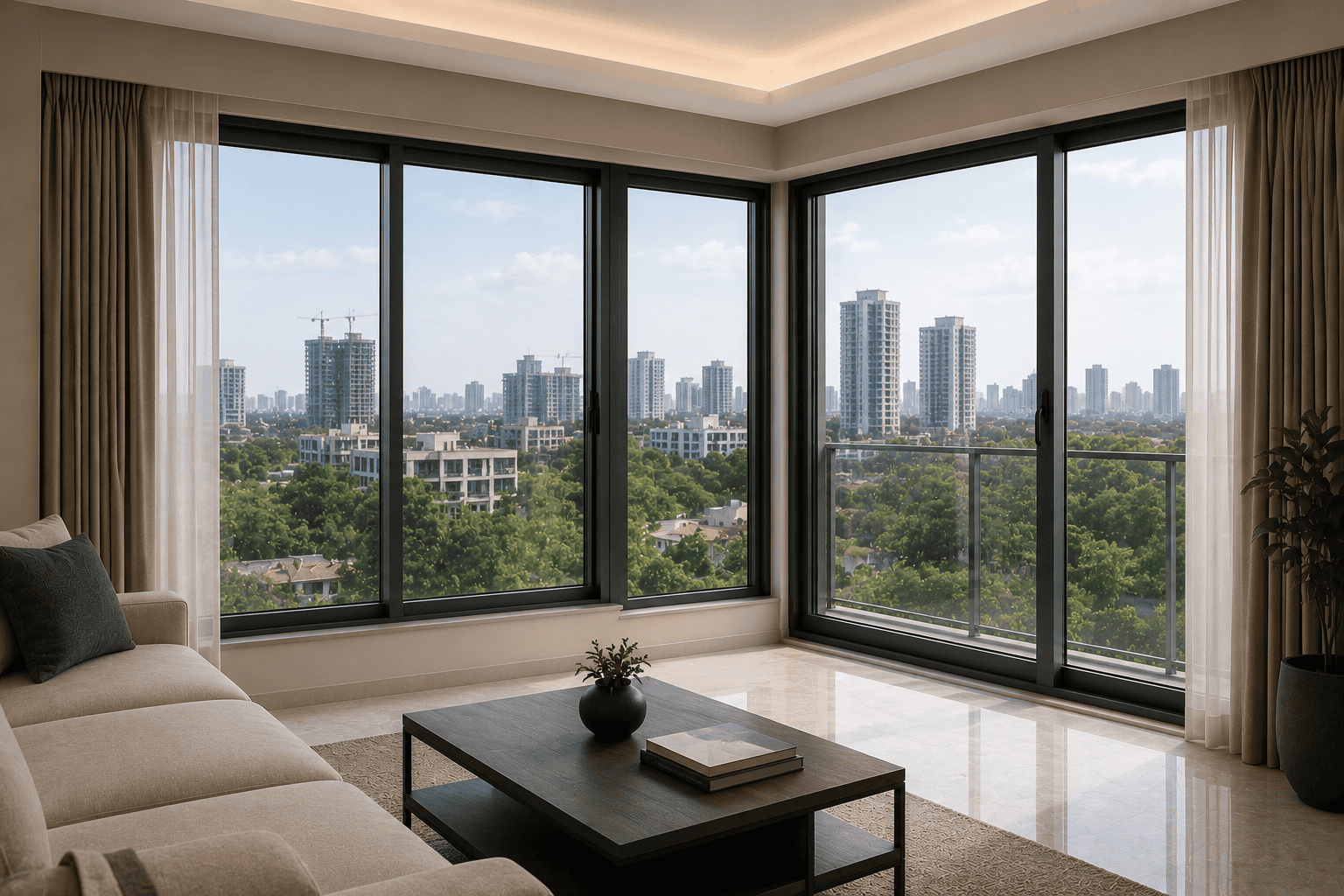
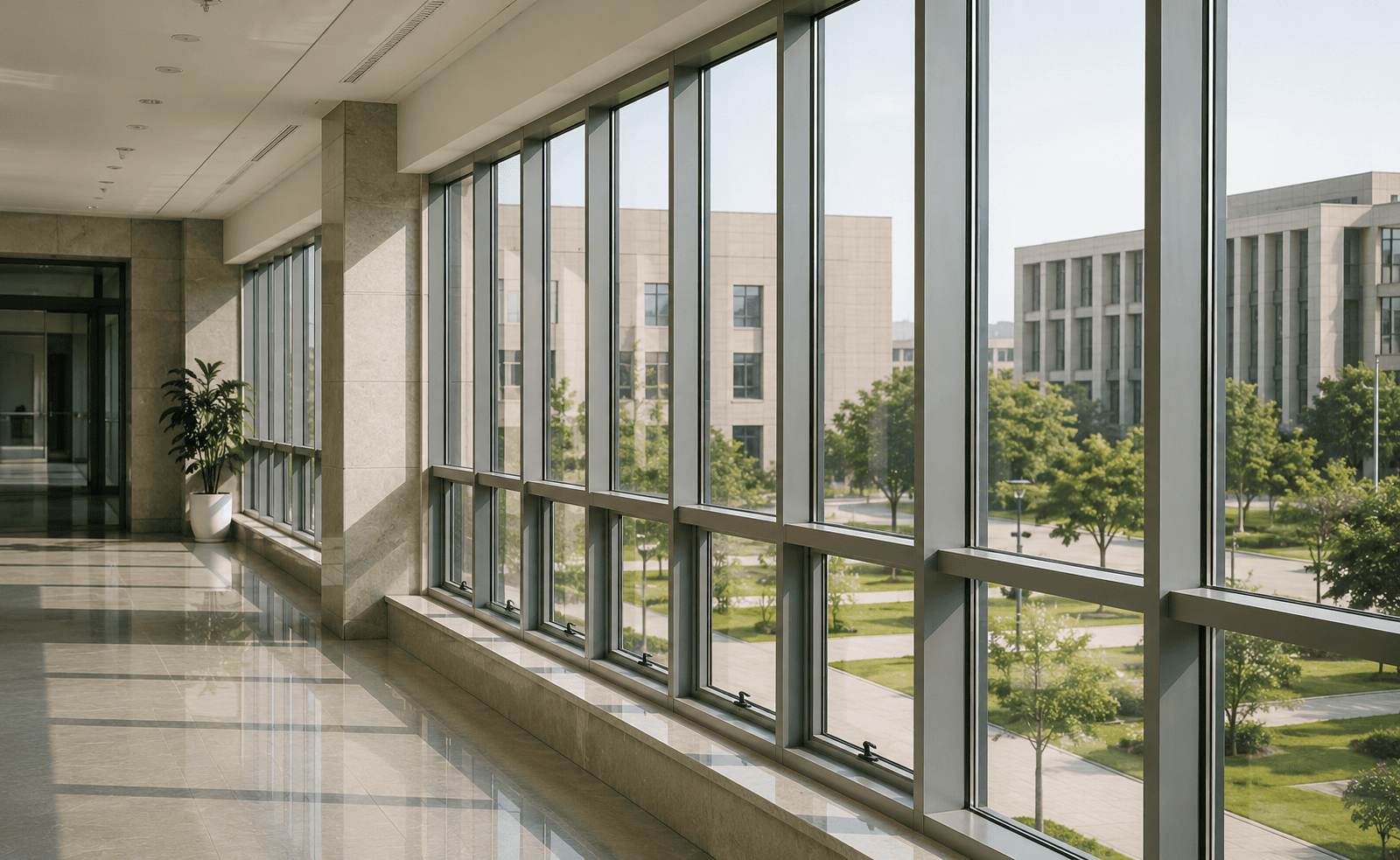
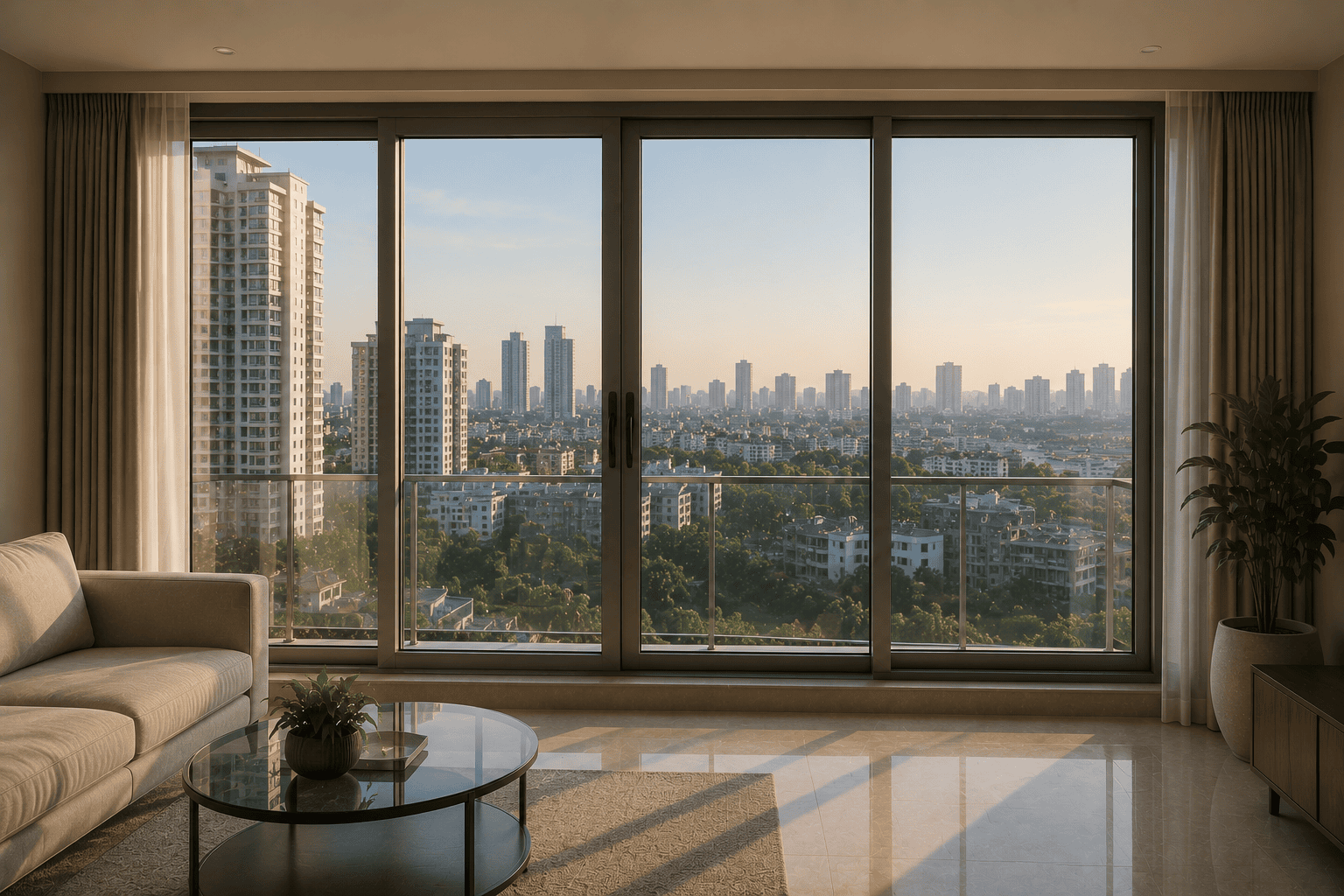
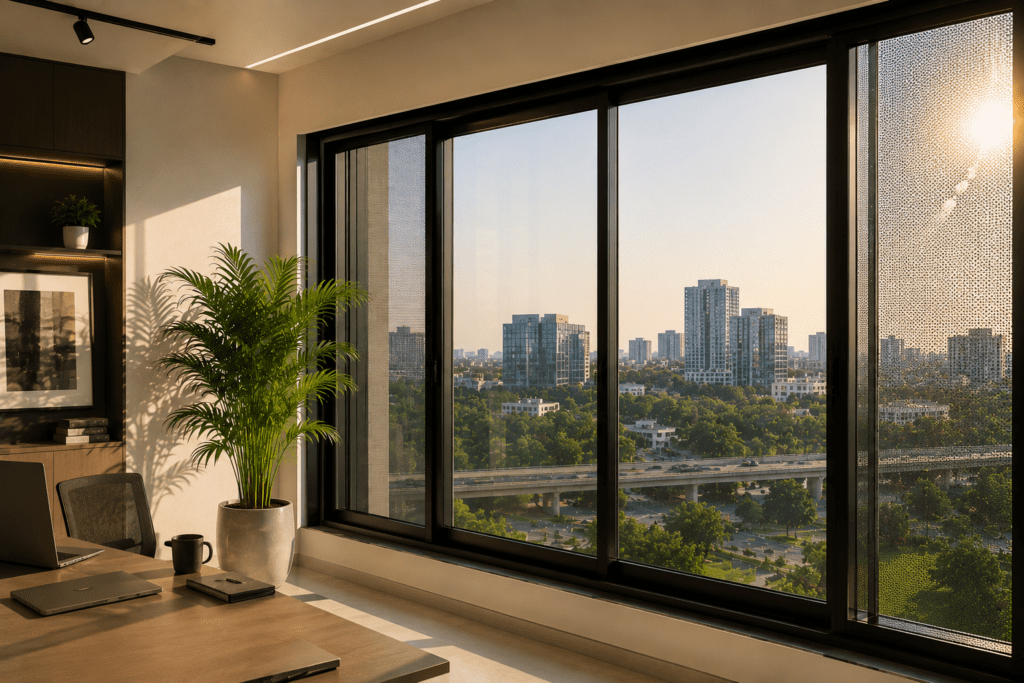
If you’ve lived in Ahmedabad through a May afternoon, no explanation is needed. The city sits on the Sabarmati’s sandy floodplain in central Gujarat — flat, dry, and fully exposed to the westerly loo winds that push temperatures into the high 40s from March through June. Gujarat’s climate data shows record highs of 45.6°C in Ahmedabad, with average summer maximums climbing from 35°C in March to nearly 44°C by May. That is not marginal heat. That is the kind of heat that runs your split ACs from 9 AM to midnight and still leaves certain rooms uncomfortable.
What most Ahmedabad residents don’t realise is that a significant portion of that battle is happening not in the air, but in the window frame itself. And until that’s addressed, your air conditioner is fighting the building it’s inside — and losing a measurable portion of every unit it consumes.
The Physics: Why Your Window Frame Is Making Your AC Work Harder
Aluminium is one of the most thermally conductive metals in common use. Its thermal conductivity is approximately 160–205 W/m·K — compared to 0.25 W/m·K for the reinforced polyamide used in thermal break construction. In plain terms: aluminium conducts heat roughly 700 times more efficiently than the break material that stops it.
In a standard aluminium window frame on a west-facing Ahmedabad wall in May, the outer face of the frame can reach 60–65°C in the afternoon sun. That heat travels through the continuous aluminium section and radiates from the inner face of the frame directly into your cooled room. Your AC senses the heat, the compressor kicks on, runs longer than it should, and the cycle repeats — all afternoon, every afternoon, for five months of the year.
This is the thermal bridge. It is not hypothetical. It is a documented, measurable heat load that contributes to higher HVAC consumption in every building in hot climates that uses standard aluminium frames.
The solution is equally well-documented: interrupt the bridge. A thermally broken frame splits the inner and outer aluminium sections with a reinforced polyamide strip. The polyamide conducts heat so poorly that the inner frame section — the part that faces your room — stays within a few degrees of your indoor temperature, regardless of what is happening to the outer section in 46°C sun.
The result is a window that no longer contributes to your room’s heat load through the frame. Combined with Low-E double glazing that reflects solar infrared radiation before it enters through the glass, the combined system reduces total heat gain through the window by 35% or more compared to standard aluminium with clear glass.
What 35% Actually Means for an Ahmedabad Household
Let’s make this concrete, because “35% reduction in heat gain” is an engineering figure until you translate it into electricity bills.
Profile: a 3BHK apartment in Prahlad Nagar or Satellite, Ahmedabad
- 3 split ACs running approximately 10 hours/day
- AC season: 8 months (March through October, peak intensity March–June)
- Windows: standard aluminium with clear glass, west and south-facing primary rooms
- Monthly AC electricity consumption: approximately 400–500 units
A 35% reduction in window-related heat gain directly reduces the cooling load that the AC must overcome. Conservatively, this translates to a 15–20% reduction in total AC electricity consumption — because the AC reaches its setpoint faster, cycles off sooner, and runs fewer hours per day.
At Gujarat’s residential electricity tariff of approximately ₹5.50–7.00 per unit (Torrent Power and DGVCL rates for residential consumers):
- Monthly saving: ₹3,300–7,000
- Annual saving: ₹40,000–84,000
- Over the 20-year life of the window: ₹8 lakhs to ₹17 lakhs in electricity savings alone
These are conservative figures. They do not account for the extended operational life of your AC compressor — which runs fewer cycles under reduced thermal load — or for the rising trajectory of Gujarat electricity tariffs over the next two decades.
Where AluPure and Prominance Fall Short for Ahmedabad’s Brief
AluPure’s India operations are headquartered in Ahmedabad on Sindhu Bhavan Marg — and their factory is in nearby Vadodara. They have genuine physical presence in Gujarat, which matters for service and installation. Their product range offers aluminium door and window systems with the claim of being built for extreme weather conditions.
But here is what the AluPure product story doesn’t emphasise for Ahmedabad buyers: AluPure is set to introduce a thermal break minimal system — meaning their core India product line is still predominantly standard aluminium without thermal break construction. The thermal break variant is a future addition, not the current standard. For a city recording 45°C+ summers, buying a window system while waiting for the brand’s thermal break product to arrive is a meaningful performance compromise.
Prominance offers uPVC windows in Ahmedabad — a different material category with different performance characteristics. uPVC has reasonable thermal properties but lacks the structural depth for large-format openings, loses dimensional stability over repeated thermal cycling in Ahmedabad’s extreme temperature range, and cannot be specified for the large glass areas that characterise Ahmedabad’s newer premium residential projects in SG Highway, Bopal, and South Bopal.
ALCOI does not appear to have a dedicated Ahmedabad market presence or city-specific content — their operations are concentrated in North India. For Ahmedabad buyers, their practical service and installation reach in Gujarat is limited.
Thermaline® has been engineering thermally broken aluminium window systems for Indian conditions for over 20 years — with thermal break construction as the standard, not an upcoming feature. For Ahmedabad’s specific brief — extreme summer heat, dry climate, rapid thermal cycling between 12°C winter minimums and 45°C+ summer maximums — our EcoSlide® and EcoCasement® systems are engineered with the right frame geometry, glass specification, and seal durability to deliver the 35% heat gain reduction that the climate demands.
Ahmedabad Neighbourhood Guide: Where the Heat Problem Is Most Severe
SG Highway corridor (Prahlad Nagar, Satellite, Bodakdev): West-facing apartments in the towers along the SG Highway face direct afternoon sun through large glass areas. This is the highest-heat-gain zone in Ahmedabad’s residential market. Thermal break frames with Low-E SHGC-0.28 glass are the specification here.
Bopal & South Bopal: Gujarat’s fastest-growing mid-premium residential corridor has seen enormous new development with builder-grade standard aluminium windows. The first summer is typically when residents discover the specification gap. Window replacement in 5–8 year old buildings here is a growing market.
Thaltej & Shilaj: Premium bungalow territory on Sarkhej-Gandhinagar Highway. South-facing rooms and courtyard-facing glazing need orientation-specific Low-E glass specification alongside the thermal break frame.
Navrangpura & Paldi: Older, denser residential areas where replacement of legacy windows is the primary opportunity. Sealing performance — monsoon water infiltration and dust infiltration through aged frames — is as important as thermal performance in this zone.
The Practical Buying Decision for Ahmedabad Homeowners
Before any window purchase in Ahmedabad, ask these four questions:
1. Is the frame currently thermally broken — not “being introduced”? The thermal break must be in the product you are buying today, not in a future product line.
2. What is the glass SHGC, and is it specified for my window’s orientation? West-facing rooms in Ahmedabad need SHGC below 0.30. A single SHGC value applied to all orientations is not a considered specification.
3. What are the seal specifications for the frame-wall joint? Ahmedabad’s monsoon — though shorter than Mumbai or Bangalore — is concentrated and intense. Multi-layer perimeter sealing is necessary.
4. What is the frame coating specification? Ahmedabad’s dry season brings significant airborne dust and sand. PVDF or high-grade polyester coating with minimum 60-micron thickness is the durability standard for this climate.
Thermaline® provides free site consultations for Ahmedabad homes — with orientation-specific glass recommendations and payback period estimates based on your actual apartment or villa brief.
