
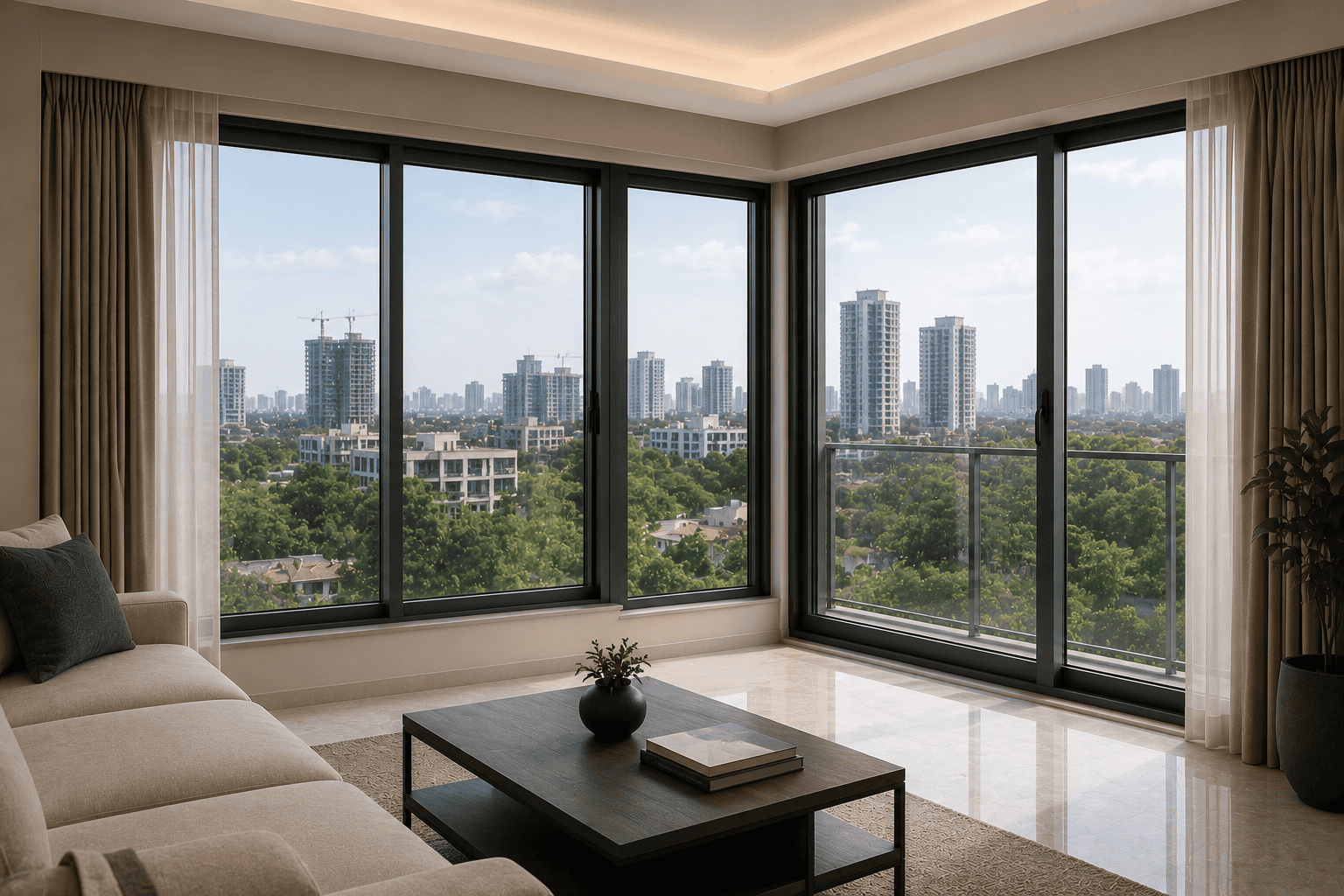
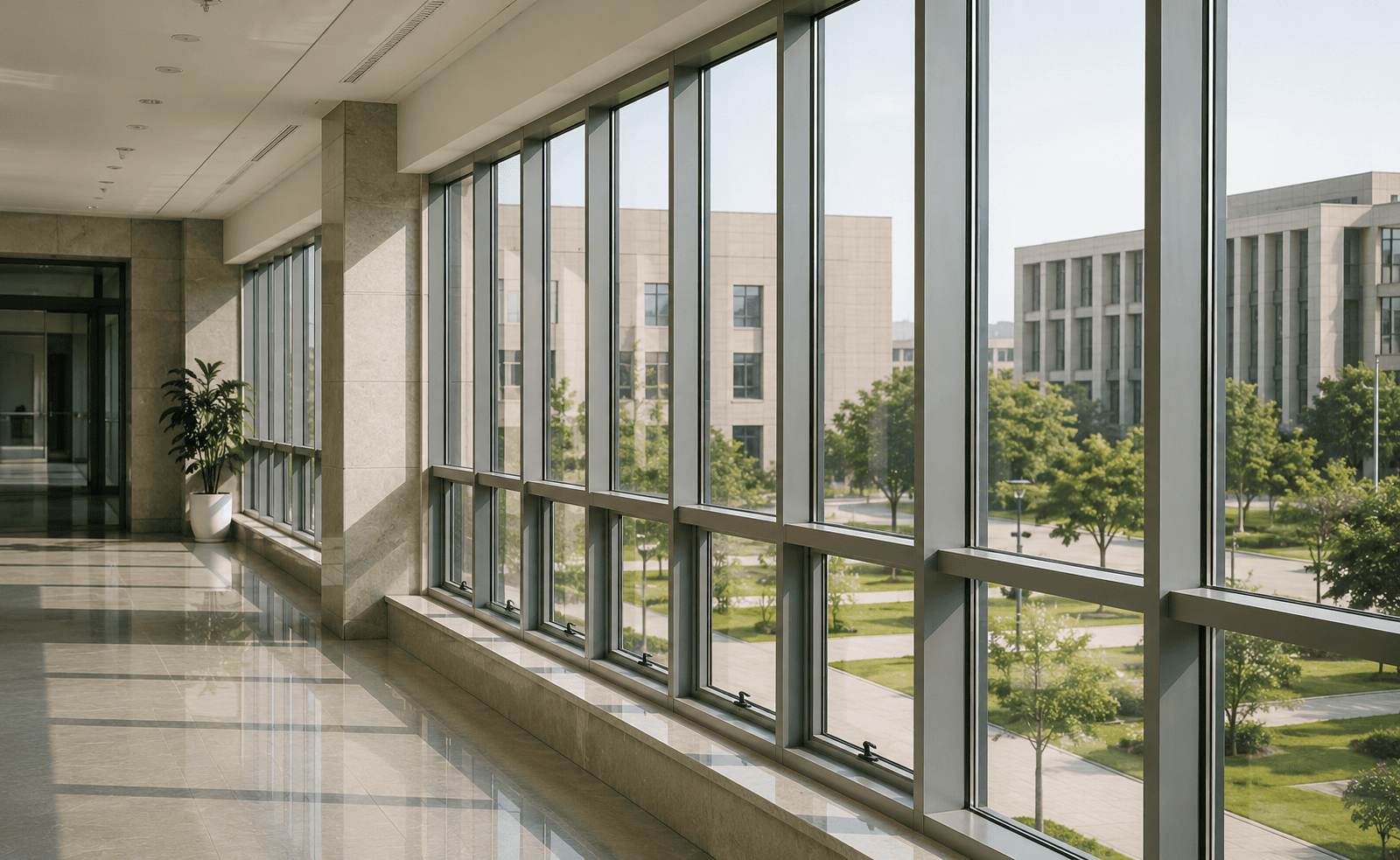
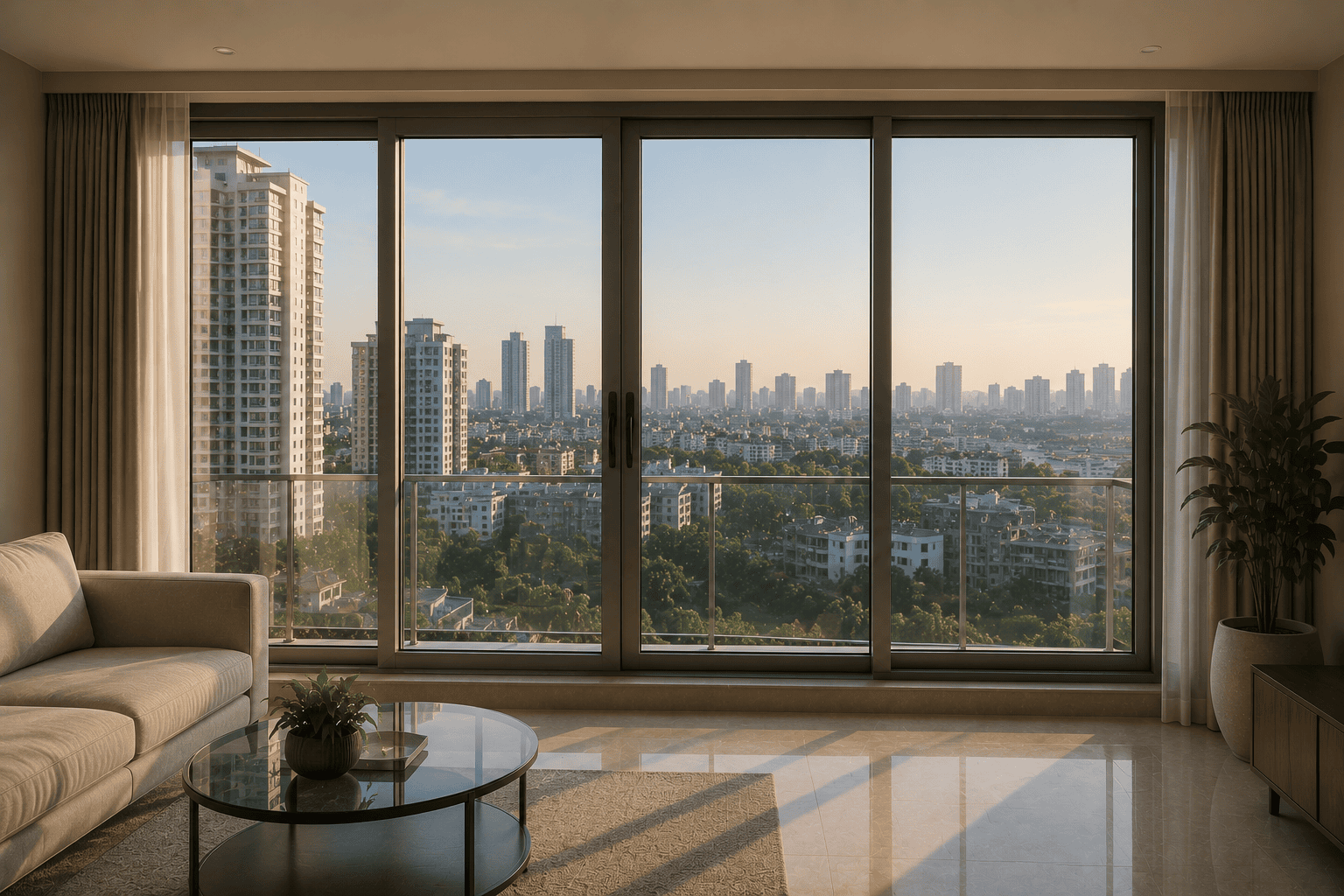

Hyderabad’s commercial real estate market is in the middle of a genuine transformation. The city’s HITEC City and Gachibowli corridor now hosts some of India’s most prominent IT campuses — Microsoft, Google, Amazon, Infosys, and TCS among them — alongside a growing cluster of co-working facilities, financial services offices, and mixed-use commercial developments.
This concentration of premium commercial space, combined with Hyderabad’s demanding climate, has created a specific energy efficiency problem. Buildings constructed between 2005 and 2018 — which represents a significant portion of the corridor’s commercial stock — were built to specifications that prioritised cost and aesthetics over thermal performance. Their windows, in particular, are now a measurable liability: contributing substantially to HVAC loads that drive energy bills, straining cooling systems designed to handle a lower base load, and increasingly falling short of the energy performance benchmarks that tenants now evaluate.
This article breaks down the data: what thermal break windows actually save in Hyderabad’s commercial context, what the ROI looks like, and why 2025 is the year building owners in this corridor are acting rather than deferring.
The Hyderabad Commercial Context: Why Windows Are a Bigger Problem Here
Hyderabad’s climate profile makes window thermal performance more financially impactful in commercial buildings than in most other Indian metros.
The city experiences one of India’s longest and most intense periods of direct solar radiation. From February through June, solar intensity is high and sustained. The pre-monsoon period — April through June — brings temperatures between 38°C and 44°C with low humidity and intense direct sun. In a building with large glazed facades and no solar control glass, the HVAC system is fighting solar heat gain through the glass from early morning to late afternoon.
The commercial building typology compounds this. IT park buildings in Hitech City and Gachibowli typically feature high window-to-wall ratios — large glazed facades are part of the architectural language. The higher the ratio of glass to solid wall, the greater the window’s contribution to total HVAC load. Buildings in this corridor with 30–40% window-to-wall ratios and standard clear glass facades are, in thermal terms, running their HVAC against the building itself.
The result shows up in energy consumption data. Hyderabad commercial buildings with standard clear glass facades in the IT corridor consistently report HVAC consumption that represents 45–55% of total building electricity use — significantly higher than the 35–40% typical of well-specified buildings in the same climate zone.
The Energy Savings Data: What Thermal Break Windows Deliver
Replacing standard clear glass aluminium windows with thermally broken aluminium + Low-E double glazed systems in a Hyderabad commercial building delivers HVAC load reductions in the range of 18–25%, depending on building orientation and existing specification.
Here is how that breaks down for a representative Hyderabad IT office building:
Building profile for this analysis:
- 5 floors, 18,000 sq ft per floor (90,000 sq ft total GLA)
- 35% window-to-wall ratio, predominantly west and south-facing glazing
- Running 12-hour AC operation, 11 months per year
- Located in the Gachibowli financial district corridor
Existing specification (standard clear double glazing, standard aluminium frame):
- Glazing SHGC: ~0.65 (65% of solar radiation enters)
- Frame U-value: ~5.8 W/m²K (standard aluminium — very high heat conduction)
- Estimated annual HVAC consumption from window-related load: ~1,80,000 units/year
Upgraded specification (Low-E double glazing, thermal break frame):
- Glazing SHGC: 0.28 (72% reduction in solar heat gain through glass)
- Frame U-value: ~1.8 W/m²K (thermal break — 69% reduction in frame heat transfer)
- Estimated annual HVAC consumption from window-related load: ~1,30,000–1,40,000 units/year
- Estimated annual HVAC energy saving: 40,000–50,000 units
Financial translation at Hyderabad commercial electricity tariff (₹8.50–10.00 per unit):
- Annual saving: ₹3.4 lakhs to ₹5.0 lakhs per year for a building of this size
- This does not include maintenance savings from reduced HVAC cycling frequency, or from the extended operational life of cooling equipment running at lower average loads
Payback period: For a full window replacement at this scale — thermal break frames, Low-E double glazing, professional installation with correct perimeter sealing — the typical capital investment is recovered through energy savings within 5–7 years at current Hyderabad commercial tariff rates. As tariffs continue to rise (Telangana commercial power tariffs have increased consistently over the past 5 years), the payback period shortens with each revision.
The GRIHA and Green Building Certification Dimension
For Hyderabad commercial buildings pursuing or renewing GRIHA or IGBC Green Building certification, window thermal performance is a directly scored criterion — and thermal break window upgrades improve the score on multiple metrics simultaneously.
The commercial real estate market in Hitech City and Gachibowli has moved toward green certification as a competitive differentiator and increasingly as a tenant requirement. Major IT sector occupiers — particularly multinationals with ESG commitments — specify green-certified building space in their real estate briefs. Buildings without certification or with certification that lapsed due to outdated specifications are at a disadvantage in the leasing market.
The rental premium for GRIHA/IGBC-certified commercial space in Hyderabad’s IT corridor is documented at 8–12% over equivalent non-certified space. For a building generating ₹3 crore per year in rental income, this premium represents an additional ₹24–36 lakhs annually.
The combination of energy savings and certification rental premium makes the ROI calculation for thermal break window upgrades in Hyderabad commercial buildings compelling even at the higher end of capital cost estimates.
Competitor Context: What Other Brands Are Not Telling You
The Indian premium window market has seen increased activity from brands like ALCOI and AluPure, both of which are present in Hyderabad’s commercial and premium residential sectors. Both offer thermally broken aluminium systems. But here is what the category-level conversation often misses:
System performance versus component performance. A thermally broken frame with Low-E glass is only as good as the installation — specifically, the perimeter seal between the frame and the wall opening. In commercial buildings, where frame spans are larger and installation quality is more variable, a poorly sealed perimeter joint loses the majority of the thermal performance gain from the glass and frame upgrade. Brands that focus on the product without owning the installation process deliver inconsistent results.
Thermaline® manages the full specification-to-installation process for commercial projects. Our installation teams are trained on the perimeter sealing methodology that determines whether the performance values of the glass and frame are realised in the building. The frame and glass specification alone is not the complete product — the installation system is.
India-first engineering versus adapted European systems. AluPure’s German engineering heritage (Profine GmbH) means their baseline product design is for Central European climate conditions. India-specific adaptations have been made — but the fundamental thermal brief is different. Thermaline® started with Indian climate conditions as the design brief, including Hyderabad’s specific combination of high solar intensity, dry summer heat, and monsoon conditions.
What Building Owners Should Request Before Specifying
For Hyderabad commercial building owners and facility managers evaluating window replacement or specification for a new project:
Request orientation-specific glass specifications. West and south-facing facades in Hyderabad need SHGC below 0.30. North-facing facades can tolerate higher SHGC with acoustic performance as the primary driver. A single-spec-fits-all proposal is a sign the supplier is not approaching the project correctly.
Request the installation specification alongside the product specification. The perimeter seal system — PU foam, vapour-permeable membrane tape, and interior sealant — is the difference between theoretical performance and actual building performance. Ask to see the methodology in writing.
Request energy savings modelling before committing. A credible supplier should be able to provide indicative HVAC load reduction estimates based on your building’s orientation, floor areas, and existing specification. This becomes the baseline for payback period calculation and can support GRIHA certification documentation.
Request references from Hyderabad commercial installations. Site performance in Hyderabad’s climate — not generic case studies from other cities — is the relevant evidence for buildings in this market.
Thermaline® for Hyderabad Commercial Projects
Thermaline® has over 20 years of experience delivering thermally broken aluminium window systems for commercial projects across India’s major cities. In Hyderabad’s IT corridor, our commercial team works with building owners, facility managers, and project architects from specification development through installation — including energy modelling support for GRIHA/IGBC documentation.
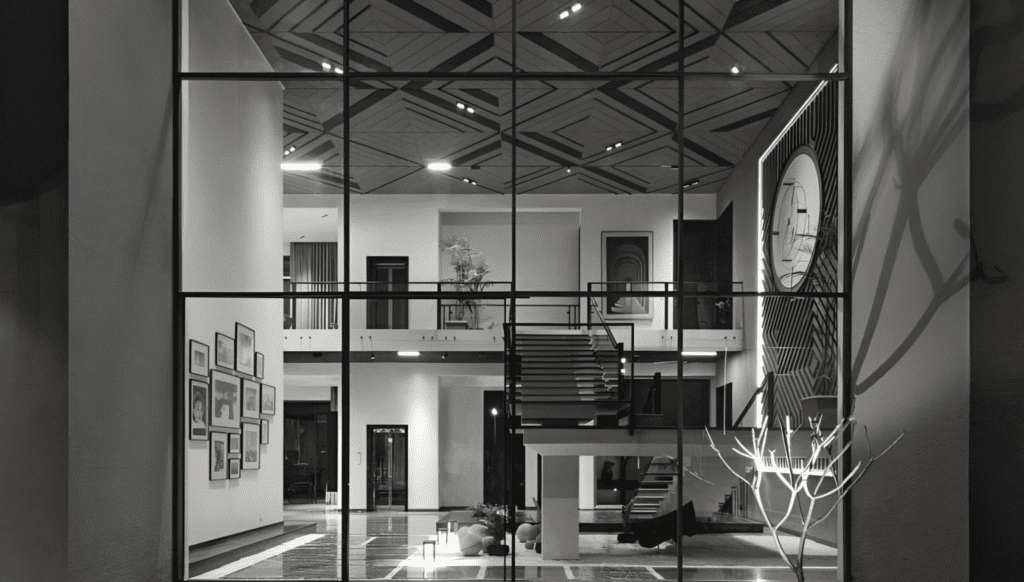
Our EcoSlide® wide-format commercial sliding systems and fixed-lite commercial configurations are available with orientation-specific Low-E glass specifications, thermal break frames rated for Hyderabad’s wind load conditions, and installation teams trained on the perimeter seal methodology that ensures building performance matches specification performance.
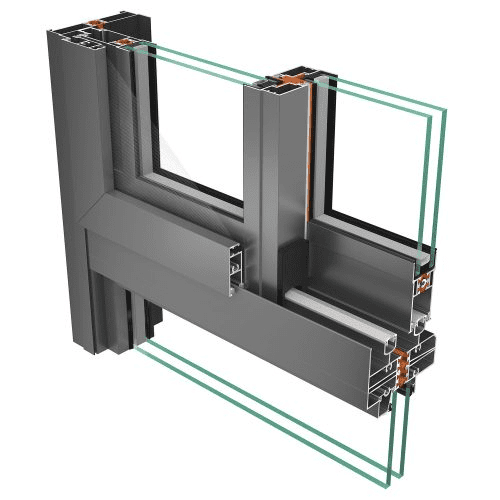
If your Hyderabad commercial building’s windows are more than 10 years old, or if your HVAC bills are climbing without explanation, a thermal performance assessment is the right first step.
The conversation with Thermaline® starts with your building’s actual data — orientation, floor area, existing glazing specification — and ends with a specification and savings projection that is specific to your building, not a generic industry estimate.
Contact Thermaline® for a Hyderabad commercial window assessment today.
FAQs
What benefits do thermal break windows provide in Hyderabad’s commercial buildings?
Replacing standard clear glass aluminium windows with thermally broken aluminium and Low‑E double glazing reduces HVAC load by about 18–25%, depending on building orientation. For a representative IT office, this translates to annual savings of roughly 40,000–50,000 units and a payback period of 5–7 years at current tariffs, with further gains from reduced maintenance and longer equipment life.
Why are windows a bigger problem in Hyderabad than in other metros?
Hyderabad experiences intense direct solar radiation for a prolonged period, especially from February to June, which increases solar heat gain through large glazed facades. High window‑to‑wall ratios in IT parks amplify this effect, causing HVAC consumption to account for 45–55% of total electricity use, higher than typical 35–40% in similar climates.
What should building owners request before specifying window upgrades?
Owners should request orientation-specific glass specifications (SHGC below 0.30 for west and south façades, higher SHGC for north façades with acoustic performance as a driver), the installation perimeter sealing methodology in writing, energy savings modelling tailored to their building, and references from Hyderabad commercial installations to ensure local performance credibility.
How do GRIHA/IGBC certifications relate to window performance in Hyderabad?
Window thermal performance directly influences green building certification scores. Upgrading to thermal break windows can improve GRIHA/IGBC ratings, and certified spaces command a rental premium of about 8–12% over non‑certified spaces, enhancing overall ROI when combined with energy savings.
Why is installation quality critical for thermally broken windows?
The actual performance depends on the installation, particularly the perimeter seal between the frame and wall opening. Poor sealing can negate the thermal gains from better glass and frames, making it essential to evaluate the installation methodology alongside the product specification to realize the expected energy performance.
