


If you’ve been researching windows for a Delhi NCR home and found yourself reading about triple glazing, you’ve likely encountered one of two things: either an enthusiastic endorsement based on European building standards, or a dismissal based on cost. Neither is the right answer for Delhi, because Delhi is not Central Europe — and the performance case for triple glazing is genuinely climate-dependent in ways that require a specific analysis for NCR conditions.
This comparison will give you that analysis. Not a product pitch, and not a blanket recommendation either way — a specific, honest answer to whether the performance premium of triple glazing over double glazing is worth paying for in Delhi NCR’s climate.
The short answer, before the detail: For most Delhi NCR residential applications, well-specified double glazing with a thermal break frame delivers the performance you need. For a specific subset of applications — large north-facing openings, unusually cold exposures at elevated floor levels, or institutional/commercial projects with very high energy performance targets — triple glazing’s additional thermal benefit becomes financially justifiable. The detail below tells you which category your project falls in.
Understanding What You’re Comparing
Double glazing consists of two glass panes separated by a sealed air or gas-filled gap. The gap — typically 12–16mm — limits heat transfer between the panes. The result is a glazing unit with significantly better thermal performance than single glass: a standard air-filled double-glazed unit achieves a centre-glass U-value of approximately 2.8 W/m²K; argon-filled units improve this to approximately 2.6 W/m²K; Low-E coating on double glazing brings the centre-glass U-value down further to 1.1–1.4 W/m²K.
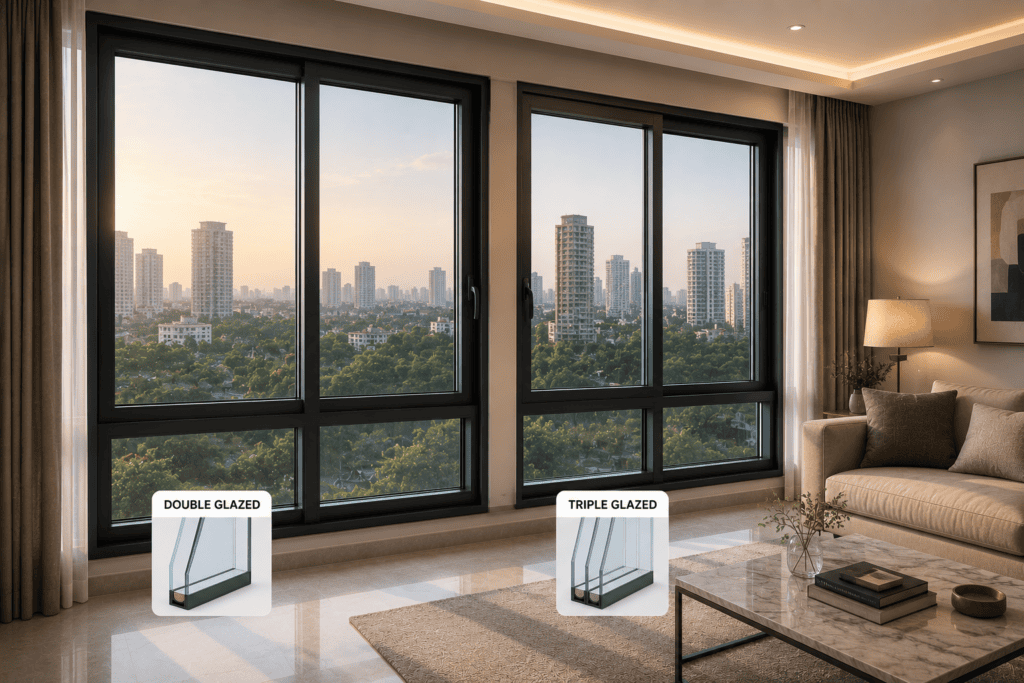
Triple glazing adds a third glass pane, creating two separate gaps. This further reduces heat transfer — a triple-glazed unit with Low-E coating and argon fill typically achieves a centre-glass U-value of 0.5–0.8 W/m²K, roughly half that of the equivalent double-glazed specification.
The performance difference is real. The question for Delhi is whether that difference matters enough, in Delhi’s specific climate, to justify the cost and weight premium.
Why Triple Glazing Was Invented — and Why That Context Matters
Triple glazing was developed for Northern European climates — Scandinavia, Germany, Austria — where building regulations require residential window U-values below 0.9 W/m²K, and where winter temperatures of -15°C to -25°C are common over sustained periods. At these temperatures, even double-glazed windows allow enough heat loss to meaningfully affect annual heating energy consumption, and triple glazing’s additional insulation delivers measurable energy savings that justify the cost premium within a reasonable payback period.
Delhi’s winter conditions are genuinely cold — minimum temperatures drop to 4–6°C regularly, with cold waves bringing readings below zero in surrounding districts. But the sustained severity and duration of Delhi’s cold is significantly less than the Northern European brief that justified triple glazing’s development. Delhi’s winter, from a thermal design standpoint, is a 3-4 month period with moderate cold peaks — not a 6-month period of sustained severe cold.
This matters for the payback calculation. The energy savings from triple vs. double glazing are real, but they are proportional to the severity and duration of the temperature differential driving heat loss. In Delhi’s climate, that differential is lower and the period shorter than the climates where triple glazing was designed to deliver its ROI.
The Delhi NCR Climate Calculation: Does Triple Glazing Pay Back?
For a well-specified double-glazed system (Low-E, argon fill, thermal break frame) vs. an equivalent triple-glazed system in Delhi NCR residential use:
The typical Delhi winter heating season runs approximately 90–100 days (November through mid-February) where heating loads are meaningful. Delhi’s average winter minimum is around 7°C; the average heating degree day count for Delhi is approximately 300–350 HDD per year — compared to 3,000+ HDD for Central European climates where triple glazing’s payback has been documented.
At Delhi’s HDD level, the incremental heating energy saving from triple vs. double glazing (Low-E specification) is in the range of 8–15% of window-related heat loss — which, for a standard 3BHK apartment, translates to a relatively modest absolute saving on annual heating bills. The incremental cost of triple glazing over double glazing is typically 25–40% more per square metre of glass.
The payback period at Delhi’s HDD level and current energy prices is typically 15–25 years — which exceeds the practical window of most residential buyers’ investment horizon and, for many products, approaches the service life of the glazing unit itself.
The honest conclusion: For standard Delhi NCR residential applications — apartments in DLF Gurgaon, premium towers in Noida Expressway, bungalows in Vasant Kunj — properly specified Low-E double glazing in a thermal break frame delivers 90%+ of triple glazing’s winter thermal performance at substantially lower cost. The marginal benefit of the third pane doesn’t justify the premium in this climate.
When Triple Glazing Does Make Sense for Delhi NCR
The calculation shifts for specific applications where the standard residential brief doesn’t apply:
Large north-facing openings in very exposed locations. North-facing glass receives no direct solar radiation in Delhi — there’s no solar heat gain to offset the heat loss, and the glazing is performing as pure insulation. For large north-facing windows in buildings above 20 floors, where the wind-driven temperature differential is higher than at ground level, triple glazing’s additional insulation becomes more valuable.
Government and institutional projects with mandatory energy performance targets. For buildings pursuing GRIHA 5-Star or LEED Platinum certification, or public sector projects mandated to meet ECBC Super-efficient specifications, overall fenestration U-values below 1.0 W/m²K may be required. Triple glazing becomes the specification path to meeting those targets when frame and glass U-values need to achieve this level.
Passive House or near-Passive-House residential projects. A growing but still small segment of Delhi NCR residential construction is pursuing Passive House or equivalent energy performance standards. These projects require extremely low heat losses through every part of the building envelope, and triple glazing is typically necessary to meet the fenestration component of the overall energy balance.
Premium villa projects where acoustic isolation is a priority. Triple glazing — with three panes and two air gaps — provides meaningfully better acoustic performance than double glazing, particularly for lower-frequency traffic and construction noise. For Delhi NCR villa projects on or near arterial roads where acoustic comfort is the primary brief, the triple glazing premium may be justified primarily on acoustic rather than thermal grounds.
What Competitors Don’t Tell You About This Question
ALCOI’s content positions the brand as India’s most technically advanced aluminium window manufacturer, but published guidance on double vs. triple glazing for India’s climate zones doesn’t appear in their accessible content. Buyers are left to apply European recommendations without climate-specific adjustment.
AluPure/Koemmerling (now rebranded as Koemmerling Aluminium Systems in December 2025) brings genuine German engineering knowledge of triple glazing — it is standard in their European product range. However, the India-specific cost-benefit calculation for Delhi’s HDD profile versus European HDD profiles hasn’t been published as guidance for Indian buyers making this decision.
This gap matters. A brand that simply applies European triple glazing recommendations to Indian projects is not giving Delhi buyers an honest answer — it’s applying a specification designed for a different climate problem to one that requires a different solution.
Thermaline®’s recommendation for Delhi NCR: properly specified Low-E double glazing in a thermal break frame is the right specification for the majority of residential and most commercial applications. Where triple glazing becomes relevant — large institutional projects, passive house performance targets, specific acoustic briefs — we specify it and explain the reasons clearly. The recommendation follows the brief, not the product margin.
The Right Specification for Delhi NCR Residential: Summary
For a Delhi NCR 3BHK to 5BHK apartment or premium villa purchase in 2025–26, the specification that delivers optimal performance per rupee spent:
Frame: Thermally broken aluminium (U-value 1.6–2.2 W/m²K). Non-negotiable for Delhi’s winter condensation prevention and summer heat gain management.
Glass — standard residential: Low-E coated double-glazed unit, argon fill, 16mm cavity. Centre-glass U-value approximately 1.1–1.4 W/m²K. SHGC 0.30–0.35 for south and west-facing openings.
Glass — large north-facing or high-floor exposed: Low-E triple-glazed unit where the thermal performance gap with double glazing becomes financially justifiable. This is the minority case in standard Delhi NCR residential specification.
Glass — acoustic priority: Acoustic laminated glass in the double-glazed unit. Addresses the traffic and construction noise profile of Delhi’s arterial roads far more cost-effectively than adding a third pane for acoustic reasons alone.
Thermaline® provides specification guidance for your specific apartment or project brief — by floor level, orientation, budget, and performance target. Speak to our team before finalising your window specification in Delhi NCR.
FAQs
Is triple glazing worth the extra cost for most Delhi NCR homes?
For most Delhi NCR residential applications, well-specified double glazing with a thermal break frame delivers the required performance, and the additional thermal benefits of triple glazing do not justify the higher cost and weight in this climate.
What is the key difference between double glazing and triple glazing?
Double glazing uses two panes with a sealed gap to reduce heat transfer, achieving a centre-glass U-value around 2.8–2.6 W/m²K, while triple glazing adds a third pane with two gaps, typically achieving 0.5–0.8 W/m²K, roughly half the heat transfer of double glazing with low-E and argon.
In which scenarios does triple glazing make sense for Delhi NCR?
Triple glazing can be justified for large north-facing openings in very exposed locations, government or institutional projects with strict energy targets, Passive House level residential projects, or premium villas where acoustic isolation is a priority and the brief justifies the cost.
What is the typical payback period for triple glazing in Delhi’s climate?
The payback period is typically 15–25 years, reflecting Delhi’s milder HDD profile compared with Central Europe, where triple glazing’s ROI is commonly documented; in many residential cases the period exceeds the investment horizon.
What is the recommended specification for most Delhi NCR residential projects?
The right specification for most 3BHK to 5BHK apartments or premium villas is thermally broken aluminium frames with Low-E coated double glazing, argon fill, and a 16 mm cavity, delivering about 1.1–1.4 W/m²K centre-glass U-value; triple glazing is reserved for minority cases with specific justified needs.
