
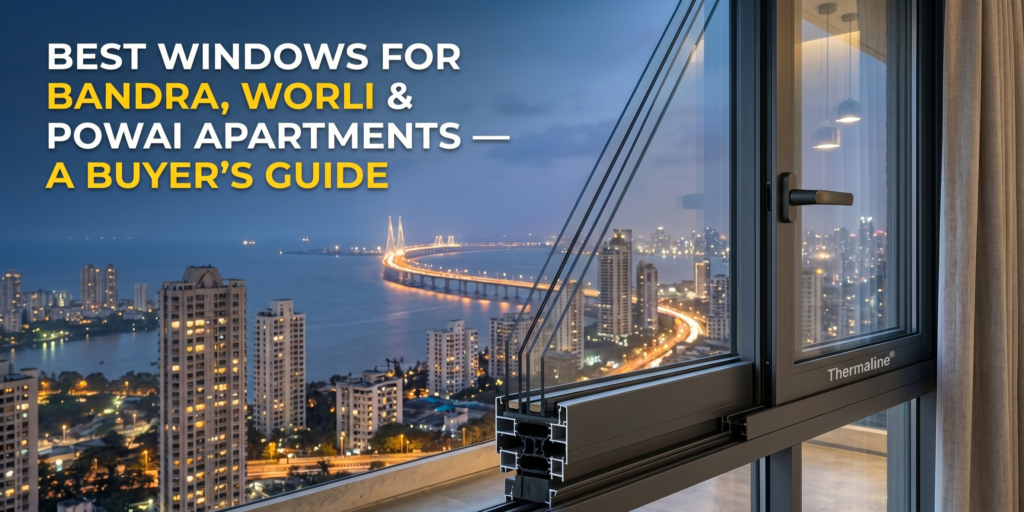
Buying windows for a Mumbai apartment sounds straightforward until you actually start looking. Within a week, most people are drowning in options — aluminium, uPVC, thermal break, double-glazed, tilt-and-turn — with every supplier telling you theirs is the best choice.
Here’s the thing: the right answer genuinely depends on where you live in Mumbai. A flat in Bandra West two streets from the sea has completely different window demands than a 25th-floor tower apartment in Powai overlooking the lake. And Worli, wedged between the Sea Link and a skyline of premium residential towers, has its own specific set of problems.
This guide breaks it down honestly — by neighbourhood, by floor level, and by what actually matters. No brand pressure. Just the right questions to ask before you commit.
First: Why Mumbai Apartments Can’t Use Generic Window Specs
Most window buying guides online are written for temperate climates — the UK, Europe, or the American Midwest — where the core concern is winter heat retention. Mumbai’s reality is different in almost every way.
You’re dealing with sustained tropical heat for 8+ months, a monsoon that drives rain horizontally at high floors, salt-laden coastal air across a large part of the city, noise from one of Asia’s most densely trafficked urban environments, and increasingly — a need for energy efficiency as electricity tariffs climb and ACs run longer than ever.
No single window product is the answer for all of these at once. The right combination depends on your specific building, floor, and neighbourhood. Here’s how to think about each.
Bandra West & Bandra East: Two Very Different Asks
Bandra is deceptive. It feels like one neighbourhood, but a flat in Bandra West on Turner Road — 400 metres from the sea — needs to be specified almost like a coastal property. A flat in Bandra East near the BKC flyover needs to prioritise noise insulation and air quality, not salt-air resistance.
Bandra West (sea-adjacent streets: Carter Road, Bandstand, Pali Hill, Waroda Road)
The dominant problem here is salt-air corrosion combined with monsoon wind load. Windows on the west and south-facing sides of buildings in this zone take direct sea breeze year-round. Standard powder-coated aluminium frames — which is what most builders spec by default — begin pitting and the hardware starts seizing within 3–5 years.
What actually works: thermally broken aluminium windows with super durable powder coating or anodised coating (not standard polyester powder coat), stainless steel hardware, and multi-point compression seals. The thermal break frame also helps significantly with AC efficiency in west-facing rooms that receive brutal afternoon sun.
Bandra East (BKC-adjacent, Kurla border zones)
Noise and dust are the headline concerns. Traffic from the Western Express Highway, construction activity from ongoing infrastructure projects, and the general urban intensity of this corridor make acoustic performance the priority.
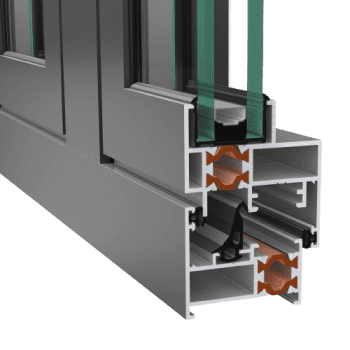
What actually works: thermal break aluminium windows with double glazing — two glass panes with a sealed air gap between them. The gap is what does the acoustic work. Pair this with proper wall-frame sealing (ask your installer about this specifically — it’s where most acoustic performance is lost in budget installations).
Worli: The High-Rise Problem
Worli has become one of Mumbai’s most premium residential corridors — towers like Three Sixty West, Avighna Park, and Piramal Aranya have reset expectations for what a Mumbai apartment looks and feels like. At that level, the windows are doing serious work.
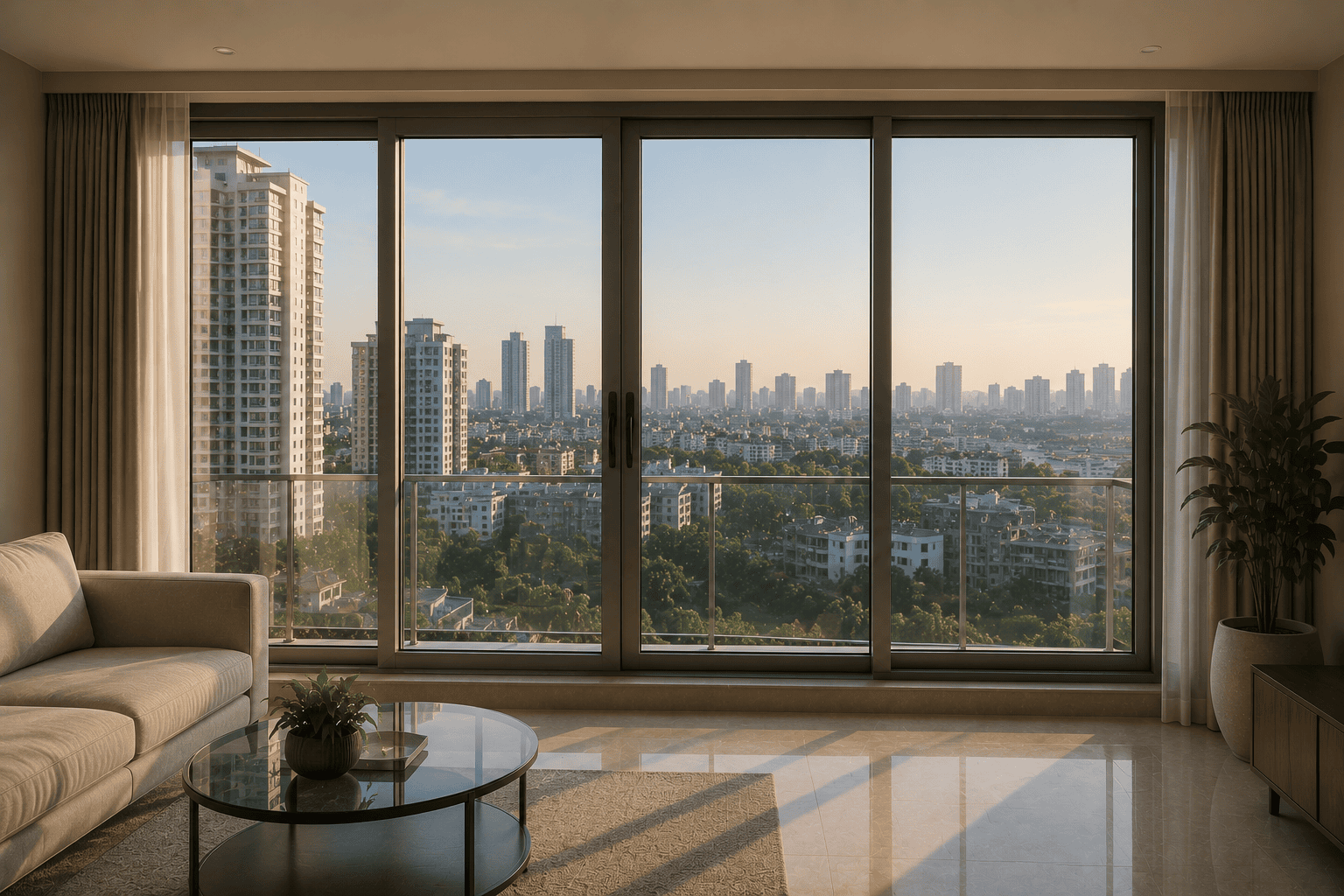
The specific Worli challenge: many of these towers sit directly on or near the Worli Sea Face. That means salt air on the exterior, significant wind load at high floors (the 30th floor of a Worli tower experiences very different wind pressure than the 8th), and often large-format window openings — minimal frames, floor-to-ceiling glass, wide sliders — that look spectacular but require precise engineering to perform properly.
For Worli apartments — particularly sea-facing units above the 15th floor — the specification needs to cover:
- Wind load rating: Ask specifically what wind speed the frame is tested and rated for. At 30+ floors on the Worli Sea Face, standard residential-grade windows are undersized for the actual wind loads they’ll experience.
- Frame depth and rigidity: Large openings (2.5m+ wide sliders) need deeper, stiffer profiles to avoid flex and the water infiltration that follows.
- Glass specification: For the thermal performance Worli’s west-facing units need, Low-E double glazing is not optional — it’s the difference between an AC that cycles normally and one that runs continuously against the solar heat gain through floor-to-ceiling glass.
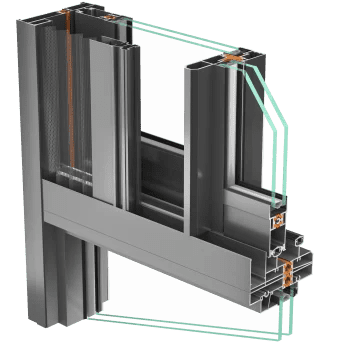
Thermaline®’s EcoSlide® system was specifically engineered for this category of demand — wide-format, high-floor, coastal-exposed installations where both aesthetics and performance are non-negotiable.
Powai: The Overlooked Problem Is Noise, Not the Sea
Powai apartments feel sheltered — it’s inland, there’s the lake, it’s green. But if you’ve lived there, you know the real issues: the Jogeshwari-Vikhroli Link Road traffic, the Andheri-Ghatkopar flyover corridor, and the near-constant construction of new towers that has defined Powai for the past decade.
Salt air is not the concern here. Noise and thermal comfort are.
The JVLR corridor apartments, and those on the main Hiranandani roads facing Galleria and the central zone, deal with noise levels that many residents significantly underestimate when buying. Working from home has made this viscerally apparent to people who previously commuted and didn’t experience the daytime noise profile of their flat.
What works in Powai: thermally broken aluminium windows with double or even acoustic laminated glass (a glass type with a sound-dampening interlayer). The thermal break frame handles the AC efficiency issue — Powai gets hot, and eastern-facing units bake in the morning sun — while the glazing spec handles noise.
Also specific to Powai: many buildings here are 10–20 years old and were originally fitted with basic aluminium windows or even sliding aluminium with single glass. If you’re in a resale flat, there’s a reasonable chance your windows are end-of-life on acoustic and thermal performance. This is worth getting assessed before monsoon — water infiltration through aged window seals in older Powai buildings is a more common problem than people report.
The Buyer’s Checklist: What to Ask Before You Buy
Wherever you are in Mumbai, these four questions will separate the right supplier from a generic one:
1. Is the frame coating appropriate for my distance from the sea? Within 1 km of the coast: PVDF or anodised coating minimum. Inland (Powai, Andheri East, BKC): standard powder coat is acceptable.
2. What is the glass specification, and does it match my actual problem? Noise problem → acoustic laminated glass or double-glazed unit with gas fill. Heat problem → Low-E coated double glazing. Both → specify both in the glass unit.
3. What is the hardware material? For coastal zones: stainless steel only. For inland zones: quality aluminium alloy hardware is acceptable; avoid cheap zinc die-cast fittings.
4. Who does the installation, and what does the wall-frame seal look like? A ₹1,00,000 window set installed with a poor perimeter seal will underperform a ₹60,000 set installed correctly. Ask to see or specify the sealing system, not just the window profile.
Why Thermaline® for Mumbai Apartments
Thermaline® has been engineering thermally broken aluminium windows for Indian conditions for over 20 years. Unlike brands that import European systems and apply them unchanged to Indian buildings, Thermaline® understands what Mumbai’s coastal exposure, monsoon season, and high-rise wind loads actually demand.
Our EcoSlide® and EcoCasement® systems are available in specifications tailored for coastal marine environments (Bandra West, Worli Sea Face), high-noise urban corridors (Bandra East, Powai JVLR), and premium large-format installations (Worli tower floors). We don’t recommend the same product to every customer — because the right answer genuinely varies by where you are.
Get a consultation specific to your apartment — building, floor, orientation, and neighbourhood — before you decide. That conversation is free. Replacing the wrong windows twice is not.
