


How Pune’s Premium Housing Boom Is Driving Demand for European Window Systems
Something has changed in Pune’s premium residential market over the past three years, and it’s showing up in a very specific conversation between architects, developers, and homebuyers.
Five years ago, a buyer purchasing a ₹3 crore apartment in Baner or a villa in Koregaon Park would ask about the kitchen brand, the flooring material, and maybe the bathroom fittings. Windows were an afterthought — something the developer chose, installed, and moved on from. Today, that same buyer is asking: “Are these European window systems? What’s the U-value? Do they have a thermal break?”
This is not a niche conversation happening in a handful of luxury projects. It is a market-wide shift in what Pune’s premium buyers understand, expect, and are willing to pay for. And it is driving a genuine transformation in how developers, architects, and window suppliers are approaching fenestration specification in the city’s upper residential segment.
Understanding why this shift is happening — and what “European window systems” actually means in the Indian context — is the starting point for any Pune buyer or developer making a serious specification decision.
What Is Driving the Shift in Pune Specifically?
Pune’s premium residential boom has a distinctive profile compared to Mumbai or Delhi’s luxury markets. The buyer base is predominantly from the IT and manufacturing sectors — engineers, product managers, senior executives who have spent time working with European and American companies, often with exposure to how buildings in those climates perform. They understand insulation, U-values, and the concept of the building envelope in a way that previous generations of Indian homebuyers typically did not.
When this buyer returns from a work stint in Germany, the Netherlands, or the UK and buys a premium home in Baner or Wakad, they bring reference points with them. The windows in a Munich apartment building seal completely, don’t sweat in winter, stay cool to the touch in summer, and operate with a precision that standard Indian builder-grade aluminium windows don’t approach. They know what good windows feel like — and they know when what they’re being offered doesn’t meet that standard.
This informed buyer base is the engine of the demand shift. Developers in Pune’s ₹2–8 crore segment have noticed. Projects in Aundh, Koregaon Park, Kalyani Nagar, and the Baner-Pashan corridor are increasingly featuring thermally broken aluminium window systems as a specification highlight — not as an upgrade option but as the project standard.
Architects are the second driver. Pune’s design community — particularly the studios handling premium residential and hospitality projects — has moved decisively toward European-influenced fenestration specifications. The aesthetic language of minimal frames, large glass areas, and clean aluminium sightlines that defines European residential architecture has become the visual vocabulary of Pune’s premium housing. The technical specification has followed the aesthetic.
What “European Window Systems” Actually Means — and What It Doesn’t
Here is where the conversation in Pune’s market needs a dose of honesty, because “European window system” has become something of a marketing phrase that can obscure more than it reveals.
Genuinely European-origin window systems — profiles extruded in Germany, Austria, or Italy and imported to India — exist in the Indian market. They carry real engineering pedigree. They are also priced at a level that many Indian projects cannot absorb, and they are designed for a climate that is meaningfully different from India’s. A German window system designed to retain interior heat through a Central European winter is not automatically optimised for Pune’s summer solar gain or monsoon sealing requirements.
The more important question for a Pune buyer or developer is not whether the window is manufactured in Europe, but whether it is engineered to European performance standards — and critically, whether those standards have been adapted for Indian climate conditions.
The performance markers that actually define a European-standard window system are:
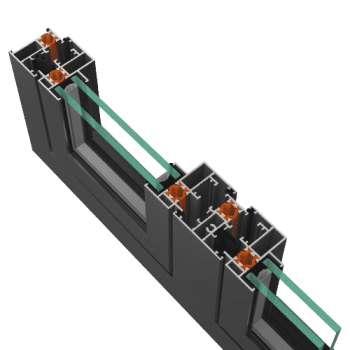
Thermal break construction. A reinforced polyamide strip separating the inner and outer frame sections — the engineering that prevents the frame from conducting heat or cold between outside and inside. This is the defining feature of European residential window systems and the characteristic most Indian builder-grade windows lack.
U-value below 1.5 W/m²K for the glazing unit. European building regulations in most countries require residential window U-values below this threshold. In India’s GRIHA and IGBC rating systems, this is increasingly the benchmark for high-performance buildings. The U-value measures how much heat passes through the glass and frame — lower is better.
Multi-chamber profile design. European window profiles — whether aluminium, uPVC, or timber — use multi-chamber cross sections that trap air, add structural rigidity, and improve both thermal and acoustic performance. Single-chamber Indian builder-grade profiles are structurally and thermally inferior.
Precision hardware with multi-point locking. European windows close against a full-perimeter gasket with hardware that applies even compression around the entire frame. The operating precision — the feel of opening and closing — is a direct result of hardware quality and profile manufacturing tolerances.
Double or triple glazing with gas fill. Argon-filled double-glazed units are the European standard for residential windows. Low-E coated glass is specified for solar control. These are the glass specifications that deliver the thermal and acoustic performance European windows are known for.
The India-Specific Adaptation Question
This is the point that differentiates a genuine high-performance window from a European-looking one: does the system address Indian climate conditions specifically?
A thermally broken profile designed for European winters needs to be evaluated for Indian summer performance. In Pune — where the priority in summer is preventing solar heat from entering, not retaining interior warmth — the glass specification matters as much as the frame. A European system with clear double glazing and no solar control coating will allow significant heat gain through large west-facing windows in a Koregaon Park apartment. The frame is performing correctly; the glass specification is not meeting the Indian brief.
Similarly, a system designed for Europe’s relatively gentle precipitation needs to be evaluated for monsoon sealing performance. Pune’s hill zones and elevated properties experience monsoon conditions that European windows are not tested for. The seal quality and drainage engineering need to be verified against Indian monsoon standards, not just European rain exposure ratings.
This is where Thermaline® sits in Pune’s market — and why the distinction matters.
Thermaline®: European Engineering, Indian Climate
Thermaline® has spent over 20 years doing the work that the European-origin-versus-India-adapted question demands. Our thermally broken aluminium window systems — Ecocascade®, EcoSlide®, and ClearView® — are engineered with the profile geometry, hardware quality, and glass specification standards that define European residential fenestration. The thermal break construction, multi-chamber profiles, multi-point locking, and precision manufacturing tolerances are not approximations of European standards. They are the same standards, applied in systems built for India.
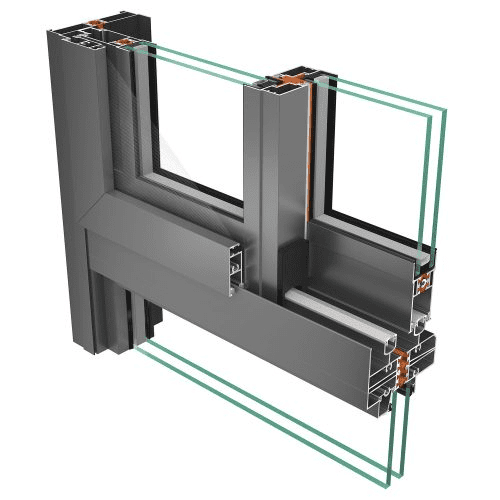
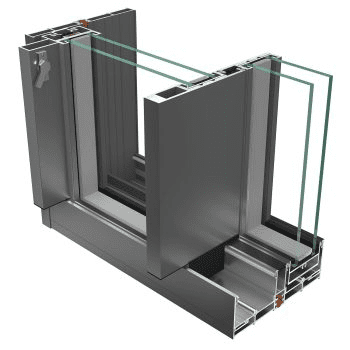
The India-specific adaptation is where our 20-year local engineering history shows:
Solar control glass specification. Thermaline® specifies Low-E coated glass for west and south-facing applications in Pune — reducing solar heat gain by 55–60% compared to standard clear double glazing. This is a Pune-specific decision, not a European default.
Monsoon sealing engineering. Our perimeter sealing systems are specified and tested for the wind-driven rain conditions of Pune’s monsoon — including the elevated exposure conditions of Baner Hills, Lavale, and the hill-zone properties where European system defaults would underperform.
Thermal performance calibrated for Indian summers. European windows optimise for winter heat retention. Our systems optimise for both — summer heat rejection and winter insulation — because Indian climates demand both, often in the same building and sometimes in the same room.
What Pune’s Premium Buyers Should Actually Ask For
If you are buying a premium property in Pune — or specifying windows for a premium project — the conversation should move from brand names and countries of origin to performance specifications:
Ask for the frame U-value and glass U-value separately. A thermally broken frame with standard single glass is not a high-performance window. You need both numbers.
Ask for the SHGC of the glass unit, by facade orientation. West-facing windows in Pune need SHGC below 0.35. North-facing windows can be specified higher for daylight. If your supplier cannot give you this number, they are not specifying for Pune’s climate.
Ask for the wind load rating. Particularly relevant for hill locations and any property above the 10th floor. The rating should match your building’s actual exposure.
Ask whether the system has been tested for Indian monsoon conditions. Not just rain penetration in standard tests, but horizontal wind-driven rain at the water ingress levels relevant to Pune’s monsoon.
Ask who is doing the installation and what the perimeter seal specification is. The frame and glass deliver their performance only when installed correctly. The wall-frame joint is where most specification failures occur in practice.
Pune’s premium buyers are sophisticated enough to ask these questions in 2025. The market has moved past accepting builder defaults at a price point where windows should be a deliberate, informed decision.
Thermaline® is ready for that conversation. Speak to our Pune team — and get a specification built for where you actually live, not where the window was designed.
