
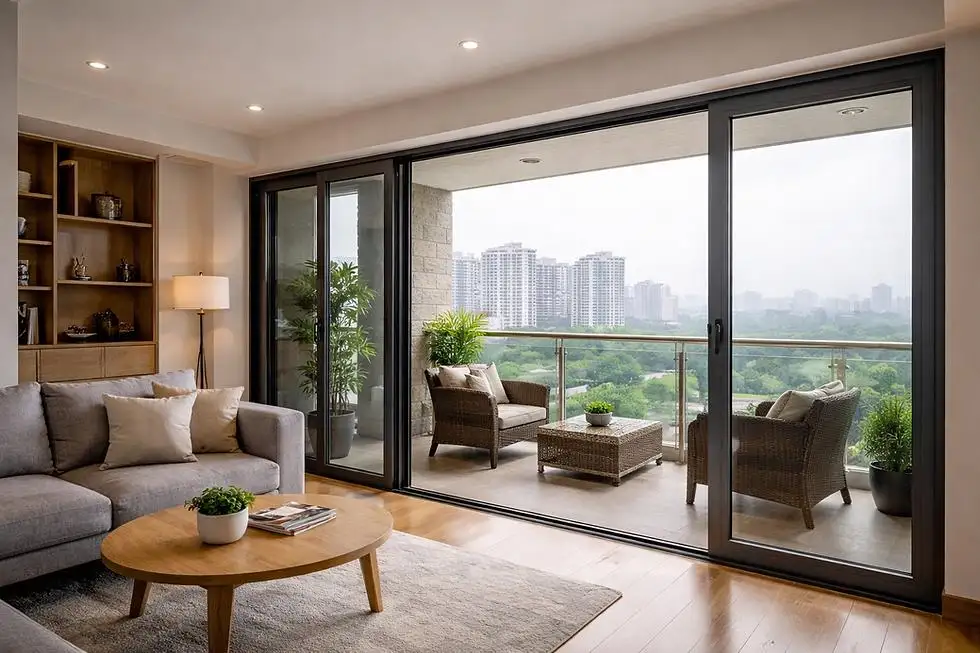
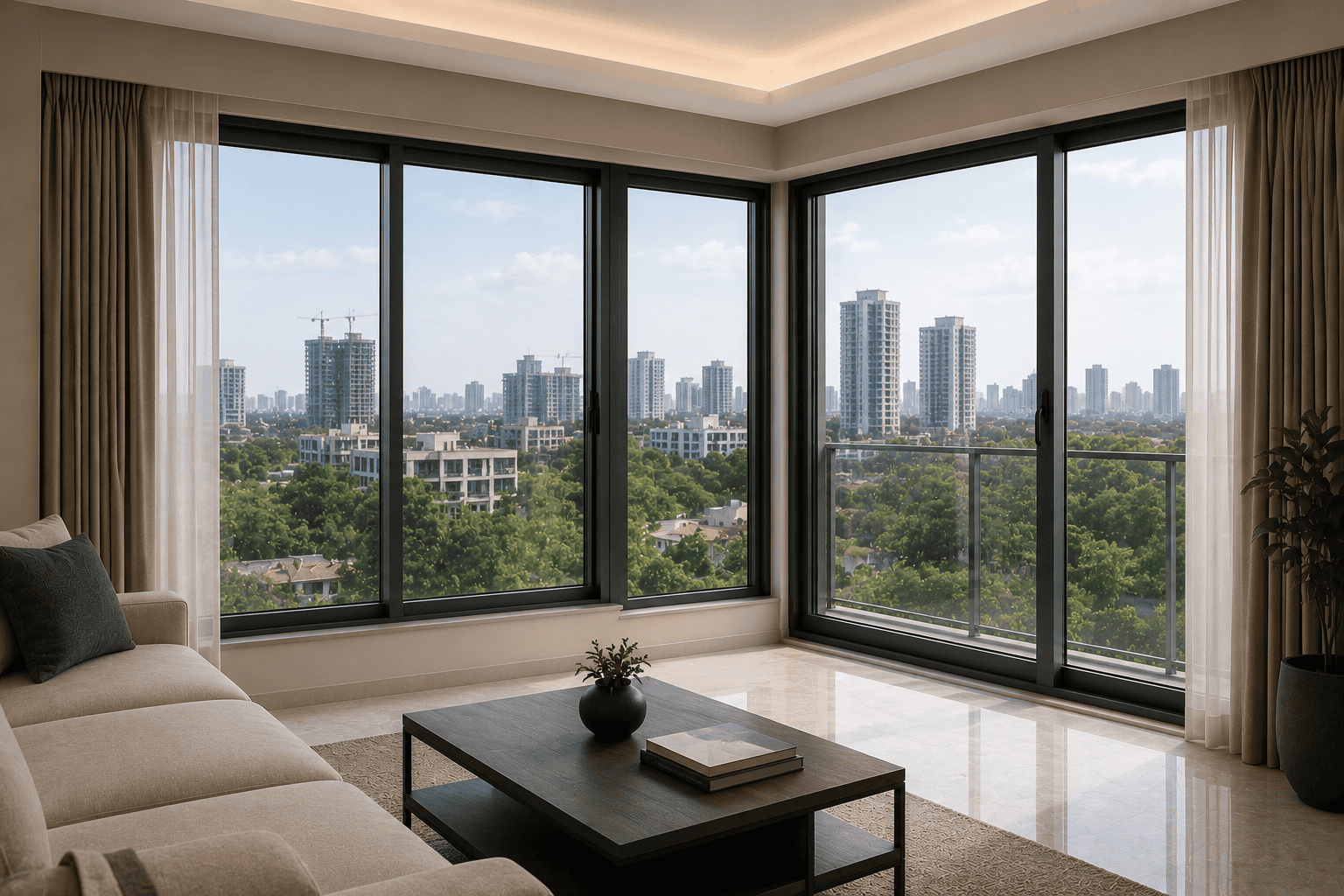
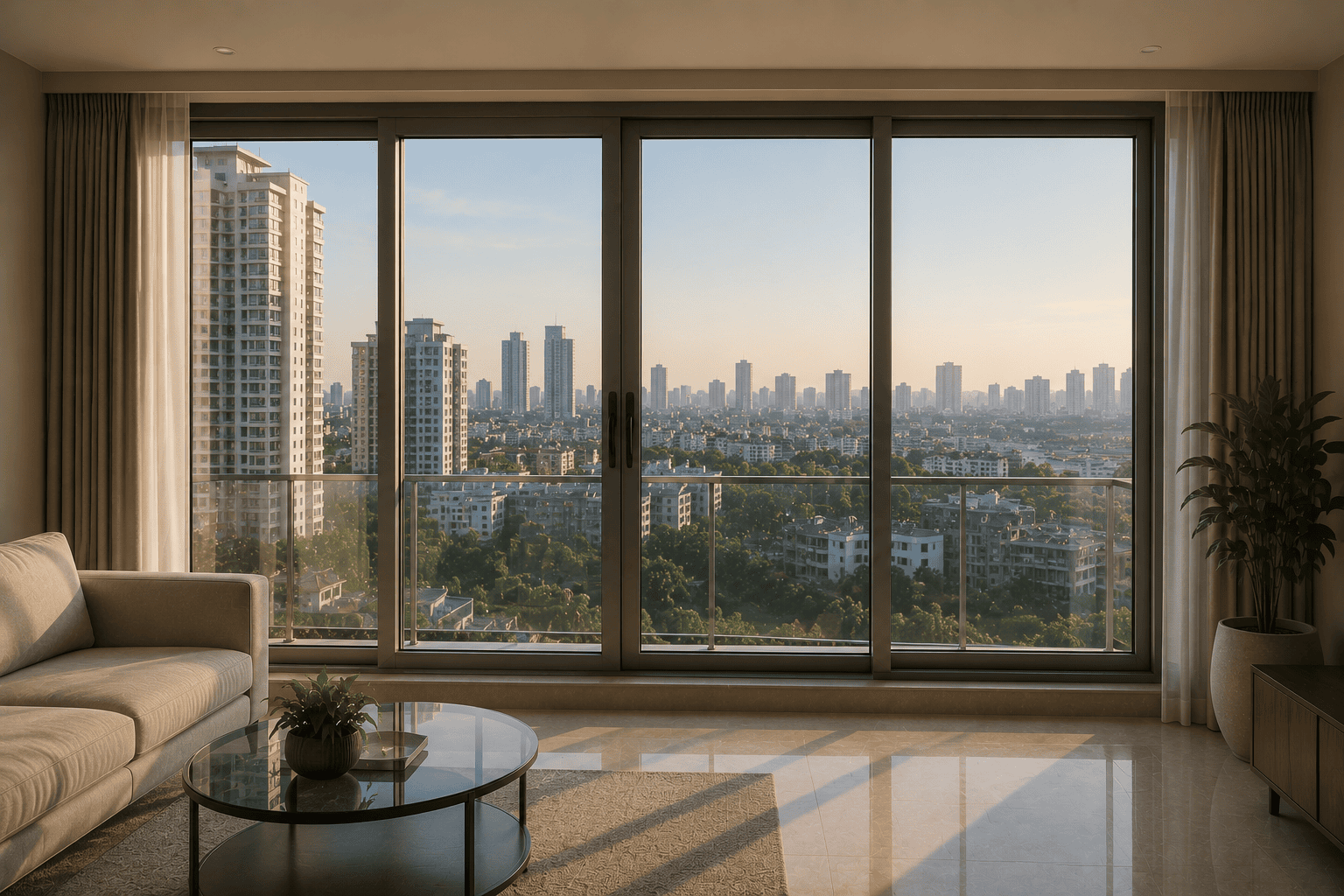
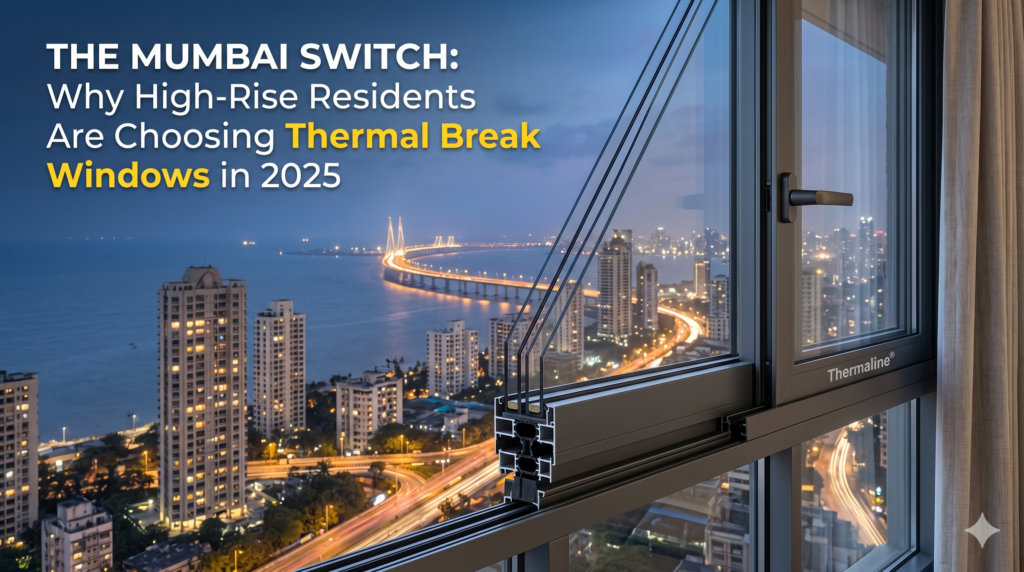
If you live on the 18th floor of a tower in Worli, Powai, or Bandra, you already know the drill. The AC runs almost non-stop from March to October. The noise from the Western Express Highway or the Bandra-Worli Sea Link filters in even when the windows are shut. And during the monsoon, that fine spray finds its way through gaps you never even noticed before.
For years, standard aluminium windows were the default in Mumbai’s high-rises — builders used them because they were cheap, fast to install, and “good enough.” But in 2025, something is changing. More and more Mumbai residents — particularly those in premium towers and mid-range redevelopment projects — are specifically asking for thermal break windows. And once you understand why, the shift makes complete sense.
What Exactly Is a Thermal Break Window?
Before we get to the Mumbai specifics, let’s clear something up — because this term gets thrown around a lot, and there’s genuine confusion about what it actually means.
A standard aluminium window frame is one continuous piece of metal running from the outside of your wall to the inside. Aluminium is a metal, and metals are excellent conductors of heat. So on a scorching Mumbai afternoon, when the outside temperature hits 38°C, that heat literally travels through the frame and enters your room — even if the glass is fine.
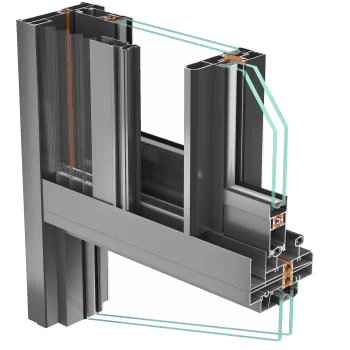
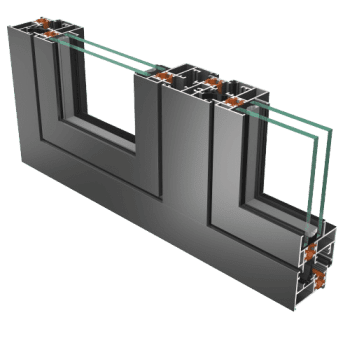
A thermally broken aluminium window solves this with a deceptively simple idea. The frame is split into two separate pieces — one exterior, one interior — and they’re joined by a reinforced polyamide strip (a high-strength, non-conductive plastic). This strip “breaks” the thermal pathway. Heat from outside cannot travel through the frame to the inside.
The result: your AC keeps the room cool more efficiently, your electricity bill drops, and your walls don’t sweat condensation during the monsoon. Thermaline® has been engineering this technology in India for over 20 years — long before most other brands even entered this space.
The Mumbai Problem Is Different From the Rest of India
Here’s what most generic window guides miss: Mumbai’s climate challenges are uniquely layered, and they demand a window solution that handles more than just heat.
The Heat-Humidity Combination
Delhi gets hotter in summer, but it’s a dry heat. Mumbai’s problem is sustained heat combined with extreme humidity — often 80–90% from June through September. This humidity means condensation forms on cold surfaces, including window frames. Standard aluminium frames sweat, and over time, that moisture damages the wall finish around the frame and creates mould spots. Thermal break frames eliminate the cold inner surface that causes condensation in the first place.
The Monsoon Seal Problem
High-rise buildings in Mumbai face punishing monsoon conditions. At the 15th floor and above, wind-driven rain doesn’t just fall — it travels horizontally at serious speed. Poor window sealing at these heights means water ingress, stained ceilings, and damaged interiors. Thermally broken window systems from Thermaline® are engineered with multi-chamber profiles and compression seals that maintain integrity even under high wind loads — exactly what Mumbai’s upper floors need.
The Noise Reality for High-Rise Residents
Mumbai is one of the loudest cities in Asia. Construction, traffic, aircraft paths, and the general chaos of the city don’t respect your floor level. In fact, without proper sound attenuation, higher floors can be louder because sound travels upward and there are no buffer buildings in the way.
Thermal break windows, when paired with double glazing (two glass panes with a gap between them), significantly dampen external noise. The combination of the insulated frame and the air gap in the glass creates a barrier that standard single-frame, single-pane windows simply cannot match. Residents in towers along the Western and Eastern Express Highways report a noticeable difference — the kind that makes work-from-home actually workable and sleep genuinely restful.
The AC Bill Argument: It Adds Up Fast
Let’s get practical about money, because this is where the conversation really lands for most Mumbai residents.
The average 2BHK in a Mumbai high-rise runs 2–3 split ACs for 8–10 months of the year. Standard aluminium windows — especially older installations — allow significant heat gain through the frame and any gaps in the seal. Your AC is essentially fighting the building itself.
Thermaline®’s thermally broken window systems have been shown to reduce heat transfer by over 35% compared to standard aluminium. In real terms, that means your AC reaches the set temperature faster, cycles off sooner, and runs less. Over a year, that compounds into meaningful savings on your electricity bill — and given how Mumbai’s power tariffs keep climbing, that saving only grows with time.
For a premium 3BHK flat where the family is running ACs through most of the day, the efficiency gain from thermal break windows can realistically offset a significant portion of the window investment over 5–7 years. And unlike other upgrades, windows don’t need replacing or servicing the way appliances do.
Why 2025 Is the Year Mumbai Is Paying Attention
A few things have converged to make 2025 a turning point:
Rising temperatures are no longer a future concern. Mumbai’s summer 2024 was the hottest recorded in decades. Residents who previously managed with ceiling fans and minimal AC are now running air conditioning for months they didn’t before. Window efficiency has moved from a “nice to have” to a direct cost line.
Green building awareness has hit the mainstream. GRIHA and IGBC green building certifications are no longer just for commercial towers — premium residential developers in Thane, Navi Mumbai, Bandra East, and Andheri are now building to these standards, and thermal break windows are a core component. Buyers are asking for these certifications, and developers are responding.
Redevelopment projects are creating a window of opportunity. Mumbai’s ongoing SRA and cluster redevelopment boom means that thousands of families are moving into new homes and making window decisions for the first time in decades. It’s a natural moment to upgrade — and many are choosing to do it right.
What to Look for When Choosing Thermal Break Windows in Mumbai
Not all thermal break windows are created equal. Here’s what actually matters when you’re comparing options:
Polyamide strip width. A wider polyamide strip means better thermal insulation. Look for systems that use reinforced glass-fibre polyamide, not cheaper alternatives.
Profile chamber design. Multi-chamber profiles trap air and add to both thermal and acoustic performance. Single-chamber profiles are a compromise.
Glass specification. The frame matters, but so does the glass. Double glazing with a Low-E (low emissivity) coating dramatically improves solar heat rejection — critical in Mumbai’s intense sun. Ask for the U-value and Solar Heat Gain Coefficient (SHGC) of the glass unit being offered.
Monsoon sealing and hardware quality. For Mumbai specifically, ask about the sealing system and the corrosion resistance of the hardware. Sea-facing and waterfront properties need hardware that can handle salt-laden air.
After-sales service. Windows in a Mumbai high-rise are not a DIY job to fix. Choose a brand with a service presence in the city.
Thermaline® has spent 20+ years engineering specifically for Indian conditions — including the unique demands of Mumbai’s climate, from the coast to the high-rises of the eastern suburbs. Our EcoSlide® and EcoCasement® systems are built to handle exactly these demands.
The Bottom Line for Mumbai High-Rise Residents
The decision to switch to thermal break windows isn’t just about following a trend. It’s a practical response to real, measurable problems — rising electricity bills, monsoon water ingress, noise pollution, and long-term comfort in a city that is only getting hotter and busier.
If you’re renovating, redeveloping, or simply replacing aging windows, 2025 is the year to do it right. The technology is proven, the Indian-specific engineering exists, and the cost of doing it wrong — in energy bills and discomfort — has never been higher.
Ready to see what thermal break windows can do for your Mumbai home? Get in touch with the Thermaline® team for a consultation and a no-obligation project assessment.
