
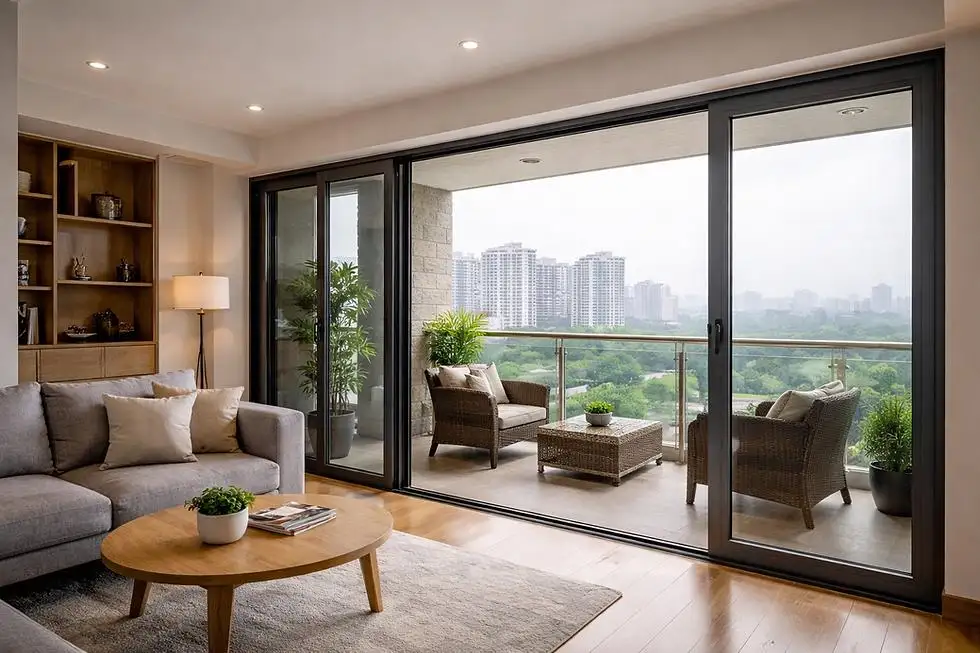
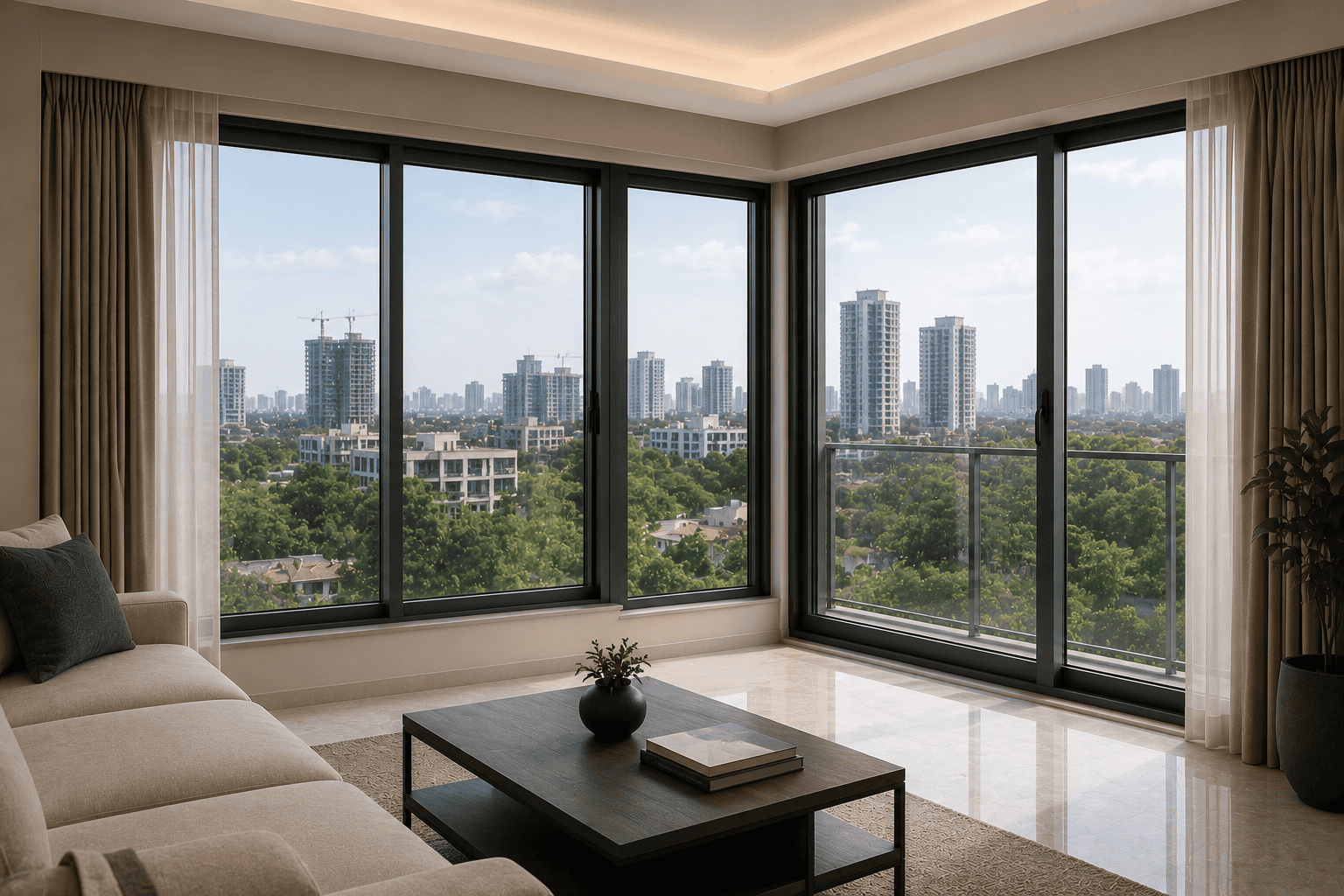
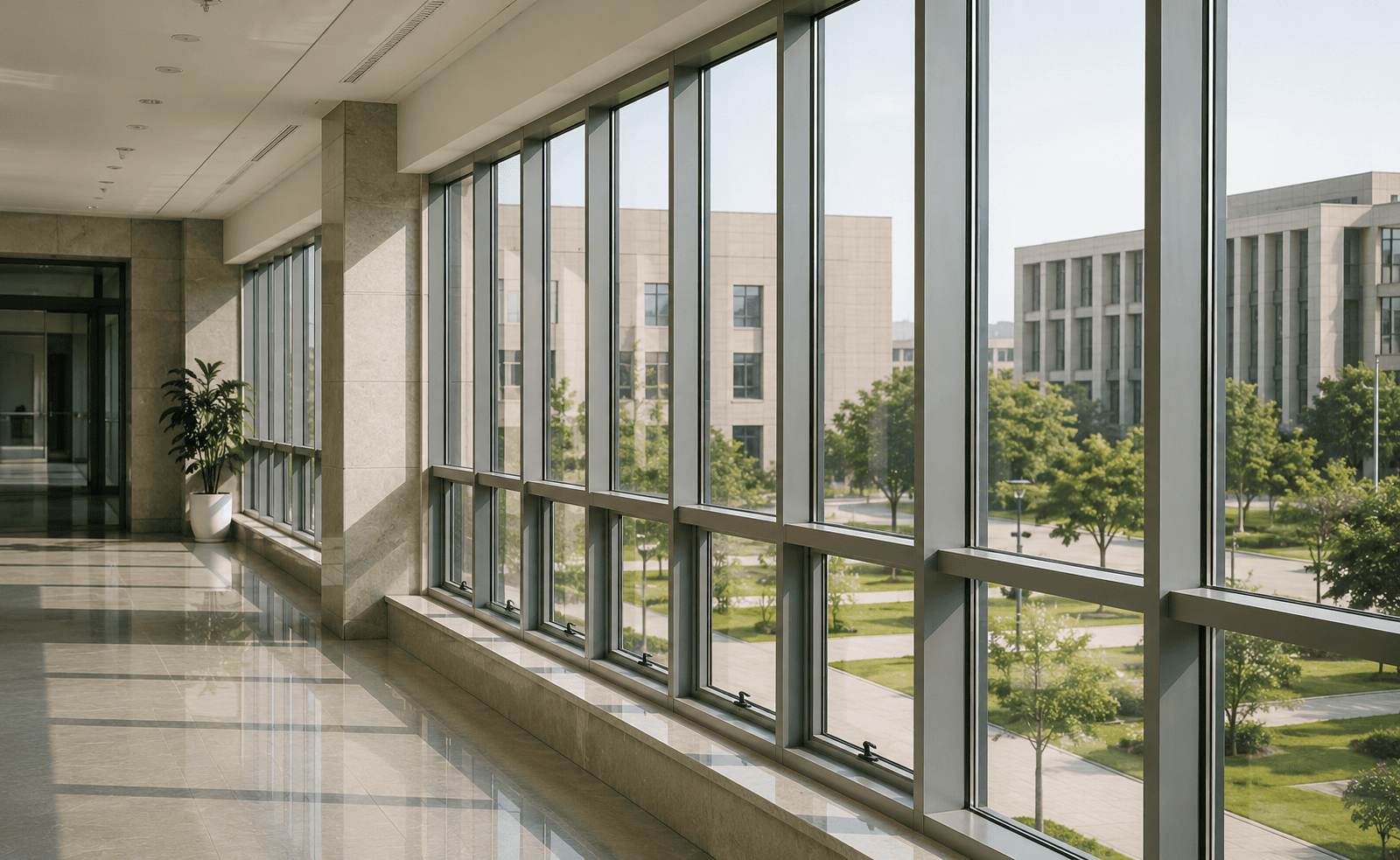
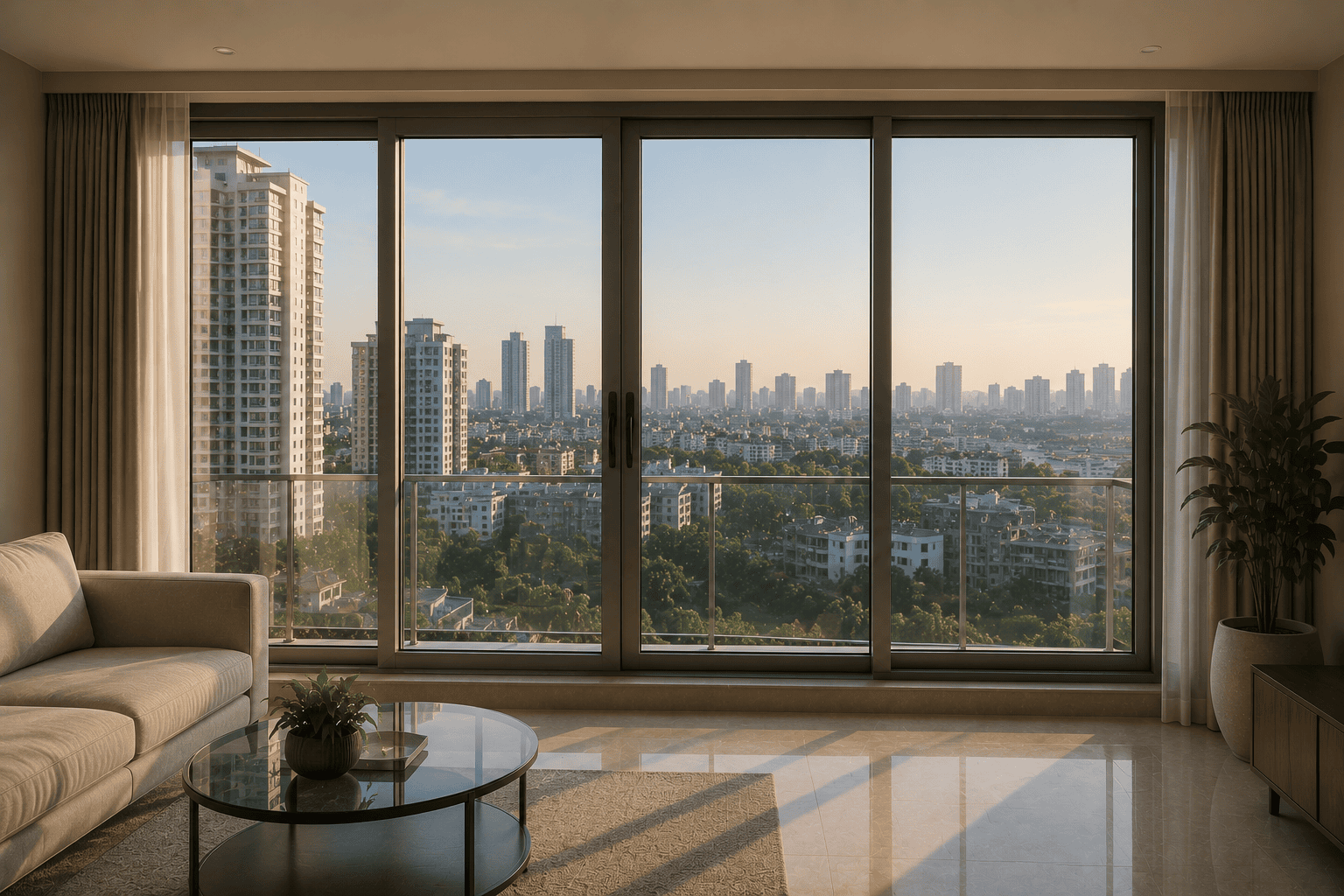
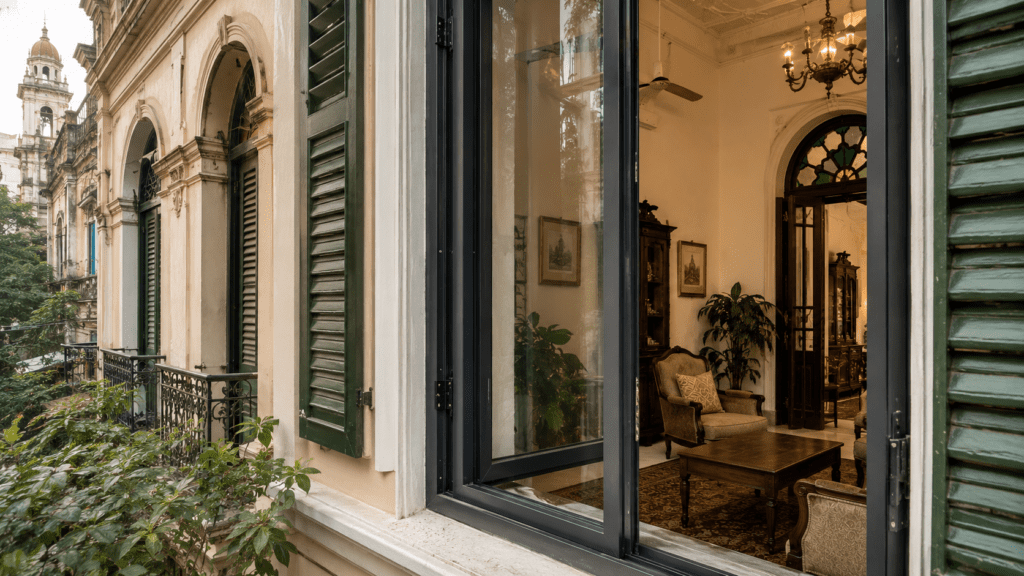
Kolkata’s residential architecture is unlike anything else in India. The city preserves — sometimes defiantly — an urban character that other metros have quietly demolished: the high-ceilinged rooms of South Kolkata bungalows, the verandahed first floors of Ballygunge, the Indo-Saracenic detailing of old Alipore mansions, the timber-framed windows of early 20th-century Bhowanipore and Kalighat homes. These buildings carry a specific weight of history that makes them genuinely irreplaceable.
And that creates a problem that most window suppliers in Kolkata are not equipped to solve. Because in almost every case, the original timber or cast-iron framed windows in these properties are failing. They warp. They leak during the monsoon with an intensity that can feel like the building itself is weeping. They don’t seal against Kolkata’s pre-monsoon humidity — that dense, pressing heat that arrives before the first rains and makes every room feel like it’s holding its breath. They’ve done their job for 50, 70, sometimes 100 years, and they’re done.
The question facing every Kolkata heritage homeowner at this point is not whether to replace them. It’s how to do it without destroying the thing that makes the home worth preserving.
Why This Specific Problem Is Harder Than It Looks
Standard window replacement is a straightforward transaction almost everywhere else in India. The developer-standard is clear aluminium sliding windows in white or silver, and the brief is essentially “same as everyone else’s.”
In a Kolkata heritage home, the brief is the opposite. The proportions of the window openings are often specific and unusual — tall, narrow casements in Victorian-influenced rooms; wide arched openings in Edwardian bungalows; small, deep-set windows in older North Kolkata merchant houses. The visual language is emphatically not the same as a Rajarhat apartment tower.
The failure mode of getting this wrong is visible and permanent. Replace a tall Victorian casement with a standard modern sliding aluminium unit and the room loses something that took a century to accumulate. The proportions are wrong. The shadow lines are wrong. The relationship between the window and the wall is wrong. And unlike a kitchen renovation, it cannot be quietly redone.
This is why the choice of window system matters so much in Kolkata’s heritage residential context — and why the conversation needs to start with the window’s visual geometry before it reaches performance specifications.
What Thermal Break Casement Windows Offer Heritage Kolkata Homes
The thermally broken casement window — specifically, a well-engineered casement system with slim aluminium profiles and configurable dimensions — is the closest modern replacement for the character of Kolkata’s original timber casements without the maintenance liabilities that make timber windows unsustainable in this climate.
Here is why this matters architecturally:
A casement window swings on hinges and closes against a perimeter frame stop — the same basic geometry as the timber casements in Kolkata’s older homes. A sliding window moves along a track and sits in a horizontal plane — a fundamentally different visual and architectural language that reads as modern and transactional, not appropriate for a building with historical pedigree.
Thermaline®’s EcoCasement® system offers:
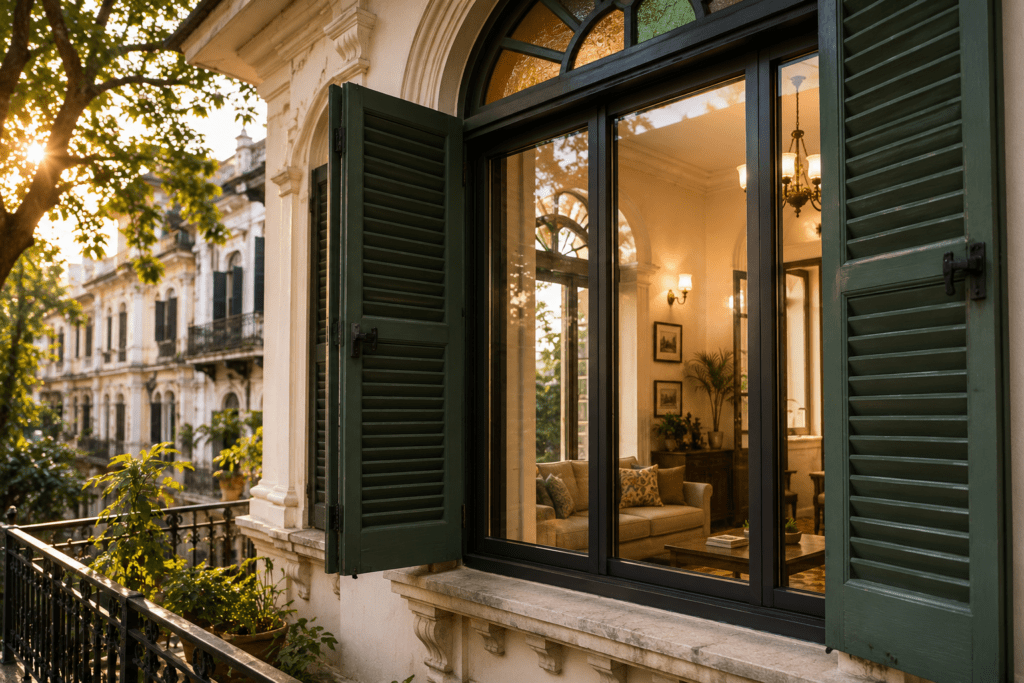
Slim sightlines that respect heritage proportions. The visible aluminium frame in a properly designed thermally broken casement can be reduced to 50–60mm — narrow enough to read as a window in a wall rather than an aluminium assembly filling a gap. In a room with 14-foot ceilings and tall openings, this proportional correctness matters enormously.
Custom sizing to match original opening dimensions. Unlike standard systems designed for developer-typical opening sizes, a properly engineered thermal break casement can be configured to the specific height-to-width proportions of your heritage opening — whether that’s a 1.2m × 2.4m tall casement or an arched transom unit above a door opening.
Powder coating in heritage-appropriate colours. Kolkata’s heritage homes don’t need silver aluminium. They need frames in off-white, cream, anthracite grey, or the deep greens and dark browns that complement colonial-era plasterwork. PVDF and quality powder coatings in these ranges are available, and the colour consistency over decades — without the repainting cycles that timber requires — is a genuine practical advantage.
Performance that the original timber couldn’t achieve. The thermal break in the frame eliminates the heat and humidity bridging that made Kolkata’s summers brutal near the window line. Multi-point compression seals prevent the monsoon water infiltration that decades of swollen timber frames created. And the aluminium core means no more seasonal warping, no more windows that won’t close properly by August, no more monsoon-soaked sills that rot over years.
What About Homes Under Heritage Protection?
Kolkata has a substantial inventory of buildings listed by the Kolkata Municipal Corporation’s heritage conservation cell and by the Indian National Trust for Arts and Cultural Heritage (INTACH). For properties on the KMC Heritage List or INTACH’s local list, any external modification — including window replacement — may require prior approval from the heritage conservation committee.
This is not a reason to avoid upgrading, but it is a reason to approach the specification carefully. The relevant questions for listed properties:
Are the windows on the street-facing or visible facades? Heritage regulations in Kolkata typically focus on street-facing modifications. Interior courtyards and rear-facing windows are generally less subject to conservation scrutiny.
Can the replacement reuse the original frame opening? Replacing the window within the existing opening — without altering the surrounding masonry or plasterwork — is generally less likely to require formal approval than modifying the opening dimensions.
Does the replacement read as period-appropriate from the street? Slimline thermally broken casements in heritage-appropriate colours, matched to original proportions, are far more likely to receive heritage committee approval than standard sliding aluminium units in contractor silver.
Thermaline® works with Kolkata architects and heritage consultants on these specifications for listed properties — providing technical documentation appropriate for heritage committee submissions where required.
Competitor Comparison: What’s Available in Kolkata’s Market
AluPure maintains a dedicated Kolkata presence and markets aluminium window systems for the city, positioned on modern design and German engineering heritage. Their product strength is in contemporary architectural applications — the clean, minimal language of new developments in Rajarhat and New Town. For heritage replacement requiring period-appropriate proportions, custom sizing flexibility, and heritage colour ranges, their published Kolkata content focuses on contemporary applications rather than the specific brief of replacing 100-year-old casements in Bhowanipore or Kalighat.
Prominance has a physical office at 40 Strand Road, Kolkata, focusing on uPVC systems. uPVC’s colour range is more limited than aluminium powder coatings, and uPVC’s dimensional constraints — profiles cannot be as slim as thermally broken aluminium at the same structural rigidity — make it a less flexible choice for heritage openings where profile geometry matters aesthetically. uPVC is also a more visually contemporary material; in a room with original plasterwork cornices, uPVC frames can create a distracting material contrast that aluminium avoids.
ALCOI has no documented Kolkata presence.
Thermaline®’s EcoCasement® system is the appropriate solution for Kolkata’s heritage replacement context — configurable in dimensions, available in heritage-appropriate powder coat colours, engineered with the thermal break and sealing performance that Kolkata’s climate demands, and installed by a team with 20 years of Indian building condition experience — including the specific challenges of fitting new window systems into century-old masonry openings.
The Conversation Worth Having Before the Next Monsoon
If your Ballygunge, Alipore, Bhowanipore, or South Kolkata home is dealing with windows that warp by June, flood by August, and require annual repainting that never quite catches up with the decay — the decision to replace is not a compromise of heritage. It is its continuation.
The character of your home lives in its proportions, its materials, its weight and silence. A well-specified thermally broken casement respects all of that while giving you windows that function, seal, and endure.
Thermaline® provides free heritage replacement consultations for Kolkata homes — specific to your building’s original window geometry, listed status if applicable, and the performance brief your Kolkata climate demands. Speak to us before the next monsoon season.
