


Let’s be honest. For years, Indian architecture felt… limited.
If you were an architect, you had a grand vision. A curved glass facade. A 15-foot-tall sliding door that vanished into the wall. A seamless corner window with no post.
And then, you’d go to the market. You’d be handed a catalogue.
You were stuck with standard sizes, clunky 4-inch frames, and a “choice” of white, black, or beige. Your grand vision was chipped away, piece by piece, until it fit into a 6×4-foot box.
For homeowners, the story was the same. You’d see a stunning, light-filled villa in an international magazine, and then look at your own home, feeling, quite literally, “boxed in.”
That era is over.
A quiet revolution has been happening, and it’s being led by custom aluminium doors and windows. It’s not just an “upgrade”—it’s a fundamental shift in how we design and experience our spaces. It’s the moment where Indian architecture finally broke out of the catalogue and started building to its imagination.
What Changed? The “Fabricator” vs. The “Engineered System”
The “old way” was all about fabrication. You’d have a local “fabricator” who would buy long sticks of basic aluminium, cut them, and screw them together in a workshop. It was a “jugaad” approach. It was cheap, and it looked it. It rattled, it leaked, and it had the insulating power of tinfoil.
The “new way” is about engineering.
The revolution began when high-performance, engineered window systems entered the Indian market. These aren’t just “windows”; they are complete, precision-engineered solutions. The profiles, the hardware, the gaskets, the drainage… every single piece is designed, tested, and certified to work together.
And why is aluminium at the heart of this? Because it’s a material of possibilities.
- It’s immensely strong, so it can have incredibly thin frames (“minimalist” or “slimline”) while holding massive, heavy panes of glass.
- It’s durable, so it won’t rot, warp, or rust, even in Mumbai’s salty air.
- It’s malleable, so it can be extruded into complex, high-performance shapes (like a thermal break).
This new technology gave architects and homeowners the one thing they never had before: freedom.
What “Custom” Actually Means (It’s More Than Just Size)
“Custom” is a word that gets thrown around a lot. But in this new design revolution, it means so much more than just “made to measure.”
1. The Freedom of Scale: Going Big & Going Minimal
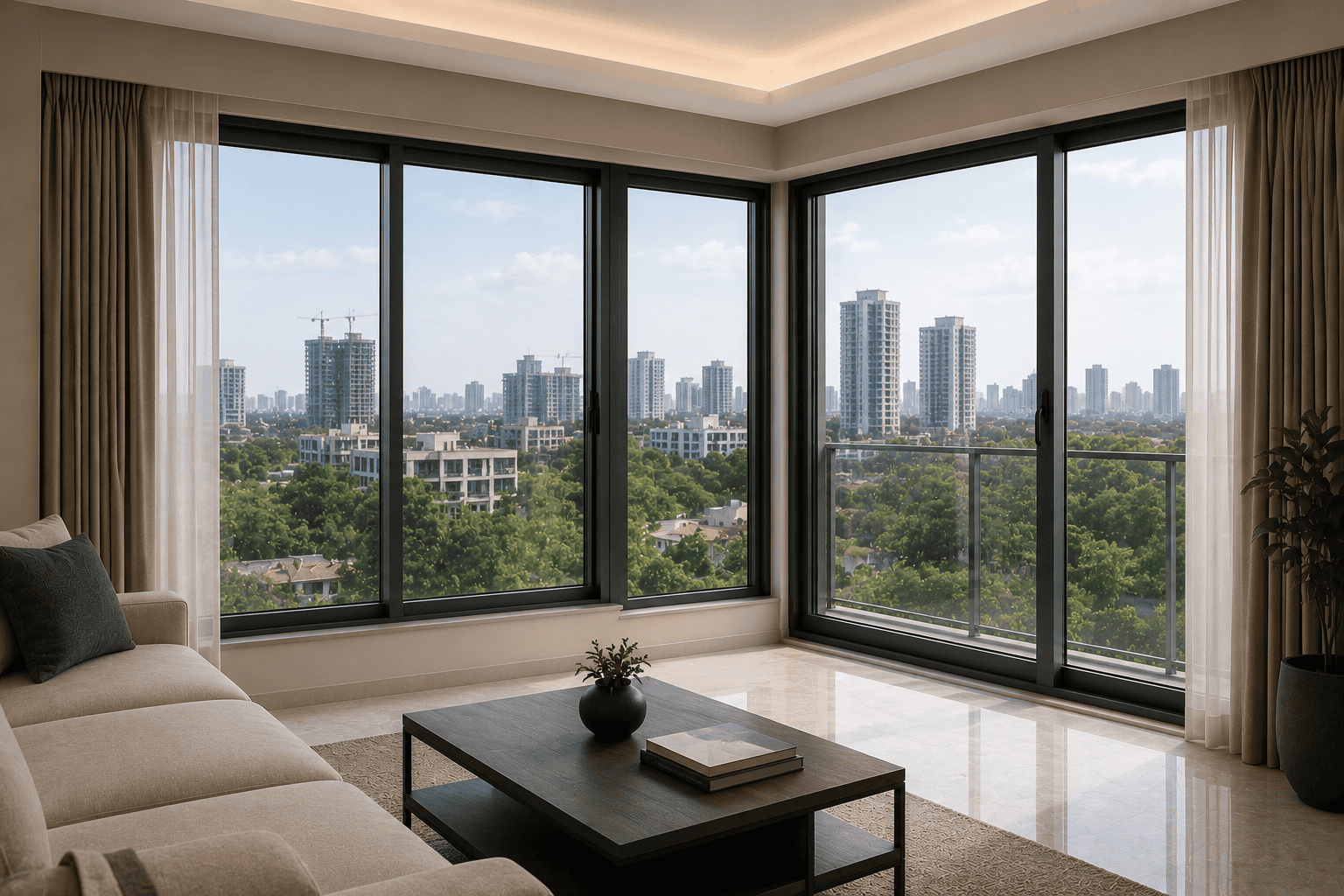
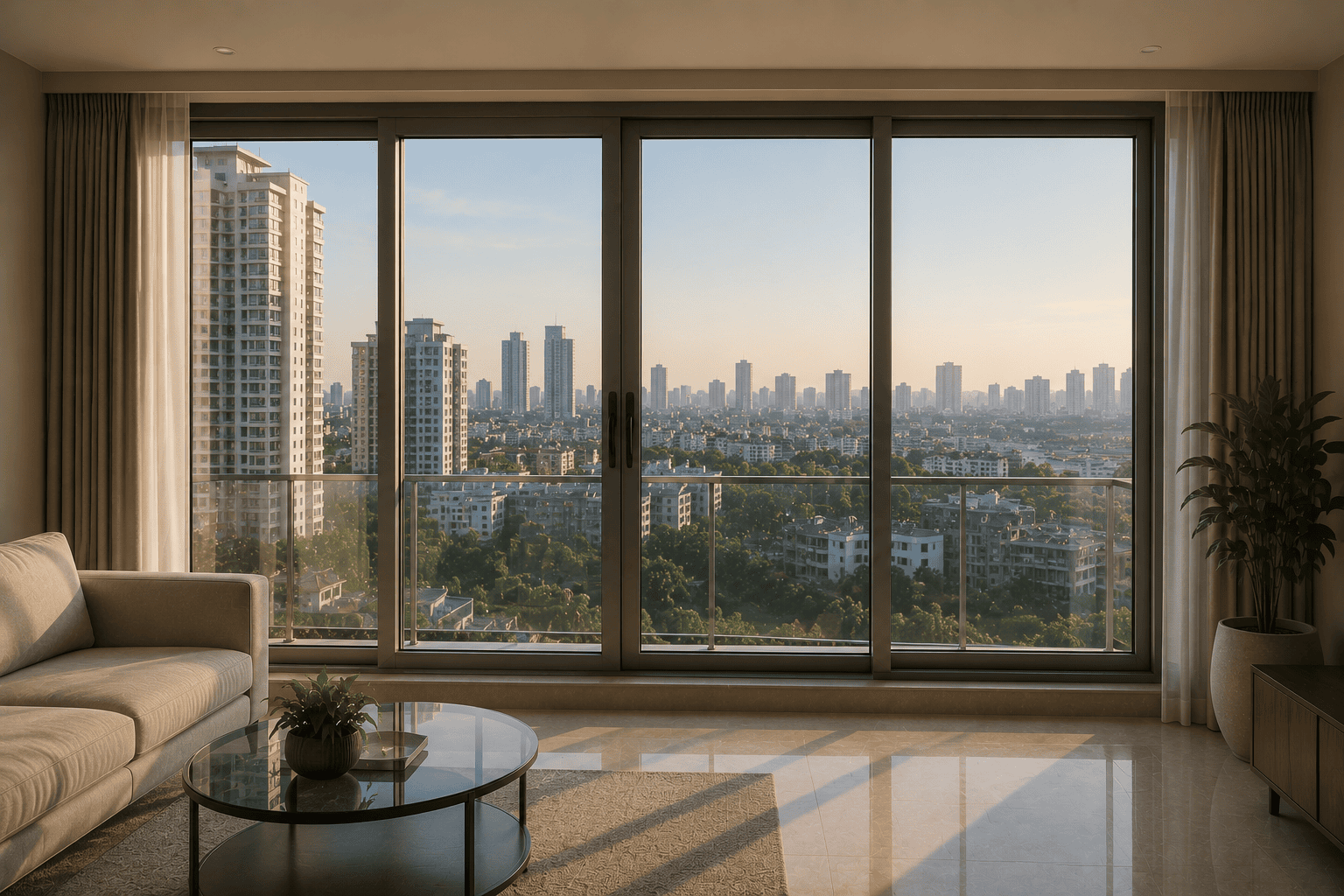
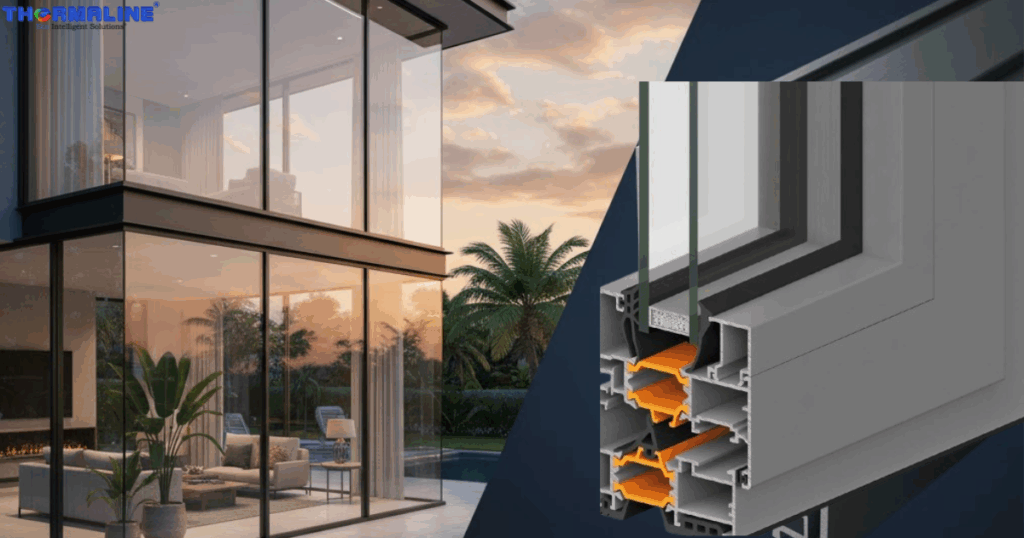
The new Indian dream home is all about light and flow. We want to erase the line between our living room and our balcony. A custom-engineered system allows you to do exactly that. We’re no longer talking about a “door.” We’re talking about a 20-foot-wide, 10-foot-tall minimal sliding glass wall that glides away with the push of a finger.
This “minimalist” aesthetic, where the frame is so thin it practically disappears, is only possible with the structural integrity of a custom-engineered aluminium profile.
2. The Freedom of Shape: Bending the Rules
Architects no longer have to design around the window; they can design with the window.
- Want a massive, circular picture window? Done.
- A trapezoidal window that follows the angle of a staircase? Easy.
- A curved, floor-to-ceiling glass wall for a penthouse? Possible.
Custom engineering means the window system bends to the architect’s vision, not the other way around.
3. The Freedom of Finish: Beyond the Boring
For years, “aluminium” meant that chalky, silver-anodized finish. Today, customization means a limitless palette. You can have any high-performance, powder-coated colour you can imagine.
Even better? You can have a wood-look finish (like Deco-wood) that gives you the warmth of timber without the nightmare of maintenance. You can even have dual-colour frames—a teak finish for your traditional interiors and a modern black for the exterior.
The Thermaline Angle: Why Custom Engineering Beats Custom Design
This is the most important part of the story. And it’s where we, as engineers, get excited.
A grand design is useless if it fails in the real world. A 20-foot glass wall is a disaster if it turns your home into a 50°C greenhouse or leaks during the first monsoon.
In India, custom design must be backed by custom engineering.
This is the Thermaline philosophy. Your vision is the “what.” Our engineering is the “how.”
The 45°C Problem: The Thermal Break Revolution
A giant wall of glass in the Delhi or Chennai summer… sounds like an oven, right?
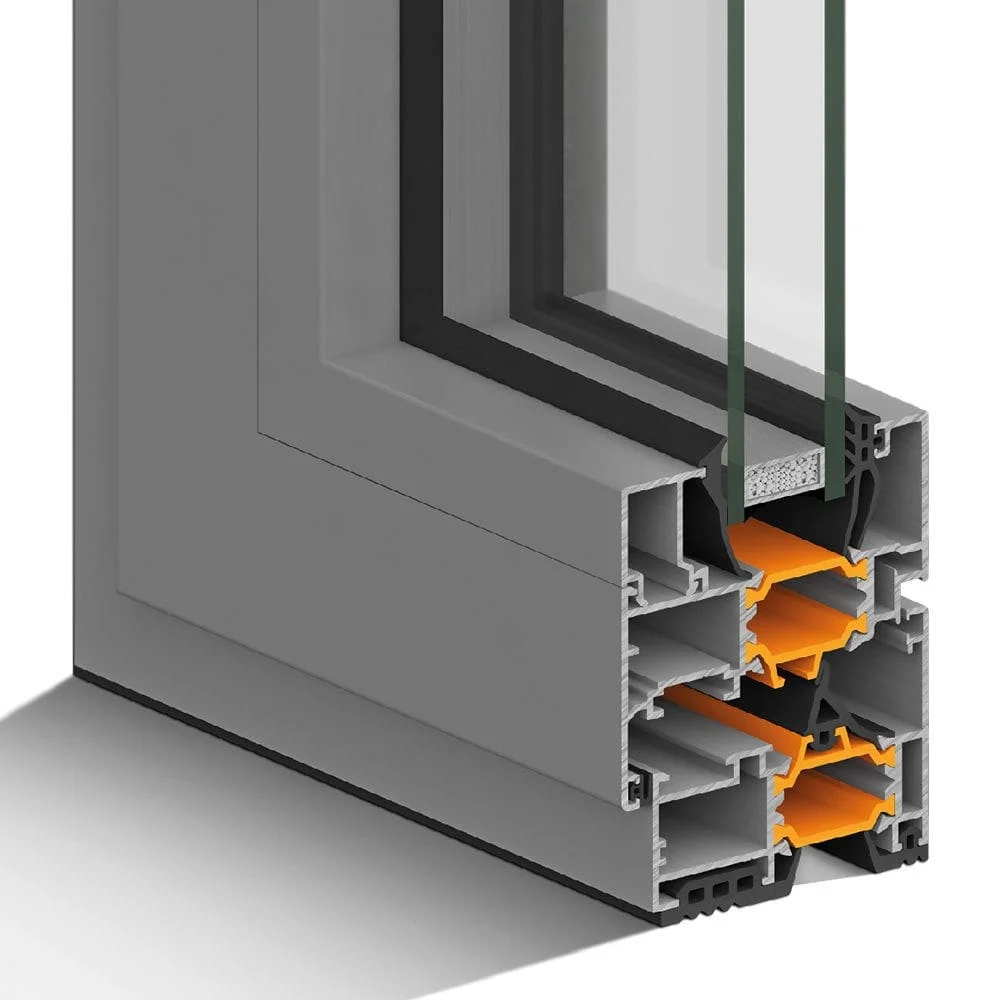
With basic aluminium, it would be. Aluminium is a fantastic conductor of heat. But a custom, high-performance system uses Thermal Break technology.This is the magic. We insert a high-tech insulating core right into the aluminium frame. This stops the heat from the outside frame from transferring to the inside frame. It’s the piece of engineering that lets you have your wall of glass without getting an electricity bill that looks like a phone number. This isn’t a luxury; in our climate, it’s a necessity.
The Monsoon Problem: Engineered Water-Proofing
A “jugaad” window will leak. It’s a fact.
A custom-engineered system is designed with multi-chambered drainage, pressure-equalized gaskets, and seals that are tested to withstand wind-driven rain. Your vision for a “clean” look is backed by a complex, hidden system that keeps your home bone-dry.
The City Problem: Custom Acoustic Solutions
Your custom window might give you a stunning view of the city, but you don’t want to hear all of it. The new luxury is silence. Custom engineering means we can design the system to hold a specific laminated glass configuration, creating an acoustic barrier that turns your home into a peaceful sanctuary.
The Future: Your Vision, Our Blueprint
The revolution is here. From minimalist villas in Goa to the high-rise penthouses of Mumbai, custom aluminium doors and windows are the new language of Indian architecture.
It’s a language of freedom, of light, and of personal expression. But it’s also a language of performance.
At Thermaline, we believe you should never have to compromise. You should never have to choose between a beautiful design and a comfortable, efficient home.
The future of Indian architecture is about having both. It’s about a perfect partnership: your grand vision, and the precision engineering to make it a reality.
