
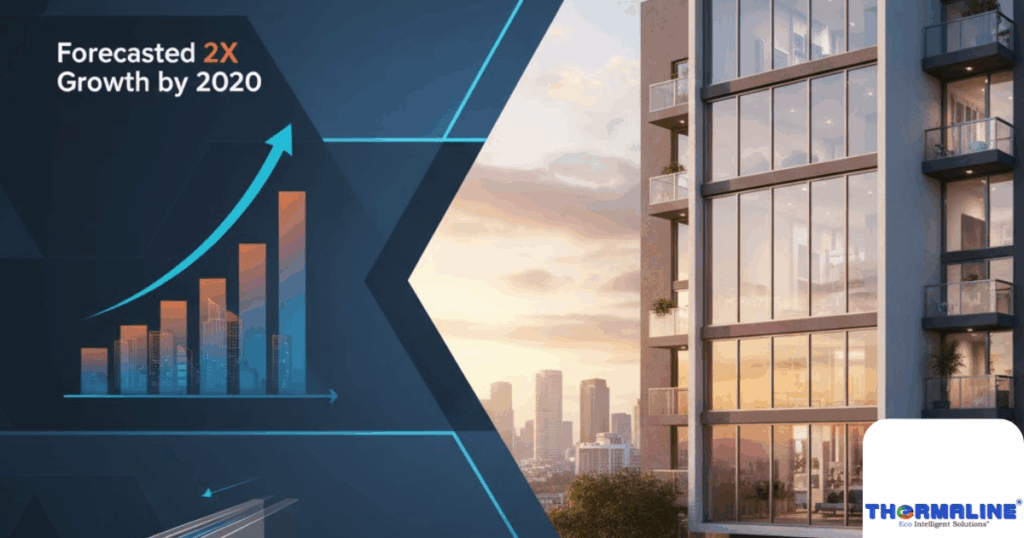
Take a look at any new, premium skyline in India, from Gurugram to Bengaluru, Mumbai to Hyderabad.
What do you see?
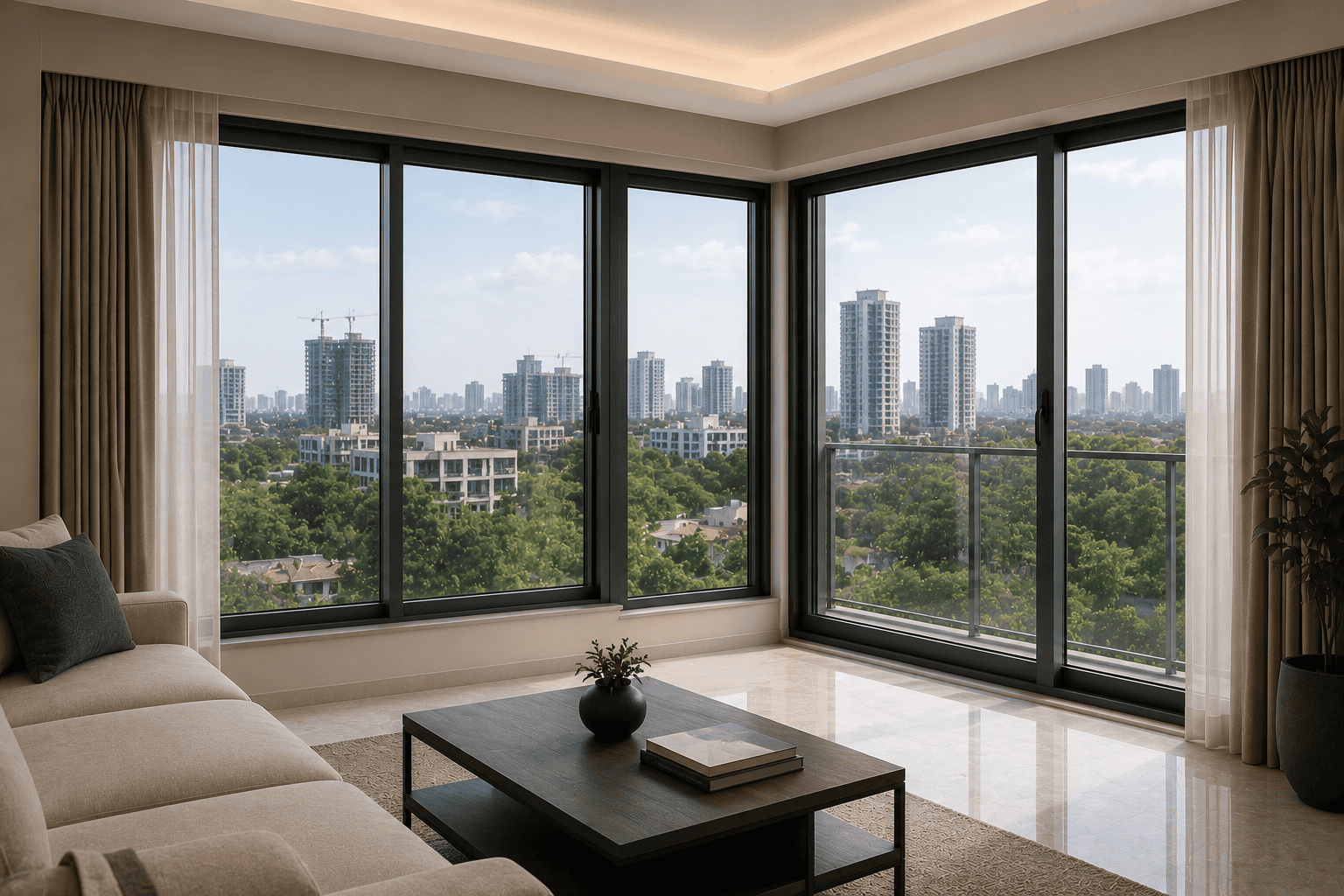
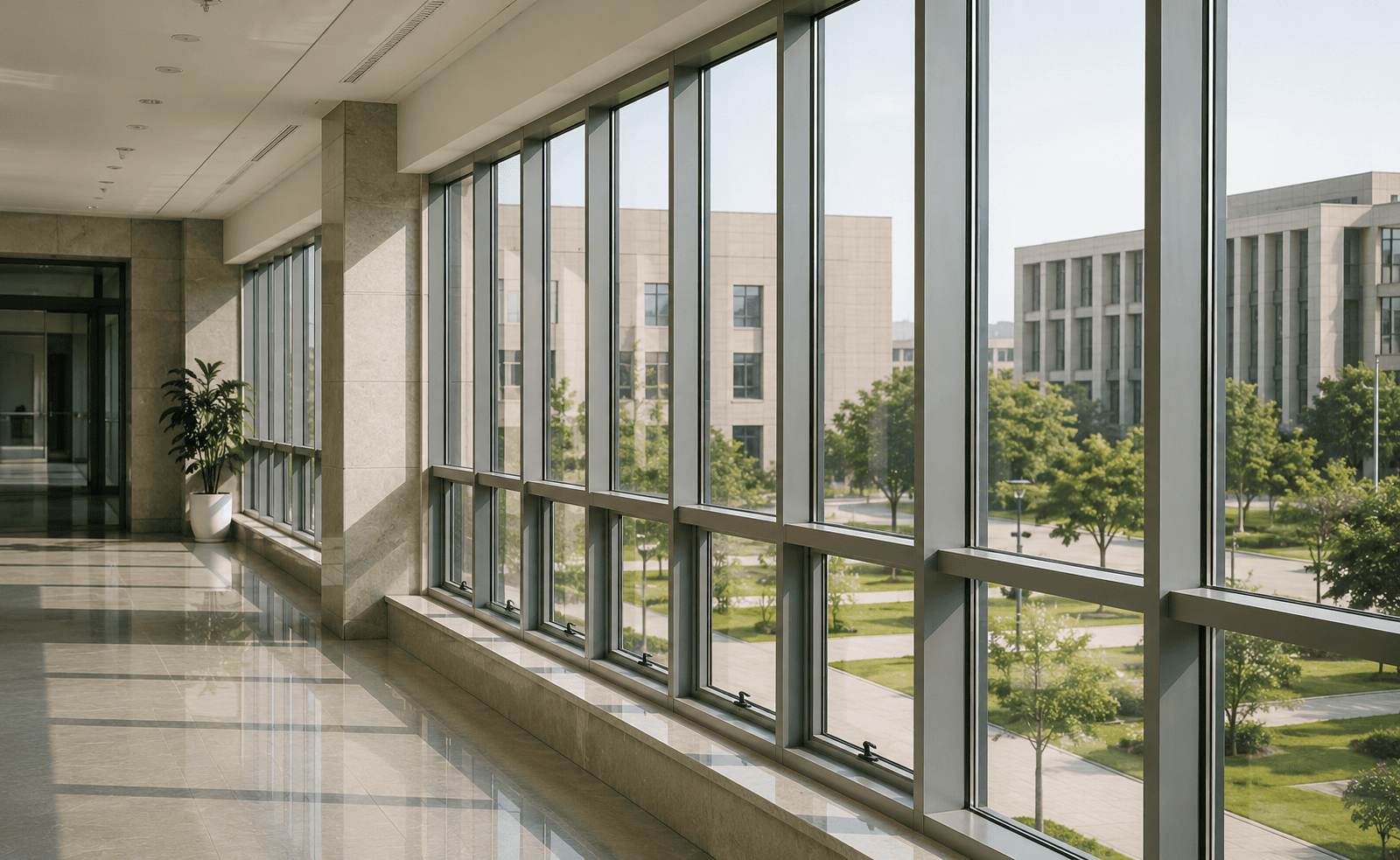
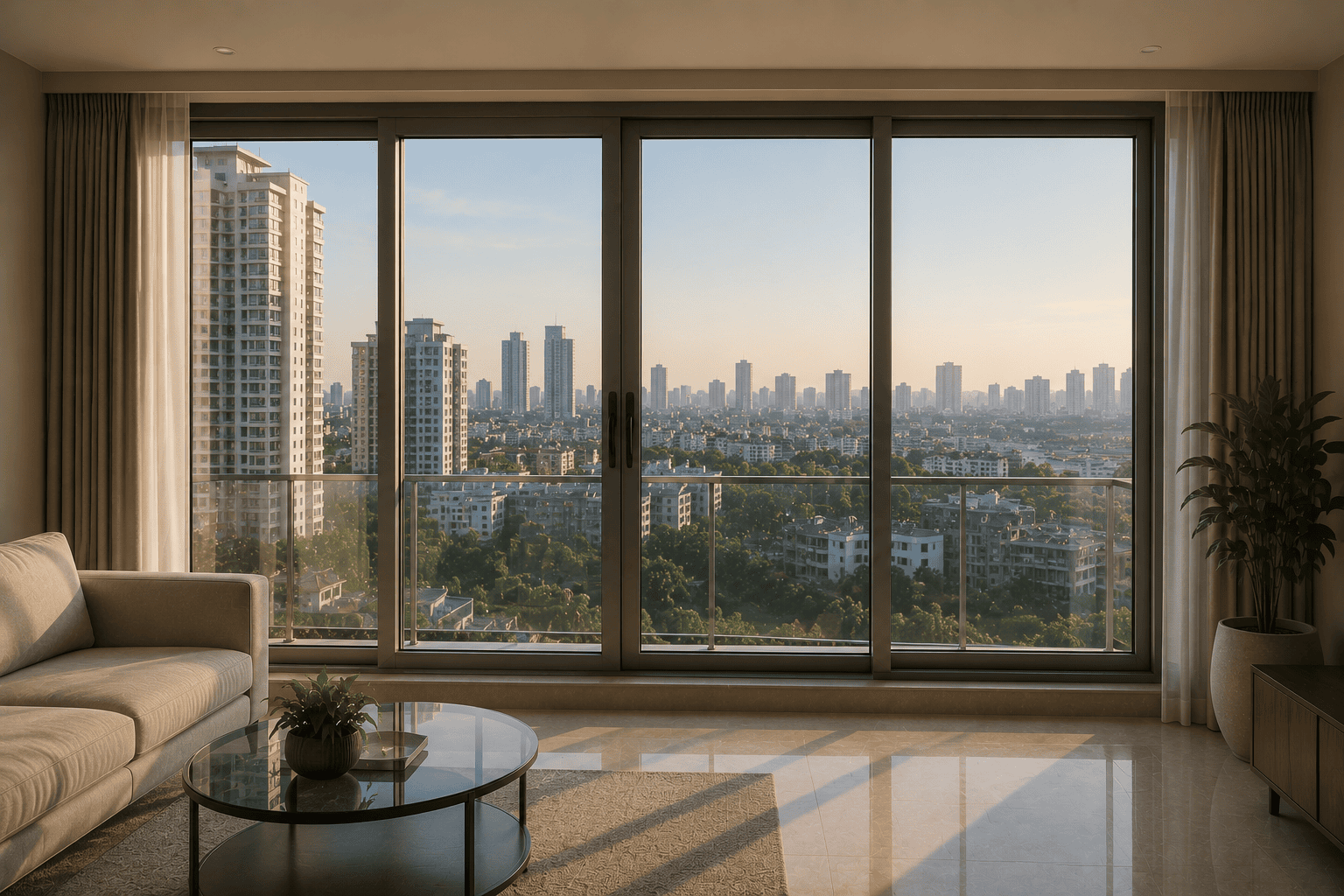
You see glass. You see sleek, modern facades, floor-to-ceiling vistas, and slim, elegant lines. You see buildings that are designed to look light, open, and connected to the world.
And the material making all of this possible? Aluminium.
For decades, the Indian window market was a simple, fragmented space, dominated by local fabricators, timber, and, more recently, mass-market uPVC. But that era is ending.
We are in the middle of a fundamental, large-scale shift. This isn’t just a “growth spurt”; it’s a re-engineering of our living and working spaces. The aluminium window market in India is not just growing—it’s evolving.
And for architects, developers, and discerning homeowners, the opportunities (and the new set of rules) for the next decade are already becoming clear.
The Big Picture: What’s Driving the Double-Digit Growth?
You don’t need a crystal ball to see the forecast; you just need to look at the construction sites. Industry reports are all pointing to a significant double-digit CAGR (Compound Annual Growth Rate) for the Indian aluminium window and door market, every year, right through to 2030.
Why? It’s a perfect storm of factors:
- Massive Urbanization & Real Estate: More high-rises (residential and commercial) are being built than ever before. These modern structures demand the strength, durability, and slim profiles that only aluminium can provide.
- Shifting Aspirations: The Indian consumer has global tastes. They see international architecture on their travels and on a_rch_Daily. They are no longer satisfied with a “window.” They want a view. They want “minimalist sliders,” “invisible frames,” and an indoor-outdoor flow.
- The Fading of Old Choices: Wood is becoming astronomically expensive and is a maintenance nightmare. Basic uPVC, while a good insulator, struggles with the structural strength needed for the large, heavy-glass panels that are now in fashion. Aluminium is simply the right material for the moment.
But here’s the most important part: the volume of growth is in aluminium. But the value, the profit, and the future are in a very specific, high-performance segment.
The Real Opportunity: It’s Not Just “Aluminium,” It’s “Engineered Systems”
The old way of making windows is dying.
The old model—where a local fabricator buys “sections” of aluminium, cuts them, and screws them together with generic hardware and gaskets—is being exposed for its failures. It leads to leaky, rattling, and inefficient windows.
The future isn’t in this “jugaad” or “commodity” market. The real growth and opportunity lie in fully engineered, high-performance window systems.
This is where the market is splitting in two. And the high-end, intelligent side is where all the momentum is.
Here are the key opportunities we at Thermaline see defining the market until 2030.
1. The Green Building Revolution: Sustainability is No Longer Optional
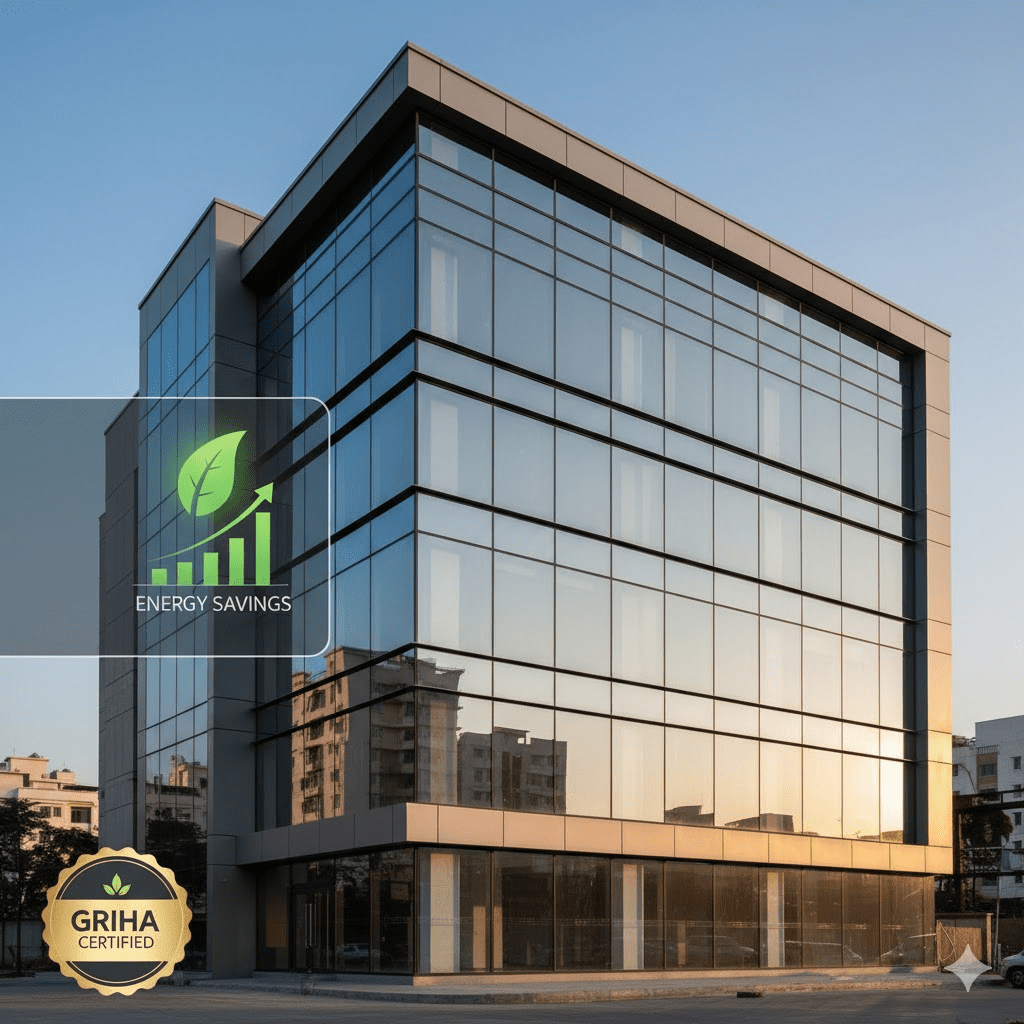
This is the single biggest driver of innovation. Green building certifications like GRIHA and IGBC (Indian Green Building Council) are moving from “nice-to-have” to “mandatory” for any serious commercial or luxury residential project.
What does this have to do with windows? Everything.
Windows are the biggest source of energy loss in a building. A building with cheap, single-glass, non-insulated windows is a thermal sieve. It’s an energy-guzzling nightmare that can’t get certified.
This is forcing developers and architects to finally prioritize energy efficiency. They are now required to specify windows that insulate.
2. The Thermal Break Tsunami: From Niche to Norm
This brings us to the most important technology in the market: Thermal Breaks.
Here’s the hard truth: Standard aluminium is a terrible insulator. It’s a metal. It transfers heat and cold perfectly. A basic aluminium window in the Delhi summer is a radiator, pumping heat into your home and sending your AC bills through the roof.
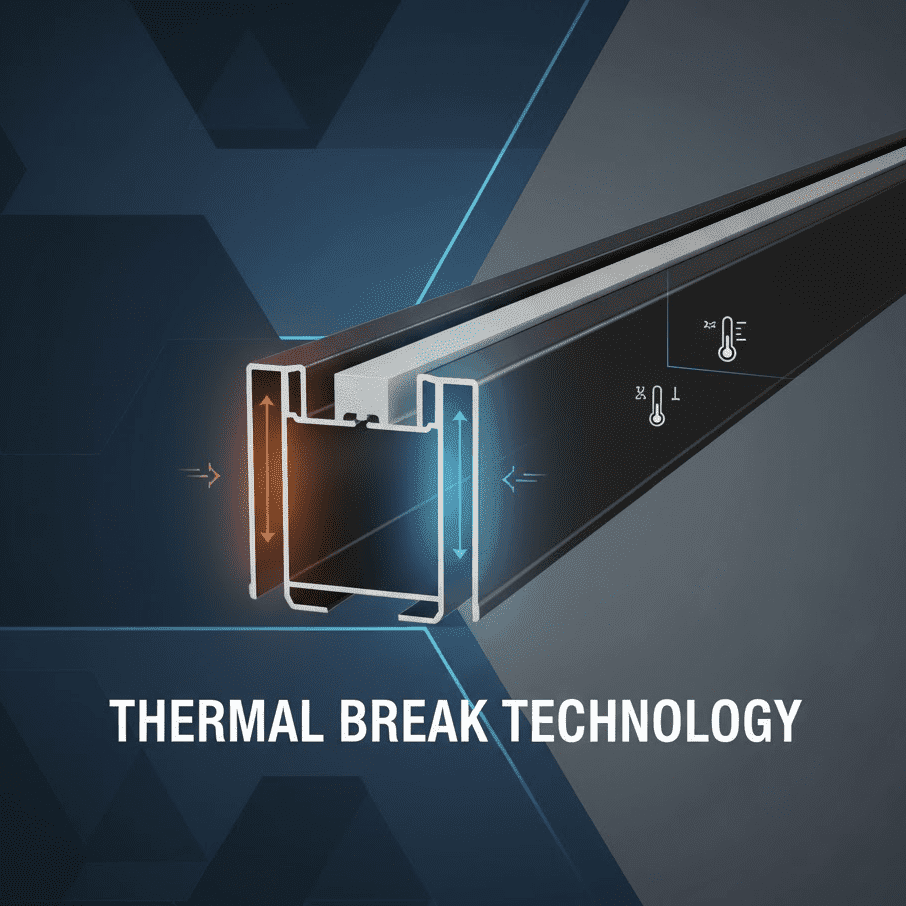
A thermal break aluminium window is the solution. It’s an engineering marvel where the inside and outside aluminium profiles are separated by a high-tech, low-conductivity insulator.
- This technology stops heat transfer.
- It keeps the 45°C heat out and your cool air in.
- It is the only way to get a “green” rating with an aluminium window.
Market Forecast: By 2030, in the premium and luxury space, non-thermal-break windows will be considered obsolete. The thermal break aluminium window market is, by itself, the fastest-growing and most valuable segment.
3. The “Silent” Demand: Acoustic Performance
The second a homeowner moves into their new 30th-floor apartment on a busy road, what’s the first thing they notice? The noise.
As cities get denser, the demand for silence has become a luxury feature.
A cheap window rattles. It lets in traffic, construction, and horns. A high-performance, engineered system—with its multi-point locking, heavy-duty profiles, and high-quality EPDM gaskets—is designed to be airtight. When paired with double-glazed glass, it creates a pocket of silence.
This isn’t a “feature” anymore; it’s a core requirement for urban living.
4. The Rise of “System” Providers
The market is maturing. Architects are tired of specifying a frame from one company, glass from another, and hardware from a third, only to have them all blame each other when it leaks.
The opportunity is for “System providers”—companies like Thermaline who design, engineer, and warranty the entire system.
This means the frame, the thermal break, the glass, the hardware, and the gaskets are all designed to work together as one high-performance unit. This is a far safer, far more reliable investment for a developer.
What This Means for You: An Architect, Developer, or Homeowner
- For Architects & Developers: Your specification is your reputation. The “default” window won’t cut it. You are now specifying for performance—U-value (heat), SHGC (solar gain), and STC (sound). Partnering with a proven, engineered system provider is the new standard.
- For Homeowners: You have more power than ever. You are educated, and you’re asking the right questions. Don’t just ask, “What’s the price per square foot?” Ask, “What is the U-value?” “Does this have a thermal break?” “What is the warranty on the hardware?” Your questions are elevating the entire industry.
The Thermaline Vision: The Future is Engineered Comfort
At Thermaline, we’ve built our entire brand on this coming shift. We didn’t wait for the market to demand thermal efficiency; we engineered it from day one.
The future of the Indian aluminium window market is clear. It’s not just about letting the light in. It’s about keeping the heat, noise, and pollution out. It’s about engineering, performance, and long-term sustainability.
The opportunity until 2030 isn’t just to sell more windows. It’s to build better, smarter, and more comfortable buildings.