
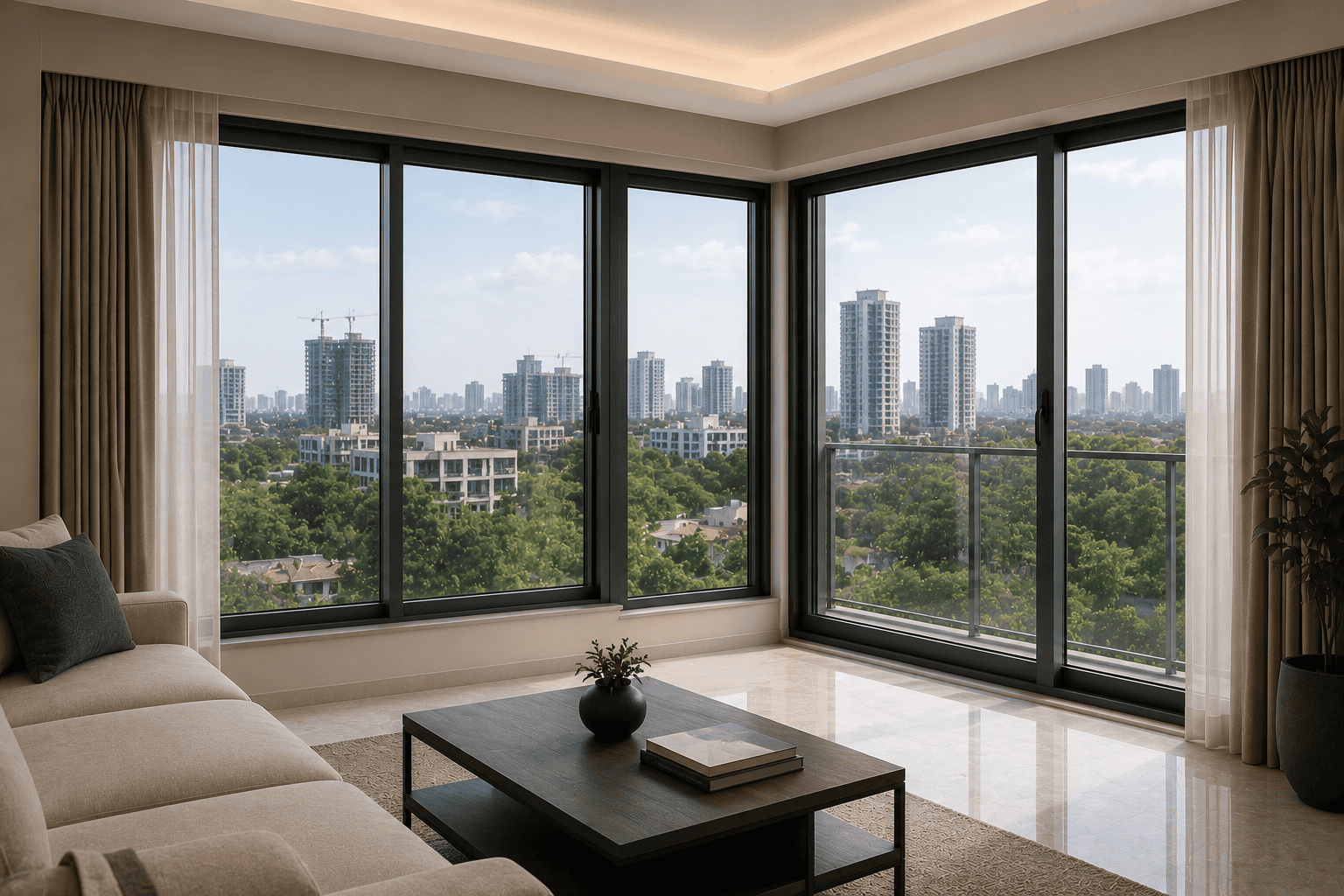

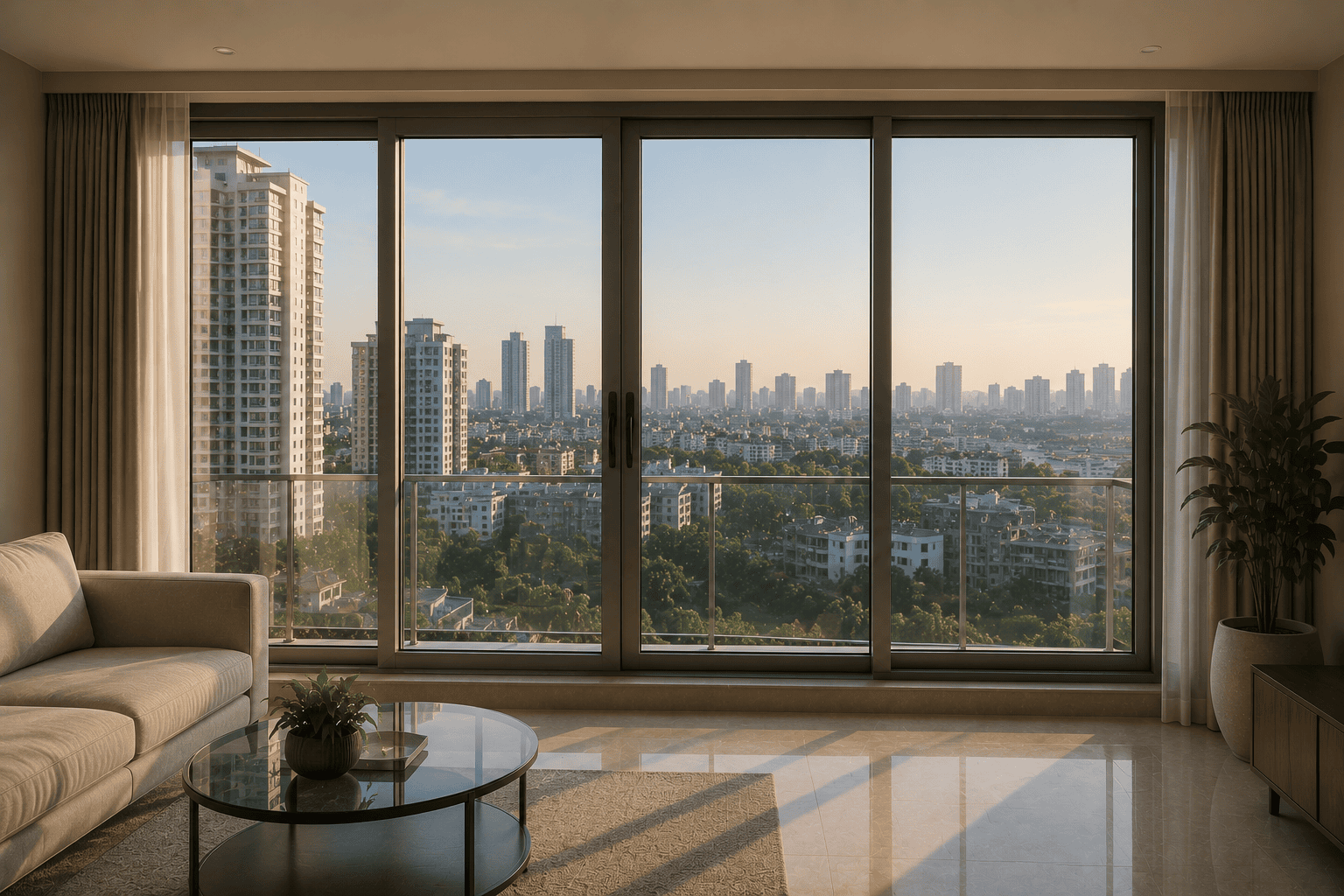
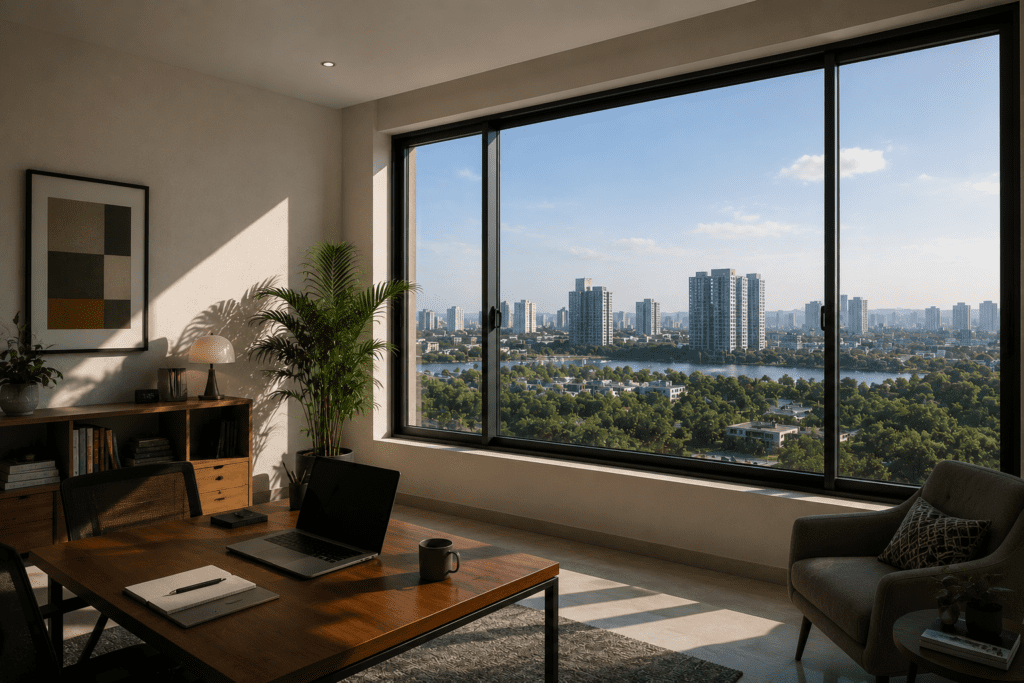
There is a dilemma that every Hyderabad homeowner with large windows eventually faces. In February, when the city is at its most beautiful, the light through those windows is extraordinary — warm, golden, exactly why you chose that apartment. By April, those same windows have become the enemy. The afternoon sun turns your living room into an oven, the AC runs on max, and the only practical solution — closing the heavy curtains — means you’ve blocked out the thing you moved there for in the first place.
This is not a choice you should have to make. It is, however, the choice that standard window glass forces on most Hyderabad residents. And understanding why — and what the alternative is — is the most useful thing a Hyderabad homeowner can know before their next window decision.
Why Standard Glass Makes You Choose Between Heat and Light
Standard clear glass in a window is nearly transparent to all forms of solar radiation — visible light and infrared heat alike. Both travel through it at roughly the same rate. This means you cannot block the heat without also blocking the light, because they’re arriving together, through the same medium, in approximately the same proportions.
This is the physics of the problem, and it explains why tinted glass — the most common attempt to address solar heat gain in Indian residential windows — is an incomplete solution. Dark tinting reduces visible light transmission and solar heat gain somewhat, but it does so by making the glass opaque to both. Your room is darker and cooler — which is not the same as bright and cool.
The correct solution is not darker glass. It is smarter glass.
What Low-E Glass Actually Does — In Plain Language
Low-E (low-emissivity) glass uses a microscopically thin metallic coating — invisible to the naked eye — that selectively reflects infrared radiation (heat) while transmitting visible light.
The coating works because infrared radiation and visible light behave differently when they encounter certain metallic surfaces. The Low-E coating is tuned to reflect the infrared wavelengths that carry heat while allowing the visible light wavelengths to pass through. The result is glass that looks clear — and transmits natural light at near-normal levels — while blocking a significant portion of the heat that would otherwise come with it.
In quantitative terms: a high-quality Low-E double-glazed unit for a west-facing Hyderabad window will have:
- Visible Light Transmittance (VLT): 60–70% — your room remains well-lit with natural light
- Solar Heat Gain Coefficient (SHGC): 0.25–0.35 — only 25–35% of solar heat enters, versus 65–70% with standard clear glass
- U-value: 1.1–1.4 W/m²K — limiting frame-conducted heat transfer as well
The practical outcome: on a west-facing Hyderabad afternoon in May, your living room receives natural daylight. The AC reaches its set temperature and cycles off. The curtains stay open. The physics have been solved.
The Frame Contribution: Why Glass Alone Is Not Enough
Low-E glass addresses solar heat gain through the glass area. The frame independently conducts heat — and this contribution is missed when only the glass is upgraded.
Standard aluminium is an extremely efficient heat conductor. In Hyderabad’s summer conditions, a standard aluminium frame heats to temperatures close to the outside ambient, and radiates that heat into the room continuously — even through a Low-E glass unit. The zone near the window frame will feel warmer than the zone near the centre of the glass.
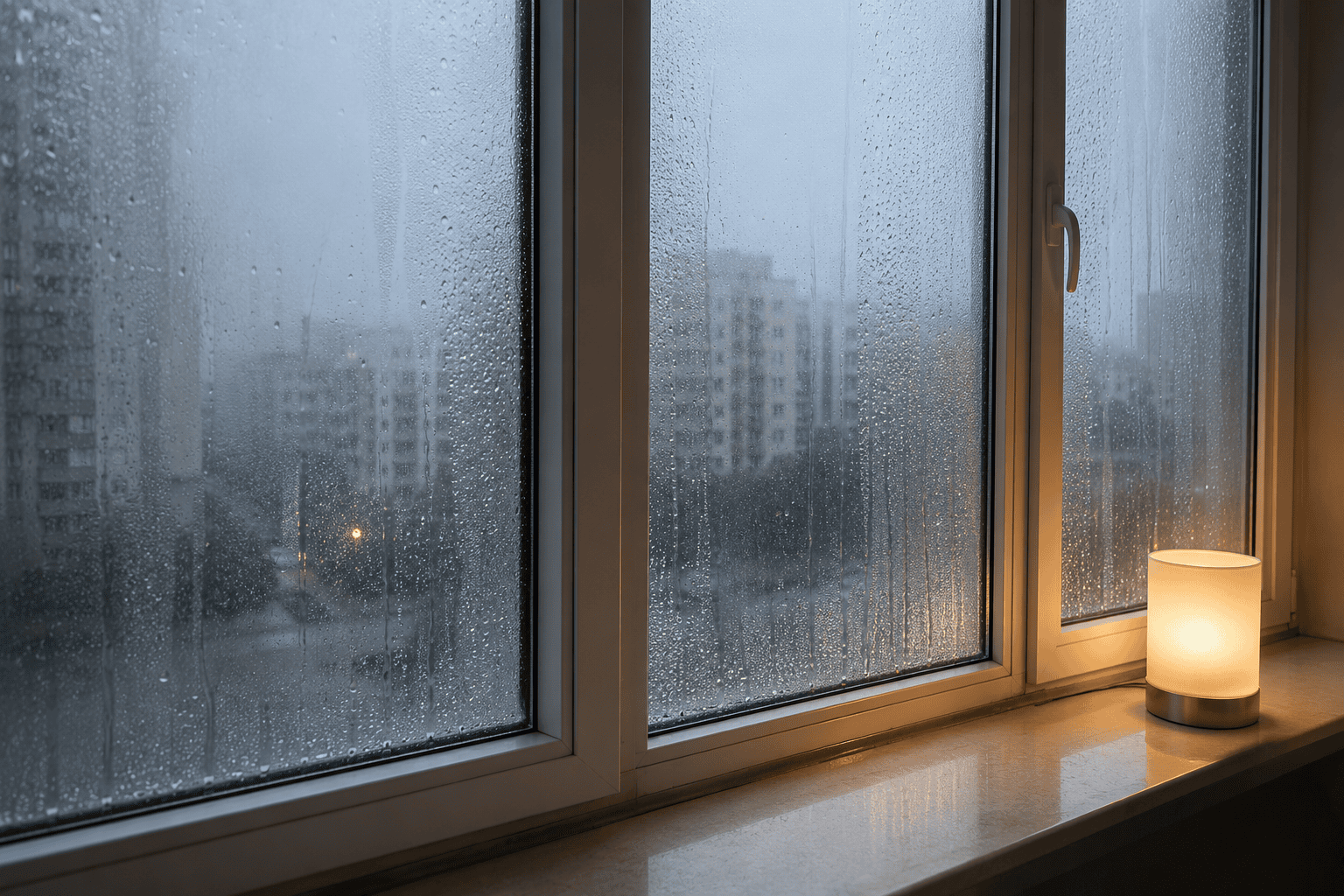
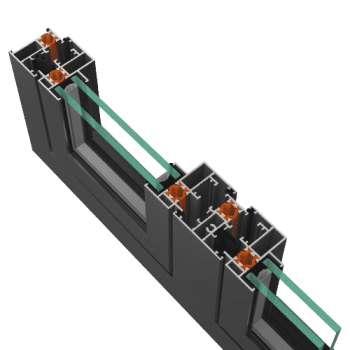
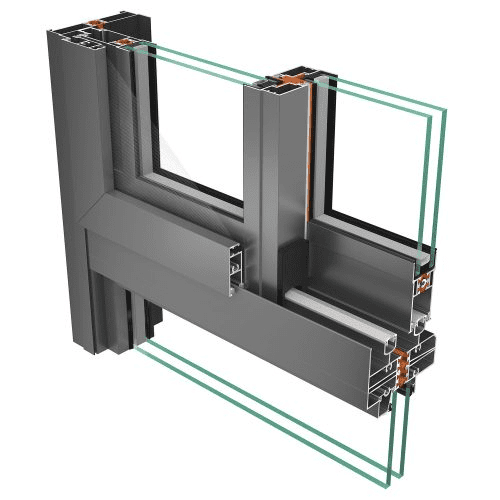
A thermally broken frame eliminates this. The polyamide strip between the outer and inner frame sections prevents the frame from reaching outdoor temperatures on its interior face. Combined with Low-E glass, a thermal break frame delivers a genuinely cool window surface — the kind that doesn’t radiate heat into the room and doesn’t cause condensation on cold mornings when the AC has been running overnight.
The combination of Low-E glass and thermal break frame is the complete solution. Specifying one without the other leaves a meaningful performance gap.
Hyderabad Orientation Guide: Which Glass for Which Direction
Not every window in a Hyderabad home needs the same specification. Here is how to think about glass selection by orientation — the kind of guidance your window supplier should be offering but often doesn’t:
West-facing windows (highest priority in Hyderabad): Hyderabad’s afternoon sun hits west-facing facades from approximately 1 PM to sunset. This is the highest solar heat gain direction in the city. Specify Low-E double glazing with SHGC of 0.25–0.30 and VLT of 60–65%. This combination blocks the majority of heat while maintaining a well-lit interior.
South-facing windows: South-facing rooms receive sun from late morning through early afternoon. Solar heat gain is significant, though less sustained than west. Specify Low-E glass with SHGC of 0.30–0.35. The slightly higher SHGC allows marginally more winter solar warmth, which matters during Hyderabad’s mild December–January period.
East-facing windows: East-facing rooms receive morning sun at low angles — particularly problematic in bedrooms where morning glare disrupts sleep. Specify Low-E glass with modest SHGC control (0.35–0.40) and consider laminated acoustic glass if the east face also has significant traffic or road exposure (common in Kondapur and Madhapur east-facing units).
North-facing windows: North-facing rooms in Hyderabad receive indirect light — no direct solar radiation in the northern hemisphere. The priority here shifts to daylighting quality and acoustic performance rather than solar control. Specify acoustic laminated double glazing for noise reduction, with a clear Low-E coating that maximises visible light transmittance without heavy solar control.
The Practical Checklist Before Buying Windows for Your Hyderabad Home
Before committing to any window specification in a Hyderabad apartment or villa, use this as your verification:
1. What is the SHGC of the glass unit, by the facade direction it’s going on? If the supplier gives you a single SHGC across all orientations, they are not specifying for your apartment. West-facing and north-facing rooms need different glass.
2. What is the VLT (Visible Light Transmittance)? SHGC is not the whole story. A glass with SHGC of 0.28 and VLT of 35% will make your room dark. Insist on both numbers — the right specification has SHGC below 0.35 AND VLT above 55% for living areas.
3. Is the frame thermally broken? Low-E glass with a standard aluminium frame delivers incomplete results. The frame needs to be thermally broken to eliminate the conducted heat contribution.
4. What is the U-value of the complete glazing unit? The U-value covers both glass and frame contribution to heat transfer. Target below 1.5 W/m²K for Hyderabad applications.
5. Is the coating a hard coat or a soft coat Low-E? Soft coat Low-E (also called sputtered coating) provides better solar control performance but requires a sealed double-glazed unit to protect the coating. Hard coat Low-E is more durable but has higher SHGC. For Hyderabad’s solar gain priorities, soft coat Low-E in a sealed IGU is the higher-performance specification.
How Thermaline® Approaches the Hyderabad Brief
At Thermaline®, we don’t apply a single glass specification to every window in every apartment. Our approach starts with the building’s orientation, floor level, and the room’s use — because a west-facing master bedroom in a Gachibowli tower needs a different balance of SHGC, VLT, and acoustic performance than a north-facing study in the same building.
Our EcoCasement® and EcoSlide® systems are available with glass specifications specifically calibrated for Hyderabad’s solar angles, summer peak temperatures, and acoustic environment — with thermal break frames that eliminate the contribution to heat gain that glass-only upgrades miss.
If you want a Hyderabad home that is genuinely bright, genuinely cool, and genuinely quiet — without choosing between any of the three — speak to the Thermaline® team for a specification built around your apartment’s actual brief.
