
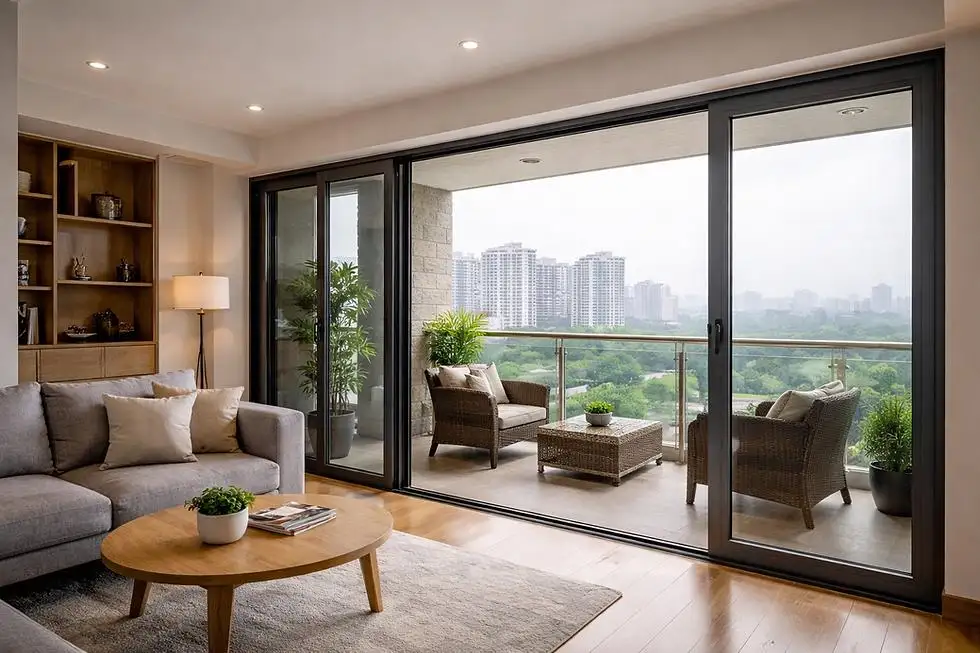



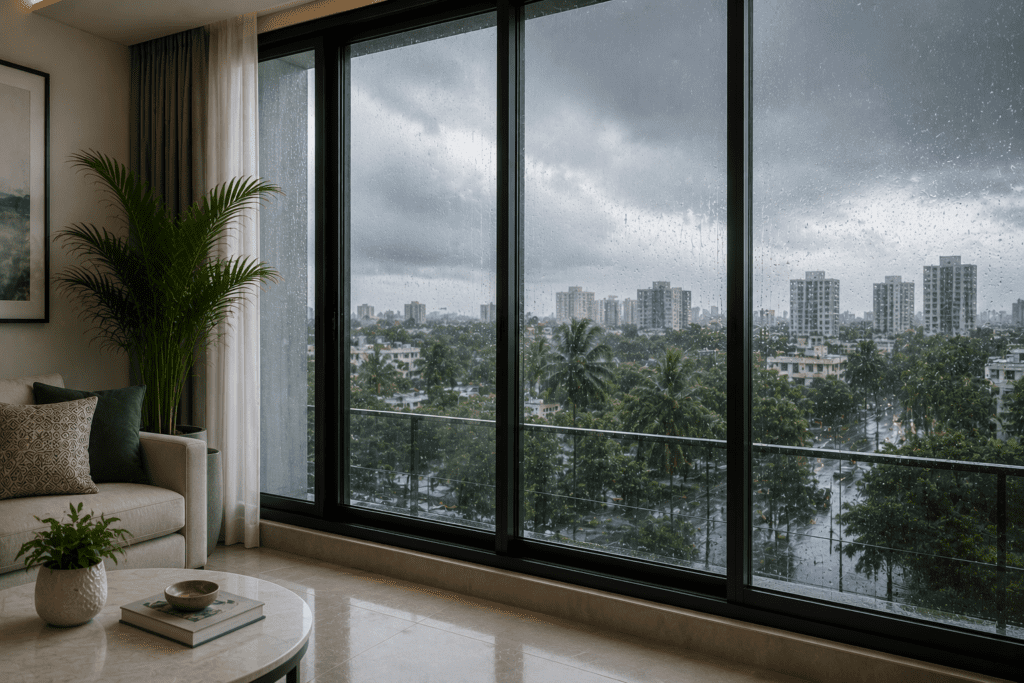
Chennai’s monsoon is unlike most of India’s. While the rest of the country gets its rain from the southwest monsoon between June and September, Chennai depends primarily on the northeast monsoon, arriving October through December — often delivered in short, intense bursts rather than the sustained daily rain pattern of Mumbai or Kerala. Cyclonic systems moving up the Bay of Bengal regularly intensify this period: 2025’s Cyclone Montha brought widespread, continuous rainfall to Chennai and its neighbouring districts, closing schools and causing significant waterlogging across the city.
This pattern — concentrated, often cyclone-influenced rainfall arriving with significant wind — creates a specific stress test for windows that differs from the more sustained monsoon patterns elsewhere in India. The question Chennai homeowners actually need answered is not “will the rain get in” in a generic sense, but specifically: which window specifications hold up against short, intense, wind-driven rain events, and which ones fail at exactly the moment you need them most?
Why Chennai’s Rain Pattern Demands a Specific Window Response
Chennai’s monsoon rainfall arrives as concentrated, often wind-accompanied bursts rather than steady, predictable precipitation — which means window systems need to perform under peak intensity conditions, not average ones.
A window system tested or rated only for moderate, steady rainfall can perform adequately in everyday conditions and still fail during a single intense Chennai monsoon event — precisely the scenario most likely to cause real damage to your home’s interior. The 2025 overnight rains that caused widespread waterlogging across 57 localities in Chennai, with areas like Mylapore recording 178mm in a matter of hours, illustrate the intensity Chennai’s window systems actually need to withstand, not theoretical “monsoon resistance” as a category claim.
This matters because window water infiltration testing standards vary considerably in rigor, and marketing claims of “monsoon-proof” or “waterproof” windows are not backed by a single universal testing standard in the Indian market. The actual performance characteristics that matter are specific, measurable, and worth understanding individually.
The Five Specifications That Actually Determine Water Resistance
1. Multi-point compression seals, not brush seals
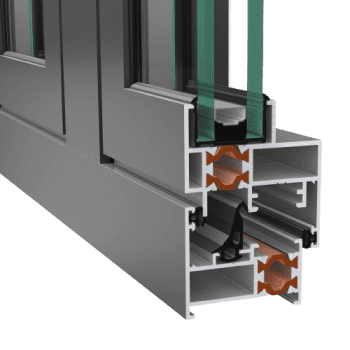
This is the single most important specification differentiator for monsoon performance. A compression seal — a continuous rubber gasket that the window panel presses against when closed and locked — maintains consistent contact pressure around the full perimeter of the panel. A brush seal, common in budget sliding windows, consists of dense nylon bristles that block airflow reasonably well but compress irregularly under wind pressure, creating gaps exactly when wind-driven rain is pushing water toward those gaps.
For Chennai’s cyclone-influenced monsoon pattern — where wind speed during rain events can be substantial — compression seals are not a premium upgrade. They are the baseline specification required for genuine water resistance.
2. Drainage channel design and capacity
Every sliding window has a bottom track designed to channel any water that does get past the outer seal back outside through drainage ports. The capacity and design of this drainage system determines whether incidental water exits safely or accumulates and eventually overflows into your room.
Standard residential drainage ports are sized for moderate, vertical rainfall. Chennai’s wind-driven, high-intensity rain events can exceed this drainage capacity if the ports are undersized or poorly positioned. Ask specifically about drainage port sizing and placement — a detail most window conversations skip entirely.
3. Frame-to-wall perimeter sealing — the most commonly neglected specification
Water infiltration in Chennai homes most frequently occurs not through the window itself but through the joint between the window frame and the surrounding wall opening — a detail entirely dependent on installation quality rather than the window product itself.
The correct specification is a three-layer system: polyurethane (PU) foam backing to fill the gap structurally, a vapour-permeable membrane tape on the exterior face that blocks water while allowing trapped moisture to escape, and a quality polyurethane or silicone sealant bead on the interior finish. Many Chennai installations — particularly budget and mid-range projects — use only basic mortar or a single sealant bead, which degrades within a few years in Chennai’s humidity and creates the infiltration pathway that residents discover during the first serious monsoon event.
4. Wind load rating appropriate for your floor level and exposure
For apartments above the 10th floor, or properties directly exposed to ECR/OMR coastal wind without windbreaks, the wind load rating of the window frame becomes directly relevant to water resistance. Under sufficient wind pressure, an undersized frame profile flexes — and that flex, even when minor and invisible, breaks the seal contact at the frame perimeter exactly when wind-driven rain is at its most intense. Ask your supplier for the specific wind load rating (typically expressed in kPa) and confirm it matches your building’s actual exposure.
5. Casement vs. sliding configuration for high-exposure openings
For windows facing direct wind-driven rain — west or southeast-facing openings in exposed coastal properties — casement windows (which close against a full-perimeter frame stop and are mechanically compressed when locked) have a structural sealing advantage over sliding windows, which rely on track precision and seal contact at the meeting point between panels. This isn’t a universal rule for every window in a Chennai home, but for the most exposed openings, it’s worth the consideration.
What Standard Builder-Grade Windows Typically Get Wrong
Most builder-grade aluminium windows installed across Chennai’s residential developments — particularly in the volume mid-market segment — combine several of the weaker specifications above: brush seals rather than compression seals, standard drainage port sizing not calibrated for intense rain events, and frame-wall perimeter sealing left to standard installation practice rather than a specified three-layer system.
Individually, each of these gaps might not cause a failure. Combined, and tested against an intense Chennai monsoon burst with wind, they frequently do — which is why so many Chennai apartments experience water staining, minor flooding near windows, or persistent dampness specifically during October–December, even in buildings that seem otherwise well-constructed.
Competitor Comparison: Monsoon Specification Transparency
When evaluating suppliers active in Chennai’s market for monsoon performance specifically, transparency about these five specifications is the differentiator that matters.
AluPure references wind load capacities ranging up to 3.5 kPa in their broader product documentation, which is a genuinely useful data point — though Chennai-specific guidance on which configuration suits coastal versus inland exposure isn’t part of their published city content. Ask for this directly if considering their systems.
Prominance’s uPVC product range is documented with attention to mechanical properties and UV resistance standards, but uPVC’s structural limitations at larger panel sizes can constrain configuration options for high-exposure ECR or OMR-facing openings where casement configuration or larger sliding panels might be the better monsoon-resistant choice.
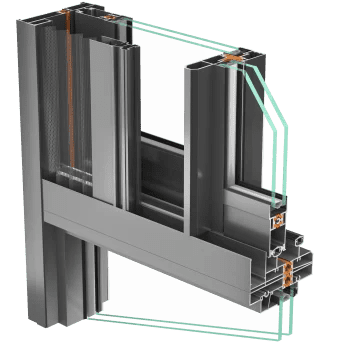
Thermaline® specifies and discloses all five of these performance characteristics for every Chennai installation — multi-point compression seal type, drainage port capacity, three-layer perimeter seal methodology, wind load rating matched to your building’s floor level and exposure, and configuration recommendation (casement vs. sliding) based on your specific opening’s exposure direction. Our EcoCasement® and EcoSlide® systems are available with the marine-grade coating and stainless steel hardware needed to perform through Chennai’s combination of monsoon intensity and coastal humidity.
The Practical Takeaway for Chennai Homeowners
If your current windows have shown any signs of water infiltration during recent monsoon events — even minor dampness, not full flooding — that is a meaningful signal, not a minor inconvenience to address with silicone and hope. Water infiltration into a wall structure is cumulative; each subsequent monsoon event compounds existing damage.
Get a specific assessment of your windows’ compression seal type, drainage capacity, and perimeter sealing before the next northeast monsoon arrives. Thermaline® provides free site assessments for Chennai homes, evaluating your existing windows against the five specifications that actually determine monsoon performance — not generic “waterproof” marketing claims.
