
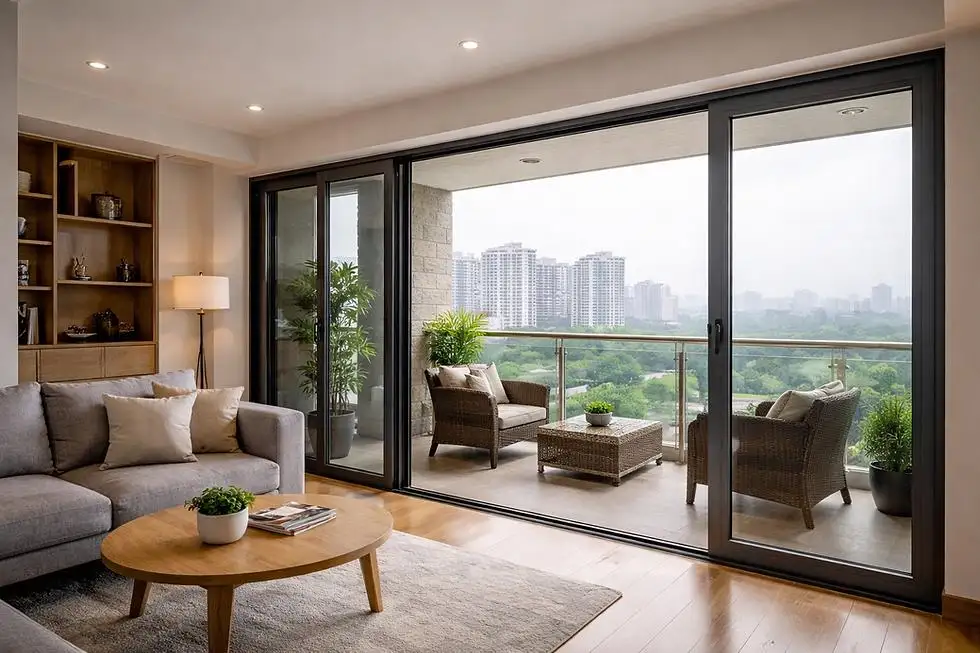
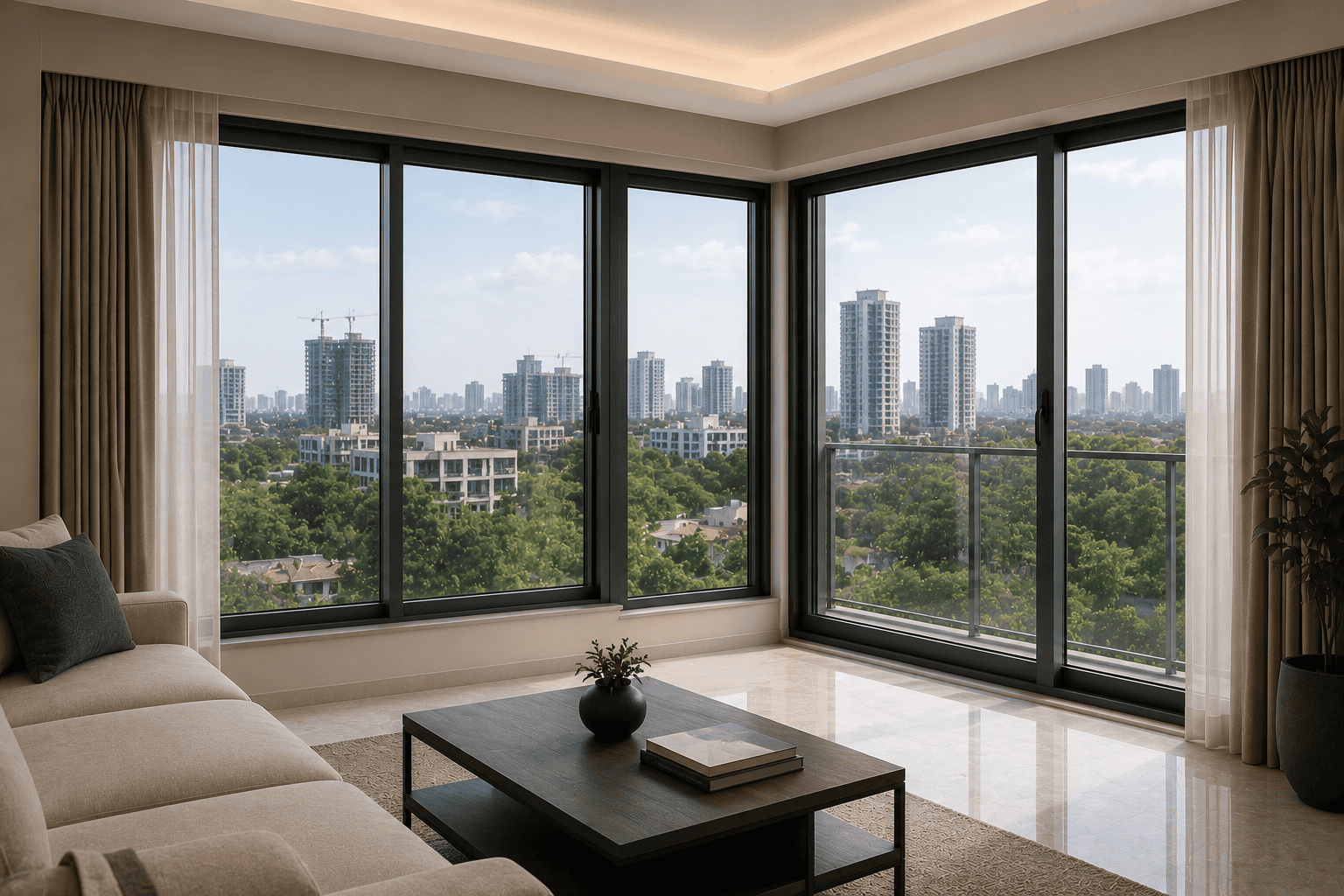


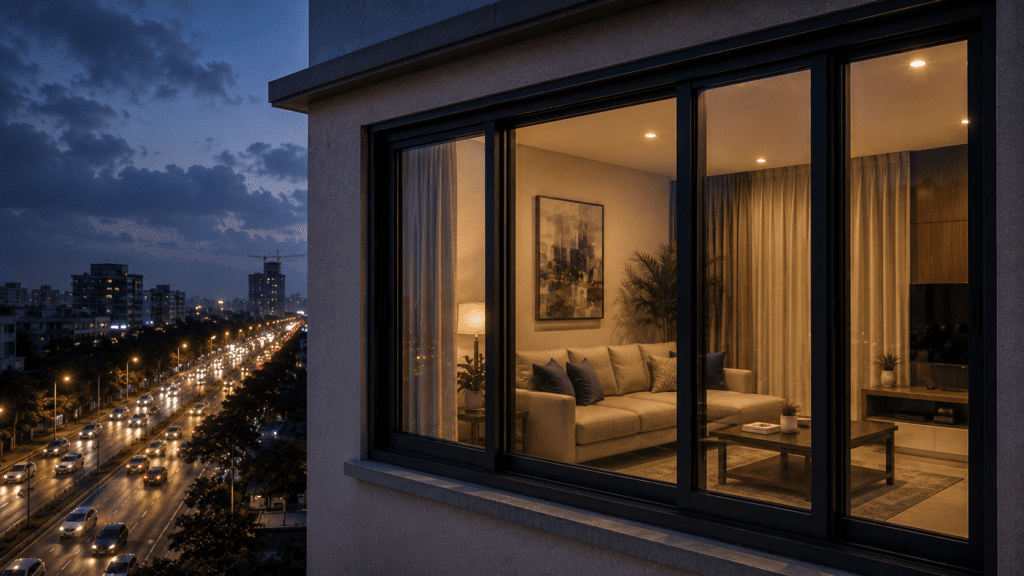
Chennai has gotten louder, and most residents living along its major arterial roads have felt this shift directly even if they haven’t articulated it that way. Anna Salai’s traffic density has grown steadily. OMR’s IT corridor runs near-continuous vehicle and commercial activity across daylight hours and well into the evening. And the city’s expanding Metro network — including the underground construction along Corridor 4 stretching toward stations like Alwarpet, expected to commercialise around December 2027 — has added years of sustained construction noise to several established residential neighbourhoods.
For homeowners and renters in apartments along these corridors, the gap between what a standard window blocks and what the actual ambient noise level demands has become a genuine quality-of-life issue — one that most builder-grade window specifications were never designed to solve.
Why Standard Windows Underperform Against Chennai’s Specific Noise Profile
Chennai’s primary residential noise sources — sustained traffic flow, construction activity, and IT corridor commercial hum — are predominantly low-to-mid frequency, broadband noise. This is precisely the type of sound that standard single or basic double-glazed windows are least effective at blocking.
Sound transmission through a window depends on the mass of the glass, the air gap (if double-glazed), and the seal integrity around the frame — not simply whether the window is “double glazed” as a binary feature. A standard double-glazed unit with a narrow air gap (commonly 6–10mm in budget installations) and equal-thickness glass panes on both sides actually creates an acoustic resonance effect, where the two panes vibrate at the same frequency and can transmit certain sound frequencies almost as efficiently as a single pane would.
This explains a common complaint among Chennai apartment residents: they’ve upgraded to “double glazed” windows expecting meaningful noise reduction, and the improvement is underwhelming — particularly against the low-frequency rumble of sustained traffic on roads like Anna Salai, GST Road, or the OMR stretch through Sholinganallur and Siruseri.
What Actually Reduces Noise: The Specification Details That Matter
1. Acoustic laminated glass, not standard float glass
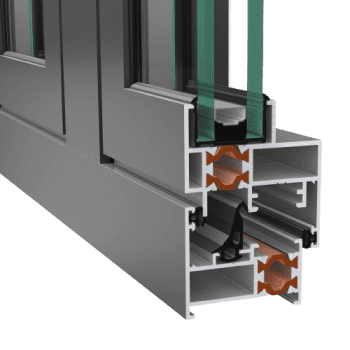
Acoustic laminated glass uses a PVB (polyvinyl butyral) interlayer bonded between two glass panes — the same interlayer technology used in automotive windshields, adapted for acoustic performance. This interlayer dampens vibration transmission through the glass, breaking the resonance effect that limits standard double glazing’s performance. For Chennai’s broadband traffic and construction noise, this is the single most impactful glass specification upgrade available.
2. Asymmetric pane thickness
Using glass panes of different thicknesses on either side of the air gap (for example, 6mm on the exterior and 8mm laminated acoustic glass on the interior) further disrupts the resonance frequency matching that limits standard symmetric double glazing. This is a detail that most standard window suppliers don’t offer as a configurable option, but it meaningfully improves performance against the specific low-frequency content of Chennai’s traffic noise.
3. Wider air gap — 16mm minimum for meaningful acoustic benefit
The width of the air gap between glass panes affects acoustic performance independently of thermal performance. While a 12mm gap might be adequate for thermal purposes, acoustic performance benefits from a wider gap — 16mm to 20mm — particularly for attenuating mid-frequency sound content typical of vehicle engine and tyre noise.
4. The frame’s contribution: seal integrity, not sound transmission through metal
Unlike thermal performance, where the frame material itself (aluminium vs. thermal break) directly affects heat transfer, the frame’s contribution to acoustic performance is primarily about seal integrity — how well it prevents sound from travelling around the glass through gaps at the frame perimeter. A thermally broken frame, by virtue of experiencing less thermal cycling stress, maintains its compression seals more effectively over years of Chennai’s heat and humidity — which indirectly preserves acoustic performance over the window’s lifespan, even though the frame material itself isn’t the primary acoustic barrier.
5. Perimeter sealing at the frame-wall joint
As with monsoon water resistance, the joint between the window frame and the surrounding wall is a commonly overlooked sound transmission pathway. Even excellent acoustic glass loses much of its benefit if sound is travelling freely around the frame through gaps in poorly sealed perimeter joints — a detail that depends entirely on installation quality.
Chennai Corridor-by-Corridor Noise Profile
Anna Salai & T. Nagar: Dense, sustained traffic noise throughout daytime and evening hours, with horn use significantly higher than quieter residential zones. Acoustic laminated glass with a wide air gap is the priority specification for street-facing units.
OMR (Sholinganallur to Siruseri, the IT corridor): Combination of continuous vehicle traffic and commercial/office noise during business hours. Units facing directly onto OMR benefit most from acoustic glass; set-back units within gated communities have somewhat reduced exposure but still benefit from upgraded specification given 24-hour activity in this corridor.
Areas near ongoing Metro construction (Alwarpet, parts of the East-West Corridor 4 route): Construction noise is impulsive and unpredictable — drilling, compaction, material transport — rather than the steady broadband profile of traffic. Acoustic laminated glass helps, but residents in directly adjacent properties should also evaluate construction timeline and consider that the noise profile will shift once Metro operations begin (replacing construction noise with periodic train-related sound, generally lower in overall impact for underground sections).
GST Road & Velachery: High-traffic arterial corridors with significant heavy vehicle presence, including commercial transport. The lower-frequency rumble from heavy vehicles specifically benefits from the asymmetric pane thickness specification described above.
Competitor Comparison for Acoustic Specification in Chennai
Acoustic performance requires a level of glass specification detail that many standard aluminium window suppliers in Chennai’s market don’t routinely offer or discuss proactively.
AluPure’s broader product documentation emphasises panel sizing flexibility and wind load capacity but doesn’t prominently feature acoustic glass configuration as a distinct, Chennai-specific offering in their published materials — buyers need to specifically request acoustic glass options and verify the PVB interlayer specification and air gap width.
Prominance’s uPVC systems can incorporate acoustic glass configurations, and uPVC frames do have a reasonably good baseline acoustic seal due to the material’s inherent sealing characteristics. However, for larger openings or premium specifications where aluminium’s structural advantages are preferred, the acoustic glass conversation needs to happen independently of the frame material decision.
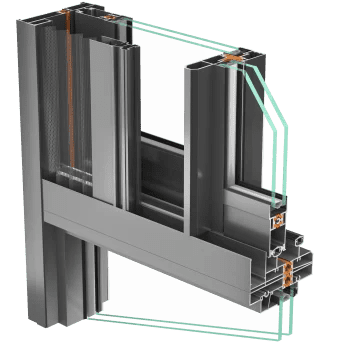
Thermaline® offers acoustic laminated glass with PVB interlayer specifications, configurable air gap widths, and asymmetric pane thickness options specifically tuned for Chennai’s traffic and construction noise profile — combined with thermally broken aluminium frames that maintain seal integrity (and therefore acoustic performance) over the long term in Chennai’s humid, high-cycling climate. Our EcoCasement® and EcoSlide® systems support these acoustic glass configurations for residential applications along Chennai’s busiest corridors.
What to Ask Before Specifying Acoustic Windows in Chennai
Is the glass acoustic laminated, or just standard double glazing? These are different products with meaningfully different performance. Ask specifically for the PVB interlayer specification.
What is the air gap width? 16mm minimum for meaningful acoustic benefit; wider gaps generally perform better for low-frequency traffic noise.
Are the two panes the same thickness, or asymmetric? Asymmetric thickness improves performance against broadband traffic noise specifically.
What is the frame-wall perimeter seal specification? Even excellent acoustic glass underperforms if installed with a poorly sealed perimeter joint.
The Practical Decision for Chennai Residents
If you’re living along Anna Salai, OMR, GST Road, or near ongoing Metro construction and finding that conversations, sleep, or work-from-home focus are regularly disrupted by outside noise — even with windows closed — this is solvable with the right specification, not an inevitability of urban Chennai living.
Thermaline® provides free consultations to assess your specific corridor exposure and recommend an acoustic glass specification matched to your building’s actual noise profile. Speak to our team before your next window purchase or upgrade.
