
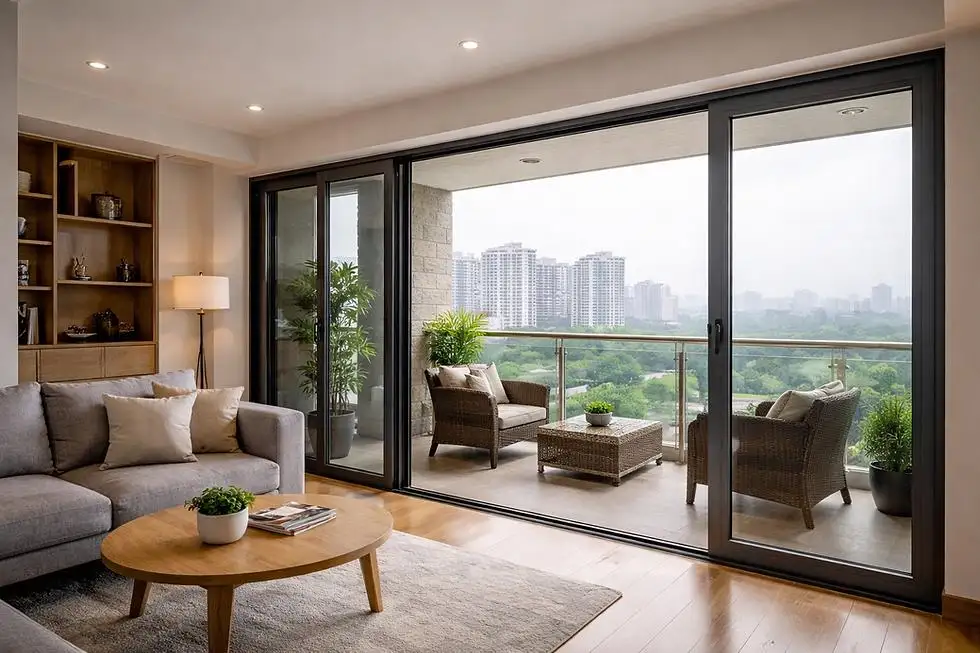
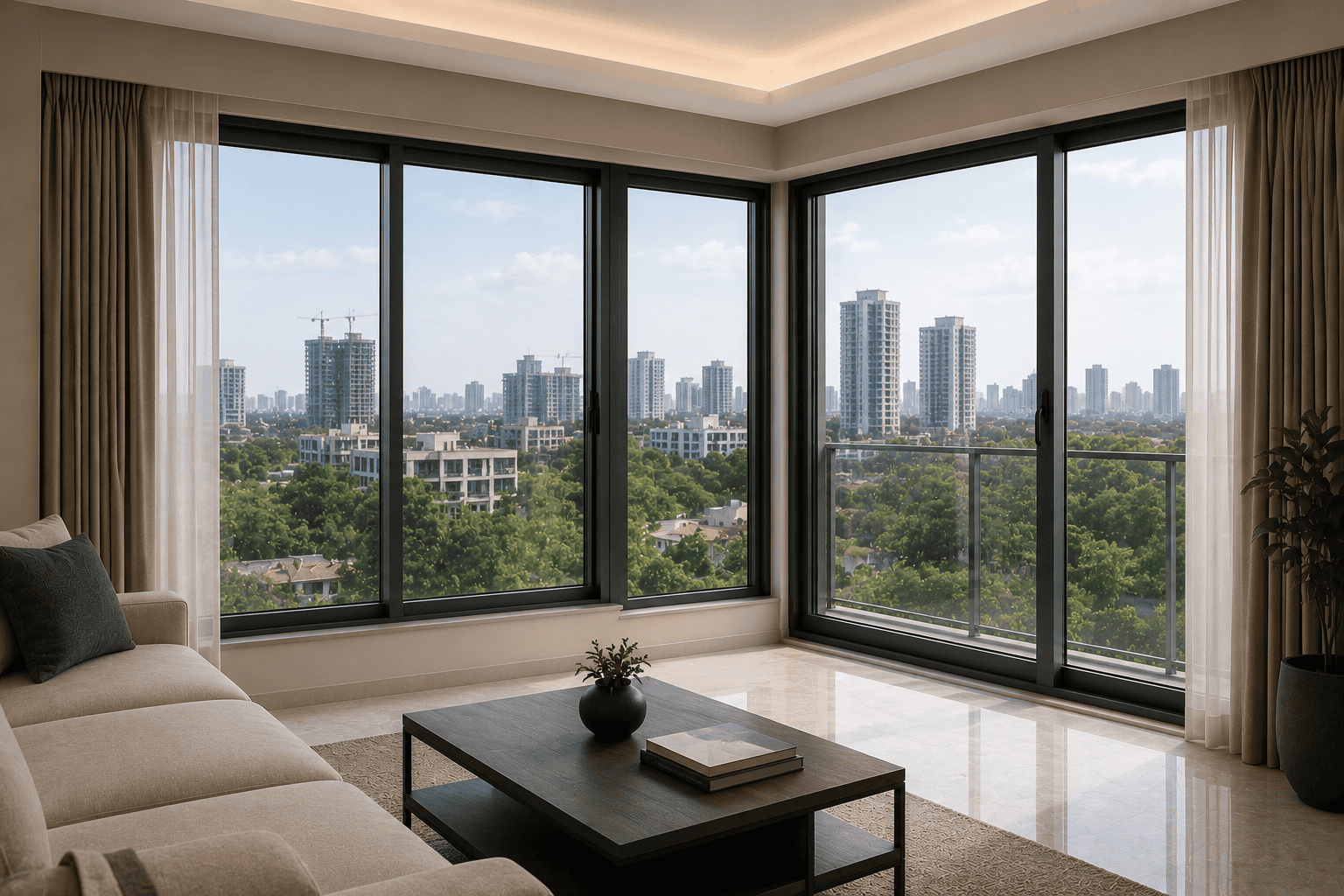
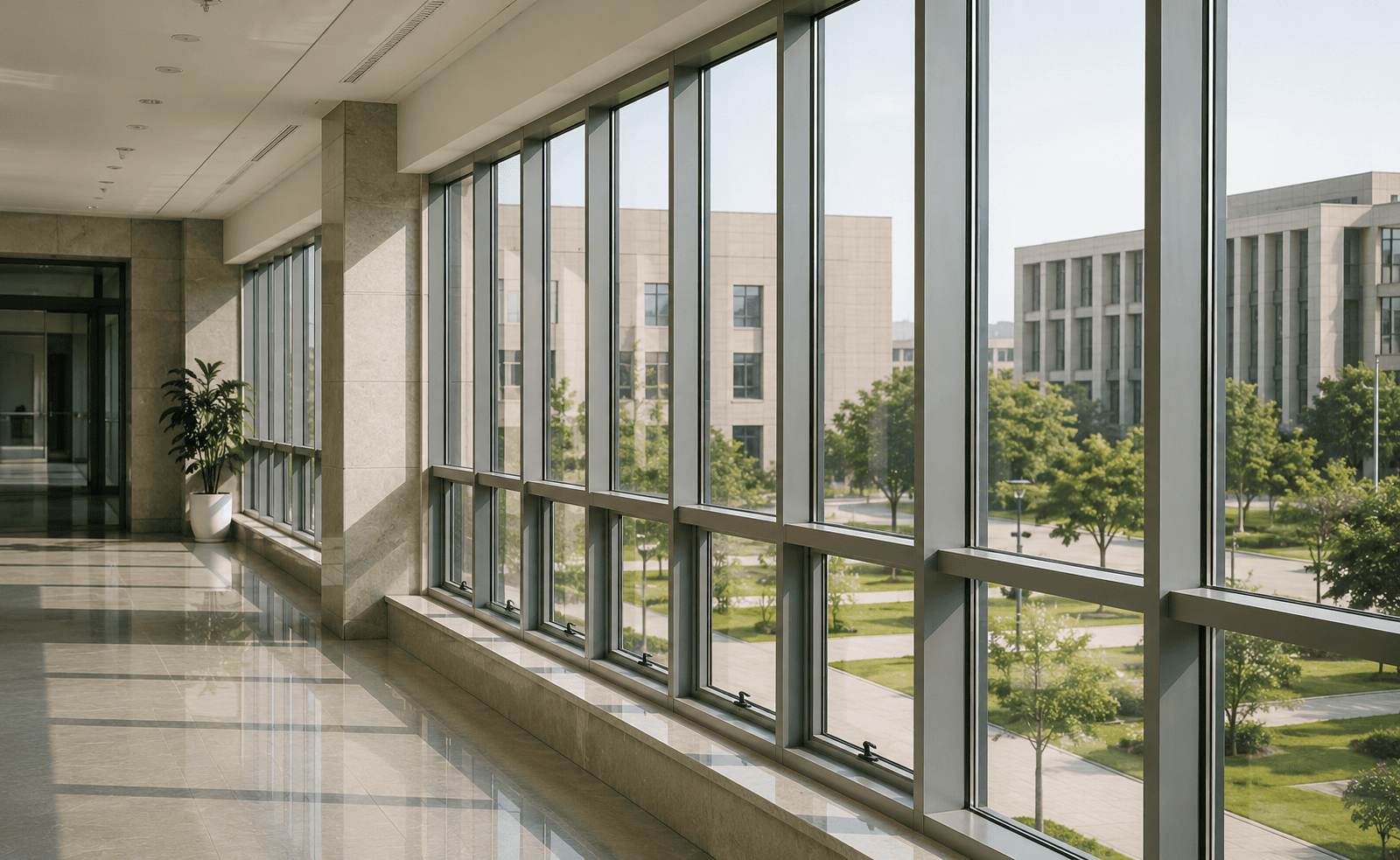
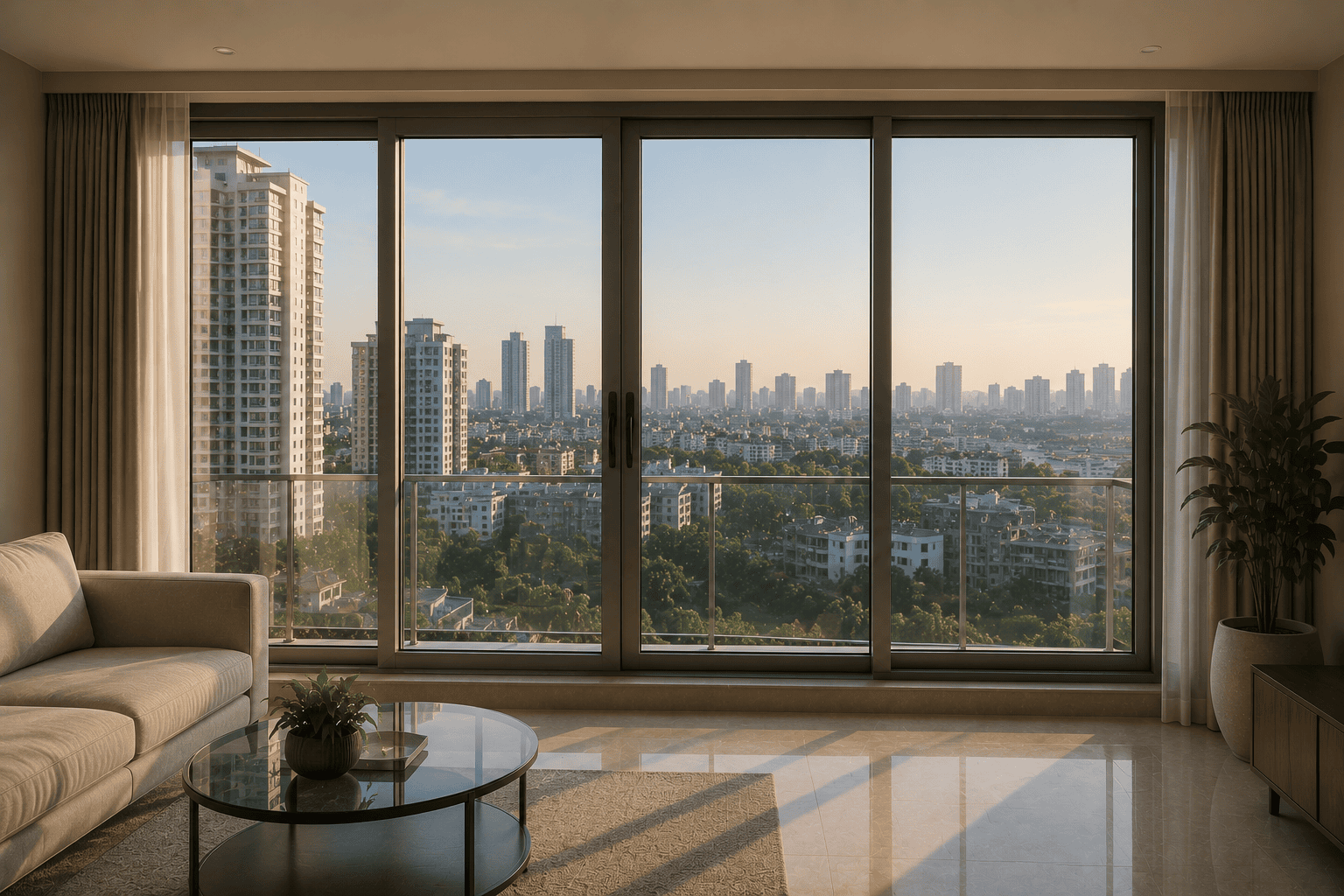
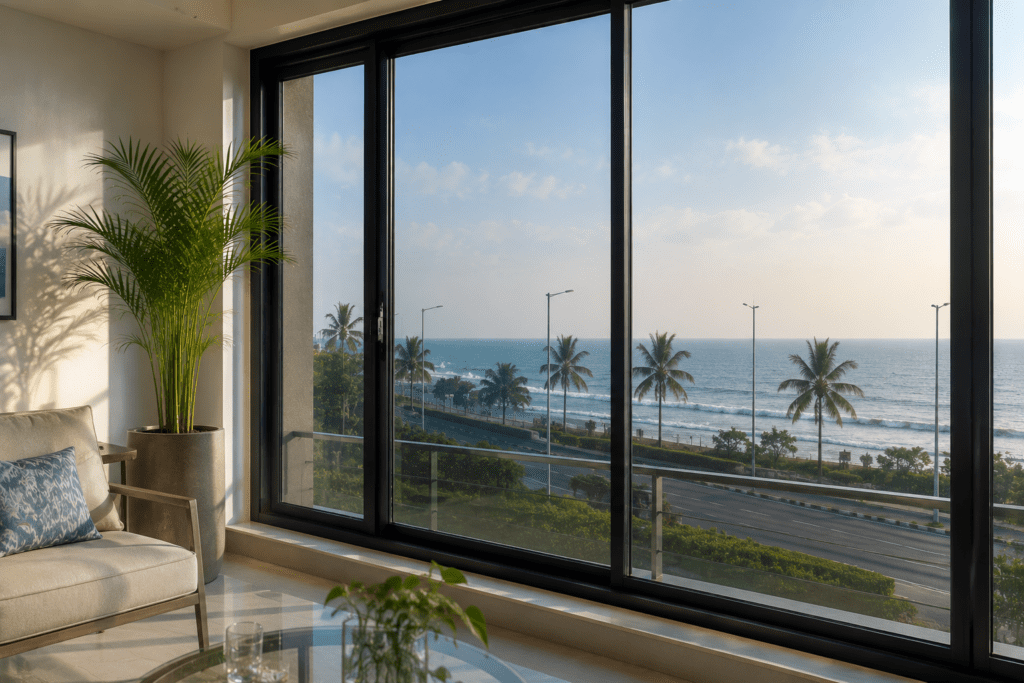
Chennai doesn’t get the dramatic seasonal extremes that Delhi or even Mumbai experience. There’s no -2°C winter, no 48°C summer spike that makes headlines. What Chennai has instead is something quieter and, in its own way, more relentless: a near-constant combination of heat, humidity, and salt-laden coastal air that runs through most of the year, broken only by a monsoon that brings its own set of challenges.
If you live anywhere along East Coast Road, OMR, Adyar, Besant Nagar, or even a few kilometres inland in Velachery or Thiruvanmiyur, your windows are dealing with a more sustained and corrosive environment than most Indian cities present. And the standard aluminium windows that builders default to across Chennai’s residential market are, in a meaningful number of cases, simply not specified for it.
The Specific Chemistry of Chennai’s Climate Problem
Chennai’s position on the Bay of Bengal coastline means the air carries fine salt aerosol particles inland — not just immediately at the beach, but for several kilometres. Areas within 2 km of the coast, including most of ECR and significant stretches of OMR, experience direct and sustained exposure to this salt-laden air. Combined with Chennai’s average humidity levels that frequently sit between 70–85% for much of the year, the conditions are close to ideal for accelerating corrosion in standard building materials — including window frames, hardware, and fasteners.
The mechanism is well understood: salt and moisture together act as an electrolyte, enabling a chemical process called galvanic corrosion at any point where dissimilar metals meet — for instance, where a steel screw fastens into an aluminium frame, or where zinc-alloy hardware meets an aluminium track. This isn’t a slow, decades-long process in Chennai’s climate. It is measurable within a few years on standard, unprotected components.
The same combination of salt air and humidity also degrades sealants faster than in drier climates. Standard silicone or polyurethane sealants that might last 15–20 years in an inland, low-humidity environment commonly show cracking and adhesion failure within 8–12 years along Chennai’s coastal corridor. Once a seal fails, the building envelope is compromised — and in a climate this humid, that compromise shows up quickly as condensation, mould growth around the window frame, and eventually water staining on interior walls.
Why “Just Aluminium” Isn’t a Specification
Here’s the issue with how most Chennai window purchases happen: the conversation centres on “aluminium vs uPVC vs wood” as if aluminium were a single, uniform product. It isn’t. The alloy grade, the surface coating, and the hardware material all vary enormously between suppliers — and in Chennai’s climate, these variations determine whether your windows look good for 3 years or perform well for 20.
Standard polyester powder coating — the most common finish on budget and mid-range aluminium windows sold in Chennai — provides reasonable protection in drier inland climates but degrades visibly faster under Chennai’s combination of UV intensity, salt exposure, and humidity. Chalking, fading, and eventually pitting are the typical failure sequence, usually visible within 4–6 years on south and east-facing facades that take the most direct exposure.
PVDF (polyvinylidene fluoride) coating is the appropriate alternative for Chennai’s coastal and near-coastal zones. It’s a fluoropolymer-based finish that resists UV degradation, chemical exposure, and salt significantly better than standard polyester coats — and it’s the standard specification used in coastal architectural projects internationally for exactly this reason.
Hardware material matters as much as the frame coating. Standard zinc-alloy hinges, handles, and locking mechanisms — common in budget aluminium window systems — show visible corrosion within 18–24 months in ECR-adjacent properties. Stainless steel hardware is the appropriate specification for Chennai’s coastal and near-coastal residential zones.
Thermal Break Windows: An Underrated Benefit for Chennai’s Climate
Most conversations about thermal break windows focus on temperature extremes — Delhi’s winters, Ahmedabad’s summers. Chennai’s climate doesn’t have those dramatic swings, which leads many Chennai homeowners to assume thermal break technology isn’t relevant to them. This is a misunderstanding worth correcting.
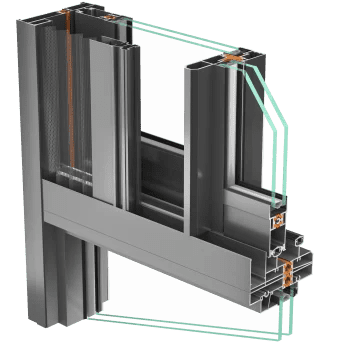
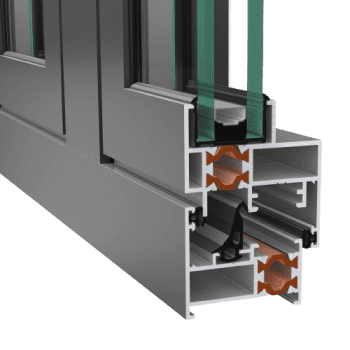
A thermally broken frame — built from two aluminium sections joined by a reinforced polyamide strip — experiences less internal thermal stress across daily heating and cooling cycles than a standard single-piece aluminium frame. Lower thermal stress means fewer micro-cracks developing in the frame’s coating and at corner joints over time. In Chennai’s climate, where any crack or gap becomes an entry point for humid, salt-laden air, this structural benefit directly extends the effective life of your window’s seal integrity and finish — independent of any heating or cooling cost savings.
There is also a genuine, if smaller, energy efficiency benefit. Chennai’s AC usage is substantial and consistent across most of the year — the city doesn’t have a true “off season” for cooling. Thermal break frames reduce the conducted heat contribution from the frame, which contributes incrementally to lower AC running costs even in a climate without Delhi or Ahmedabad’s extreme peak temperatures.
Checking Competitor Specifications in the Chennai Market
Chennai’s aluminium window market includes both AluPure and Prominance as active suppliers, alongside numerous local fabricators listed on marketplace platforms like Justdial and McCoy Mart.
AluPure (profine India Window Technology) maintains dealer presence in Chennai and markets standard aluminium window and door systems for the city. Their broader product communications reference durability and weather resistance, but Chennai-specific guidance on coastal coating specification (PVDF vs standard polyester) or salt-air hardware recommendations isn’t part of their published city content — buyers need to ask these questions directly and verify the answer in writing.
Prominance is primarily a uPVC specialist, with significant presence across Chennai’s dealer network. uPVC has genuine corrosion-immunity advantages in coastal environments since it doesn’t corrode the way metal does. However, uPVC’s structural limitations for large-format openings, and the material’s tendency toward UV-driven discolouration and brittleness over extended exposure in Chennai’s intense year-round sun, are trade-offs that matter for premium residential and commercial specifications requiring larger glass areas.
ALCOI does not show meaningful presence in Chennai’s market based on available information — their documented operations concentrate in North India.
Thermaline® has engineered thermally broken aluminium window systems for Indian coastal conditions for over 20 years. Our EcoSlide® and EcoCasement® systems are available with PVDF coating specifications and stainless steel hardware specifically for Chennai’s ECR, OMR, and near-coastal residential zones — addressing both the corrosion resistance and the seal-longevity benefit that standard aluminium and uPVC alternatives don’t fully deliver together.
Chennai Zone-by-Zone Guide
ECR (East Coast Road) & Besant Nagar: Highest salt-air exposure zone. PVDF coating and stainless steel hardware are essential, not optional, for any aluminium window specification here.
OMR (IT corridor, Sholinganallur to Siruseri): Moderate-to-significant coastal exposure depending on exact distance from shore, combined with IT corridor traffic noise. Consider acoustic glass specifications alongside coastal-grade frame coating.
Adyar, Thiruvanmiyur, Velachery: Near-coastal zone with meaningful salt-air presence, particularly in older properties closer to the Adyar estuary and backwaters. PVDF coating recommended.
Anna Nagar, T. Nagar, Kilpauk (further inland): Reduced salt-air exposure but Chennai’s general humidity still accelerates standard sealant degradation. Quality compression seals remain important even without coastal-specific coating requirements.
What to Ask Before You Buy Windows in Chennai
Whatever supplier you’re considering, ask these questions directly:
What coating is used on the frame, and is it rated for coastal/marine exposure? PVDF, not standard polyester, for ECR/OMR and near-coastal zones.
What material is the hardware? Stainless steel for coastal and near-coastal zones; quality aluminium alloy acceptable further inland.
What is the seal specification, and what is its expected lifespan in humid coastal conditions? Multi-point compression seals outlast brush seals significantly in Chennai’s climate.
Is the frame thermally broken? Even without Chennai’s temperature extremes, the reduced thermal cycling stress extends seal and coating life — a genuine benefit specific to long-term coastal performance.
Why This Decision Matters More in Chennai Than You’d Expect
A window purchase decision in Chennai isn’t primarily about managing temperature extremes — it’s about managing a sustained, corrosive environment that will quietly degrade an underspecified product faster than almost anywhere else in India. The visible signs — pitted frames, seized hardware, peeling coating — typically show up within 3-5 years for budget specifications, well before most homeowners expect a window replacement.
Thermaline® offers free site assessments for Chennai homes and apartments — specific to your distance from the coast, building orientation, and existing window condition. Speak to our team before your next window purchase or renovation in ECR, OMR, or anywhere across Chennai.
