

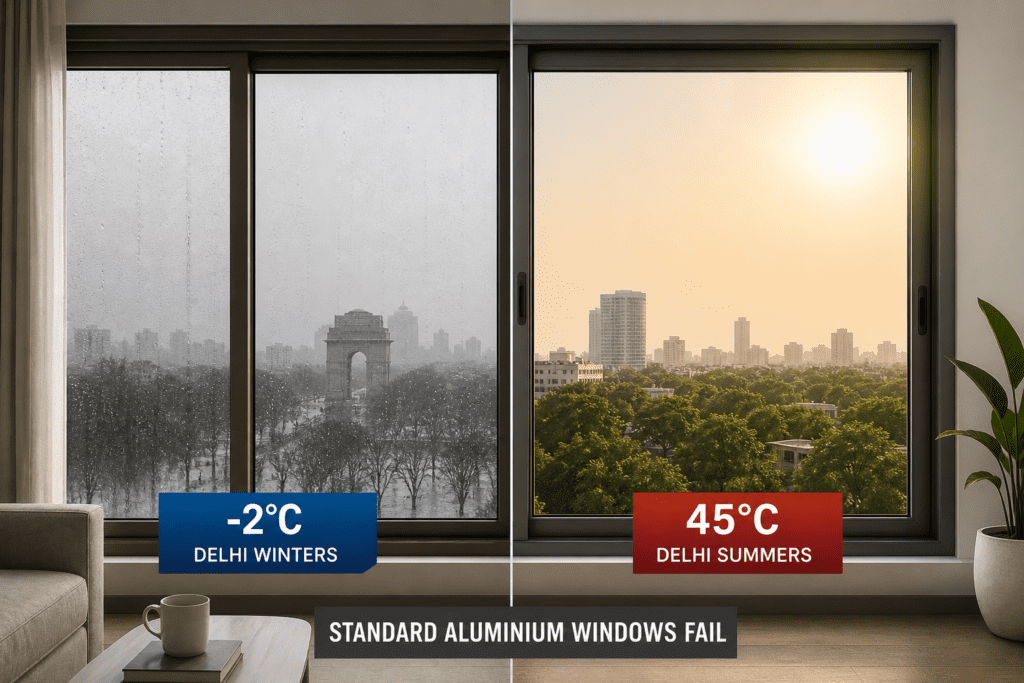
Ask anyone who has lived in Delhi for more than a year, and they’ll tell you the same thing: the city doesn’t have a gentle climate. It punishes you twice — with winters that genuinely bite and summers that are among the most extreme in the world.
In January, temperatures in Delhi can drop to -2°C, sometimes lower. By May and early June, the same city is recording 44°C to 46°C on its worst days, with the notorious loo — the hot, dry westerly wind — making outdoor life almost unbearable. Then the monsoon arrives, brings humidity, and by September you’re doing it all over again.
This 47-degree seasonal range is not just uncomfortable to live through. It is actively destroying the windows in millions of Delhi NCR homes — and most residents don’t realise it until the damage is already done.
The Science of What Happens to Standard Aluminium in Delhi’s Climate
Standard aluminium is an excellent conductor of heat. That single property — which makes it useful in engineering — is precisely what makes it a poor choice for window frames in an extreme climate like Delhi’s.
In summer, when the outside temperature hits 44°C and your AC is holding the inside at 24°C, the aluminium frame becomes a thermal bridge — a direct, uninterrupted pathway for heat to travel from outside your home to inside. The frame heats up, radiates into your room, and forces your air conditioner to work harder than it should. You feel it as persistent warmth near the windows even when the AC is running. Your electricity bill confirms it every month.
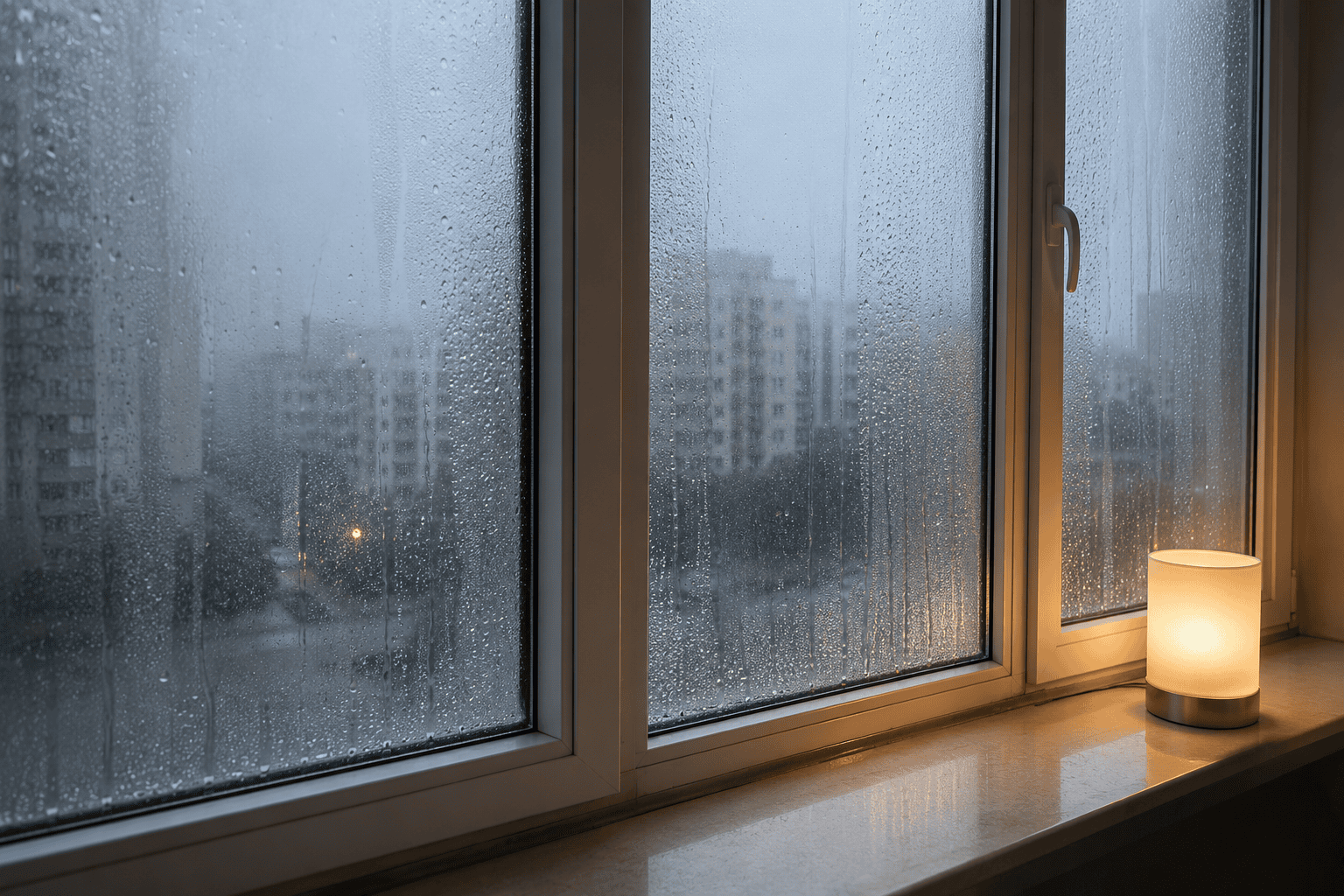
In winter, the same physics reverses. Delhi’s January nights are genuinely cold — single-digit temperatures are the norm for weeks at a time, and sub-zero nights are not rare. The aluminium frame conducts the outdoor cold inward, creating a chilled zone near your windows. This is why rooms with large windows feel noticeably colder in Delhi winters, even when the heater is on. And it’s also why condensation forms on the inner glass surface on cold mornings — warm indoor air hitting the super-chilled glass pane, leaving streaks of water that quietly damage your windowsill and wall joint over time.
The expansion-contraction cycle is where the physical destruction begins. When a material heats and cools, it expands and contracts. Aluminium does this significantly — a 3-metre aluminium frame can expand by several millimetres across a Delhi summer-to-winter cycle. Over years, this repeated movement stresses the joints, loosens the seals between the frame and the wall, and creates micro-gaps that let in dust, cold air, and eventually water during the monsoon.
In Delhi’s climate specifically, this cycle is more extreme than almost anywhere else in India. A window installed in a Chennai flat faces far less seasonal thermal stress than the same window in a Dwarka apartment or a DLF Gurgaon villa.
How It Shows Up in Real Homes
If you’ve lived in Delhi NCR long enough, you recognise the symptoms, even if you haven’t connected them to the windows specifically.
The fine dust that appears inside your room even with windows shut — that’s coming through micro-gaps in deteriorated window seals, accelerated by years of thermal cycling. Delhi’s air quality makes this particularly harmful: it’s not just dust, it’s particulate matter from vehicular emissions and seasonal stubble burning that you’re breathing indoors.
The chill you feel near the glass in January, even in a room with running heating — that’s the thermal bridge in the aluminium frame conducting outdoor cold directly into your living space.
The sweating on the inner side of the glass on winter mornings — that’s condensation from the cold surface, and the moisture is going somewhere: into your wall joint, behind your curtains, and into the material of your window frame itself.
The AC that never quite reaches the set temperature in south-facing rooms in May — that’s solar heat gain through an uninsulated frame and single-pane glass forcing the compressor to work at maximum output for hours at a stretch.
None of these are minor inconveniences. They’re cumulative damage, and they’re happening quietly behind the scenes of every home with standard aluminium windows in Delhi NCR.
What Thermal Break Windows Actually Do — and Why Delhi Needs Them
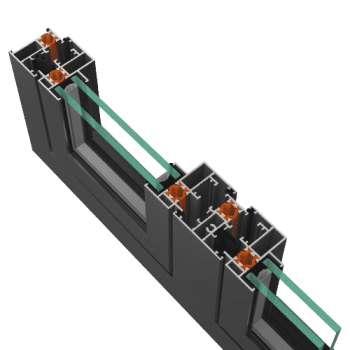
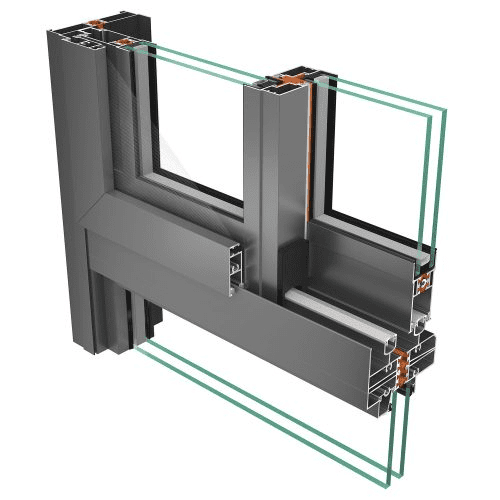
A thermally broken aluminium window solves the core problem by interrupting the thermal bridge. The frame is engineered as two separate aluminium sections — one exterior, one interior — joined by a reinforced polyamide strip that is a poor conductor of heat. The two sides of the frame cannot exchange temperature freely. Whatever is happening outside stays outside.
In Delhi terms: in May, the outer frame gets hot. The inner frame, separated by the polyamide strip, stays close to your room temperature. Your AC doesn’t have to fight the frame. In January, the outer frame gets cold, but your inner room surface stays warmer. No condensation, no chill zone, significantly less heating load.
The impact on energy consumption in Delhi NCR is measurable. With the summer AC load that a Delhi home carries — often 4 to 6 months of near-constant running — reducing heat ingress through the frame by 35% or more translates directly into lower units consumed per day. Over a year, the savings compound significantly. Over the 20–25 year lifespan of a properly specified thermal break window, the energy savings substantially offset the price premium over standard aluminium.
Beyond energy, the dust infiltration problem improves dramatically. Thermal break frames with quality compression seals maintain their integrity through the expansion-contraction cycle far better than standard aluminium — because the two-piece construction means each section experiences less individual thermal stress. Gaps take years longer to form. Delhi’s PM2.5 stays outside where it belongs.
Delhi NCR Neighbourhood Guide: Where the Problem Is Most Acute
South Delhi (Vasant Kunj, Saket, Greater Kailash, Hauz Khas): Older building stock means original windows are often 15–25 years old and well past performance life. Condensation and dust infiltration are the dominant visible problems. South-facing rooms bake in summer.
Gurgaon (DLF phases, Golf Course Road, Sector 56–65): Premium residential towers with large window openings — the visual aesthetic that defines Gurgaon high-rises — means maximum heat gain through west-facing glass. Many residents report ACs running continuously through May without reaching comfortable temperatures.
Noida (Sectors 100–137, Expressway corridor): High-density apartment living with builder-grade aluminium windows that were not specified for performance. Resale flats in this corridor commonly have windows that are 8–12 years old, seal-compromised, and acoustically transparent to Yamuna Expressway traffic noise.
Dwarka and New Gurgaon (Sectors 82–115): Newer construction, but developer-grade windows are still the norm. The thermal performance gap is less visible in new builds — and therefore often ignored until the first full summer or winter cycle reveals it.
The Practical Decision: When Standard Windows Stop Being Acceptable
There is no precise expiry date on a window, but there are clear signals. If you are experiencing any of these in your Delhi NCR home, your windows have likely crossed the line from functional to failing:
- Dust inside the room despite all windows closed
- Visible condensation streaks on inner glass surfaces in January and February
- Rooms that feel cold near the windows even with heating on
- AC unable to maintain set temperature in south or west-facing rooms in peak summer
- Visible gaps between the frame and the wall on the interior or exterior side
- Hardware that is stiff, corroded, or no longer operating smoothly
At this point, re-sealing and maintenance extend the window’s life temporarily but don’t restore its performance. Replacement with a properly specified thermal break system is the only solution that actually addresses the underlying problem.
Why Thermaline® for Delhi NCR Homes
Thermaline® has spent over 20 years engineering thermally broken aluminium window systems for Indian climate conditions — not European ones. Delhi NCR’s specific demands — the extreme thermal range, the dust infiltration challenge, the monsoon sealing requirement, and the increasing expectation of acoustic performance — are not secondary considerations in our product design. They are the primary ones.
Our EcoSlide® and EcoCasement® systems are available in specifications calibrated for Delhi’s seasonal extremes. We assess your specific apartment or villa — orientation, floor level, room function, existing wall condition — before recommending a system. Because a south-facing living room in a Gurgaon tower and a west-facing bedroom in a South Delhi bungalow have different performance requirements, and a single standard product serves neither properly.
If your Delhi NCR home is fighting its own windows through summer and winter, it’s time for a conversation. The assessment is free. The difference in how your home performs, year-round, is not.
