




Introduction
Is your peace of mind getting disturbed by unwanted noise? Are you craving for a really quiet home? Then, you need to know this now. Windows are the weakest barrier for both heat and sound. So, soundproof windows are a must for your soundproof home. This is where thermally broken windows come into play.
How Does Noise Enters Your Home?
Before we talk about soundproof homes and noise reduction, let’s understand how noise propagates.
The Connection Between Windows and Noise Control
Sound always travels through a medium, may it be, air, thin materials,or rigid connections. Regular window frames make way for sound very easily, carrying vibrations straight indoors. Hence, without proper window acoustic insulation, outside noise enters inside your living space very easily.
To reduce outside noise effectively, your windows must obstruct both sound transmission and vibration
How soundproof windows reduce outside noise?
Soundproof windows use a thermal break between the inner and outer parts of the window frame. This feature is used in window frames made of aluminum or steel. It prevents sound and heat from transferring through the frame.
How to Stop Sound Entering the Home?
If you can stop the sound waves from entering your house you will get the quiet home you desire. Let’s know how it is possible.
Sound travels through vibrations. When the vibration passes through your window, you hear the noise. Window acoustic insulation systems create barriers that absorb or block these sound vibrations.
What is Window Acoustic Insulation and Its Mechanism?
Window acoustic insulation is the insulation system used to reduce the transmission of sound waves or noise through windows. Acoustic insulation is used in thermally broken windows. A quiet home is achieved through three key components. They are thermally broken frame design, specialized glazing, and proper sealing.
Thermally Broken Frames
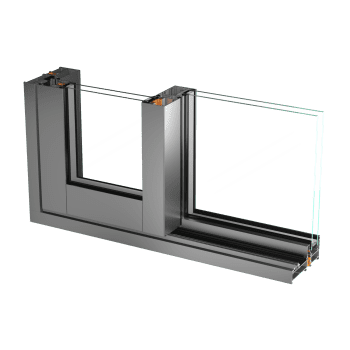
A thermal break is used in thermally broken frames to prevent sound transmission. Generally, it is made of polyamide or similar insulating material. It separates the external aluminum frame from the internal frame, stopping heat and sound from traveling directly through the frame.
The Mechanism of Thermally Broken Frames
A thermal break itself explains its purpose. It just works like the speedbraker on the highway, reducing outside noise.
Thermal break is a special strip, made of a dense plastic-like material. It lies between the inner part and the outer part of the window.
When sound vibrations hit that plastic strip, they get absorbed and muffled instead of traveling directly through. It stops the frame itself from vibrating. This technology significantly helps to reduce outside noise entering the home.
Materials Used in Thermally Broken Frames
- Aluminum profiles with polyamide strips
- Reinforced insulating polymers
Multi-chamber frame designs
The Importance of The Glass
While the frame is not ignorable, the glass plays a hero for soundproofing your home. Here are details of a few specialized glasses created to make a quiet home.
Double (or Triple) Glazing:
When the glazing system has two (or three) glass panes with a gap in between, it is known as double (or triple) glazing. This air or gas-filled gap acts as an extra barrier, trapping sound waves.
Laminated Glass: Laminated glass is built with a transparent plastic layer placed between two panes of glass. This layer absorbs sound vibrations almost completely. It’s like adding a dampening layer that sound struggles to get through.
Different Thicknesses: Sometimes, window makers use two panes of glass that are of different thicknesses. This is interesting. Different thicknesses block different sound frequencies. Using a thicker and a thinner pane together helps to cancel out a wider range of noises making the windows soundproof.
Sealing and Installation Quality
Even the best soundproof windows fail if there are gaps. Proper sealing ensures there are no acoustic leaks. So proper installation is as important as the manufacturing.
(Standard aluminum windows act like tuning forks, amplifying vibration. Thermally broken frames dampen those vibrations, making soundproof windows far more effective.)
Creating a Quiet Home with the Right Soundproof Windows
Depending on configuration, thermally broken soundproof windows can reduce outside noise by 35–45 decibels. That is the difference between hearing traffic clearly and barely noticing it.
Here is the guide on how to choose the right soundproof windows for maximum noise reduction.
Check the Sound Transmission Class (STC)
The STC is the most critical metric. It measures how many decibels of noise a window blocks.
Standard Window (STC 26–28):
You will hear clear conversations and every passing car.
High-Performance Window (STC 35–40):
Significant noise reduction; traffic becomes a faint hum.
Professional Grade (STC 45+):
Necessary for homes near airports or train tracks to reduce outside noise to near-silence.
Tips:
For exterior windows, also look for the OITC (Outdoor-Indoor Transmission Class) rating. While STC is great for speech, OITC is specifically designed to measure low-frequency sounds like heavy trucks and sirens.
Analyze the Frame Thermal Break Width
In my field, we use a “thermal break” to stop heat, but it doubles as a massive acoustic dampener. A thermal break is an insulating strip (usually polyamide) that separates the outer and inner metal frames.
Why Width Matters:
A wider thermal break creates a larger “dead zone” for vibrations.
The Rule:
Higher noise areas need wider thermal breaks. A 24mm–35mm break is standard for high-performance units. If you live in a high-density urban area, don’t settle for “thin” breaks; they won’t provide enough window acoustic insulation.
Optimize Your Glass Configuration
The glass accounts for 80% of the window’s surface area. To block sound, we use three engineering principles: Mass, Dissimilarity, and Dampening.
Asymmetric Glazing:
Never choose two panes of the same thickness (e.g., 4mm + 4mm). Instead, use dissimilar glass (e.g., 4mm + 6mm). Different thicknesses vibrate at different frequencies, meaning one pane blocks what the other misses.
Laminated Glass:
This is the “gold standard.” It features a PVB (Polyvinyl Butyral) interlayer that acts like a sponge for sound vibrations.
Air Gaps:
A wider gap between panes (at least 16mm–20mm) provides better insulation than a cramped triple-pane setup.

Customization Based on Your Local Noise Levels
Don’t over-engineer where you don’t have to, but don’t under-spec where it matters.
| Environment | Recommended STC | Glass Configuration | Thermal Break Width |
| Quiet Suburb | 28–32 | Standard Double Pane | 20mm |
| Busy City Street | 35–40 | Dissimilar Glass (Thick/Thin) | 24mm+ |
| Highway / Airport | 45+ | Laminated + Asymmetric Glass | 30mm+ (Wide) |
The “Airtight” Requirement
In thermal engineering, we say “Where air goes, sound goes.” Even the best soundproof windows will fail if the installation isn’t airtight.
Check the Seals:
Look for triple-gasket systems.
Locking Points:
Choose “Multi-point” locks that pull the window sash tight against the frame, creating a vacuum-like seal.
Common Myths About Soundproof Windows
“Any Double-Glazed Window Is Soundproof”
Not true. Without a thermal break, vibration still travels through the frame.
Understanding Realistic Expectations
No window makes a home silent, but the right system can make it feel peaceful.
Conclusion
Thermally broken windows are a powerful tool for increased productivity, delivering real noise reduction and helping you build a truly quiet home. By breaking vibration paths, improving window acoustic insulation, and working with advanced glazing, these soundproof windows will bring peace in your life. If peace, comfort, and efficiency matter to you, thermally broken windows are not optional; they are essential.
Here are a range of soundproof windows you can choose from for your beautiful home. Visit Now.
FAQ:
How do thermally broken windows help in reducing outside noise?
Thermally broken windows reduce outside noise by incorporating a thermal break made of insulating material, such as polyamide, between the inner and outer parts of the window frame. This prevents sound and heat from transmitting through the frame, thereby minimizing noise entry.
What are the key components of a soundproof window?
The key components of a soundproof window include a thermally broken frame design, specialized glazing such as double or laminated glass, and proper sealing to ensure there are no gaps for sound to enter.
How can I choose the right soundproof windows for my home?
To choose the right soundproof windows, consider the Sound Transmission Class (STC) rating, the width of the thermal break, glass configuration—such as laminated or dissimilar panes—and ensure the windows are installed airtight with effective sealing and locking mechanisms.
Is a double-glazed window always soundproof?
No, a double-glazed window alone does not guarantee soundproofing; without a thermal break and proper sealing, vibrations can still pass through the frame, allowing outside noise to enter your home.
Why is proper sealing important for soundproof windows?
Proper sealing is crucial because gaps or leaks can allow sound waves to bypass the glass and frame, reducing the effectiveness of soundproof windows and allowing noise to enter your home.

2 Responses